

ADD ANI AS A TRUSTED SOURCE
googleads
ANI Logo
Menu
Science

Study identifies nematode species that protect crops without pesticides

Researchers have identified a microscopic worm species that infects and kills insects.

ANI Feb 11, 2024 17:31 IST googleads

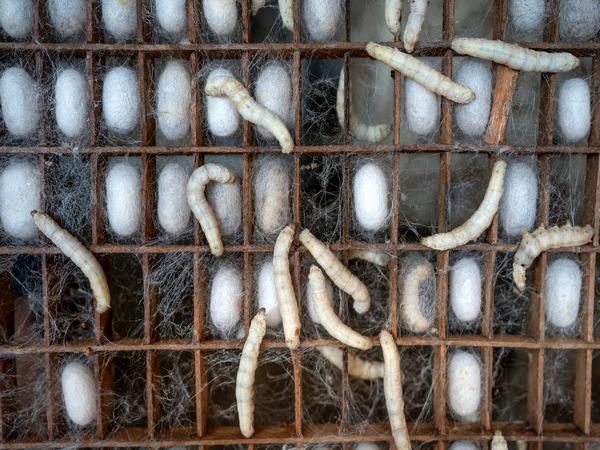
Representative Image

Los Angeles [US], February 11 (ANI): Researchers have identified a microscopic worm species that infects and kills insects.
These worms, known as nematodes, have the potential to manage crop pests in warm, humid environments where other beneficial nematodes do not currently thrive.
The study was published in the Journal of Parasitology.
This new species belongs to the Steinernema family of nematodes, which has long been employed in agriculture to treat insect parasites without the use of pesticides. Steinernema are harmless to humans and other mammals and were discovered in the 1920s.
"We spray trillions of them on crops every year, and they're easy to buy," said UCR nematology professor Adler Dillman, whose lab made the discovery.
"Though there are more than 100 species of Steinernema, we're always on the lookout for new ones because each has unique features. Some might be better in certain climates or with certain insects."
Hoping to gain a deeper understanding of a different Steinernema species, Dillman's laboratory requested samples from colleagues in Thailand.
"We did DNA analysis on the samples and realized they weren't the ones we had requested. Genetically, they didn't look like anything else that has ever been described," Dillman said.
Dillman and his colleagues have now described the new species in the Journal of Parasitology. They are nearly invisible to the naked eye, about half the width of a human hair and just under 1 millimetre long.
"Several thousand in a flask looks like dusty water," Dillman said.
They've named the new species Steinernema adamsi after the American biologist Byron Adams, Biology Department chair at Brigham Young University.
"Adams has helped refine our understanding of nematode species and their important role in ecology and recycling nutrients in the soil," Dillman said.
"He was also my undergraduate advisor and the person who introduced me to nematodes. This seemed a fitting tribute to him."
Adams, who is currently doing research on nematodes in Antarctica, said he is honoured to have such a "cool" species bear his name in the scientific literature.
"The biology of this animal is absolutely fascinating," Adams said.
"Aside from its obvious applications for alleviating human suffering caused by pest insects, it also has much to teach us about the ecological and evolutionary processes involved in the complex negotiations that take place between parasites, pathogens, their hosts, and their environmental microbiome."
Learning about these worms' life cycles as an undergraduate is what hooked Dillman on studying them.
As juveniles, nematodes live in the soil with sealed mouths, in a state of arrested development. In that stage, they wander the soil, looking for insects to infect. Once they find a victim, they enter the mouth or anus and defecate highly pathogenic bacteria.
"A parasite that poops out pathogenic stuff to help kill its host, that's unusual right out of the gate," Dillman said. "It's like something out of a James Cameron movie."
Within 48 hours of infection, the insect dies. "It essentially liquefies the insect, then you're left with a bag that used to be its body. You might have 10 or 15 nematodes in a host, and 10 days later you have 80,000 new individuals in the soil looking for new insects to infect," Dillman said.
The researchers are certain that S. adamsi kills insects. They confirmed this by putting some of them in containers with wax moths. "It killed the moths in two days with a very low dose of the worms," Dillman said.
Going forward, the researchers hope to discover the nematode's unique properties. "We don't know yet if it can resist heat, UV light, or dryness. And we don't yet know the breadth of insects it is capable of infecting.
However, S. adamsi are members of a genus that can infect hundreds of types of insects. Therefore, the researchers are confident it will be beneficial on some level whether it turns out to be a specialist or a generalist parasite of multiple types of insects.
"This is exciting because the discovery adds another insect killer that could teach us new and interesting biology," Dillman said.
"Also they're from a warm, humid climate that could make them a good parasite of insects in environments where currently, commercially available orchard nematodes have been unable to flourish." (ANI)


Get the App

What to Read Next

Science

Amphibians bounce-back from Earth’s greatest mass extinction

Amphibians bounce-back from Earth’s greatest mass extinction

Researchers at the University of Bristol discovered that ancient frog ancestors survived the biggest mass extinction of species by eating on freshwater prey that evaded terrestrial predators.

Read More
Science

Study reveals impact of animals as architects of Earth

Study reveals impact of animals as architects of Earth

A new study led by Professor Gemma Harvey from Queen Mary University of London has revealed how hundreds of species shape the landscapes we depend on, from termite mounds visible from space to beavers creating wetlands and hippos carving drainage systems.

Read More
Science

Gut microbes play role in regulating stress responsiveness

Gut microbes play role in regulating stress responsiveness

A groundbreaking study has revealed the critical role of gut bacteria in regulating stress responses through interactions with the body's circadian rhythms.

Read More
Science

Bacterial vaccine demonstrates potential as cancer treatment

Bacterial vaccine demonstrates potential as cancer treatment

Columbia researchers developed probiotic bacteria that train the immune system to eliminate cancer cells, paving the way for a new class of cancer vaccinations that take advantage of bacteria's innate tumour-targeting abilities. These microbial cancer vaccines can be tailored to each person's specific original tumour and metastases, perhaps preventing future recurrences.

Read More
Science

Researchers shed light on possible endosymbiosis

Researchers shed light on possible endosymbiosis

Endosymbiosis is a remarkable biological phenomenon in which one creature resides within another. Such an unconventional partnership is usually advantageous to both parties. Even in human bodies, we find evidence of such cohabitation: mitochondria, the cells' powerhouses, originated from an ancient endosymbiosis. Bacteria long ago invaded and colonized other cells. This coexistence created the groundwork for mitochondria, which are found in the cells of plants, animals, and fungi.

Read More
Science

Researchers discover molecular mechanism for bacterial infection

Researchers discover molecular mechanism for bacterial infection

Researchers at Virginia Tech have discovered how bacteria change molecules in order to infect their host.

Read More
Science

Plastic pollution, seawater flooding effect on coastal plants

Plastic pollution, seawater flooding effect on coastal plants

Two of the planet's most urgent environmental stressors have the potential to affect the development and reproductive production of plants found along the world's coasts, according to new research.

Read More
Science

Chemists design novel method for generating sustainable fuel

Chemists design novel method for generating sustainable fuel

Tuning this environment by controlling how the CoPc catalyst was distributed on the carbon nanotube surface allowed carbon dioxide to be as much as eight times more likely to produce methanol, a discovery that could increase the efficiency of other catalytic processes and have a widespread impact on other fields, said Robert Baker, co-author of the study and a professor in chemistry and biochemistry at The Ohio State University.

Read More
Science

Simple method can increase accuracy of plant genetics research

Simple method can increase accuracy of plant genetics research

Researchers have developed a simple strategy that improves the accuracy of approaches used to understand how environmental elements like temperature affect gene activity in plants.

Read More
Science

Gardeners can help to identify possibly invasive plants: Research

Gardeners can help to identify possibly invasive plants: Research

Researchers from the University of Reading and the Royal Horticultural Society have discovered that gardeners play a vital role in identifying 'future invaders' - ornamental plants that could become invasive species.

Read More
Home About Us Our Products Advertise Contact Us Terms & Condition Privacy Policy

Copyright © aninews.in | All Rights Reserved.


