

ADD ANI AS A TRUSTED SOURCE
googleads
ANI Logo
Menu
Science

Study identifies more than 500 animal species considered to be lost

Washington [US], May 21 (ANI) An international study has offered the first global assessment of all the terrestrial vertebrate species that have not yet been declared extinct and identifies more than 500 species considered 'lost'. These species have not been seen by anyone in more than 50 years.

ANI May 21, 2022 00:39 IST googleads

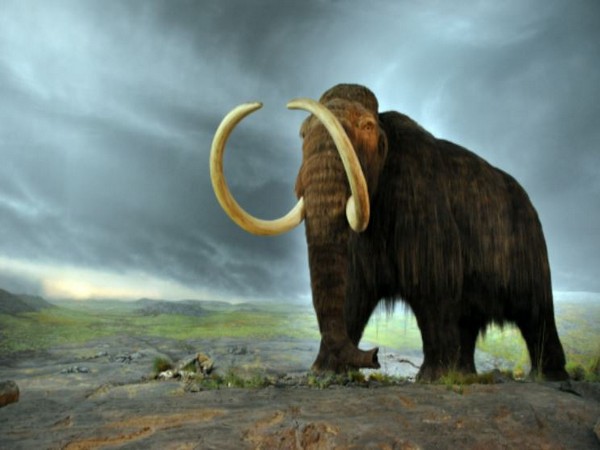
Representative image

Washington [US], May 21 (ANI) An international study has offered the first global assessment of all the terrestrial vertebrate species that have not yet been declared extinct and identifies more than 500 species considered 'lost'. These species have not been seen by anyone in more than 50 years.
Researchers reviewed information on 32,802 species from the International Union for Conservation of Nature Red List of Threatened Species (IUCN Red List) and identified 562 lost species. Their findings appear in the journal Animal Conservation.
The IUCN Red List defines extinct as 'when there is no reasonable doubt the last individual of a species has died,' which can be challenging to verify. According to Simon Fraser University biodiversity professor and study co-author Arne Mooers, the Red List categorizes 75 of these 562 lost species as 'possibly extinct.' The researchers note the existence of many species with an uncertain conservation status may become increasingly problematic as the extinction crisis worsens and more species go missing.
A total of 311 terrestrial vertebrate species have been declared extinct since 1500, meaning 80 per cent more species are considered lost than have been declared extinct.
Reptiles led the way with 257 species considered lost, followed by 137 species of amphibians, 130 species of mammals and 38 species of birds. Most of these lost animals were last seen in megadiverse countries such as Indonesia (69 species), Mexico (33 species) and Brazil (29 species).
While not surprising, this concentration is important, according to researchers. "The fact most of these lost species are found in megadiverse tropical countries is worrying, given such countries are expected to experience the highest numbers of extinction in the coming decades," says study lead author Tom Martin from the UK's Paignton Zoo.
Mooers, who anchored the study, says: "While theoretical estimates of ongoing 'extinction rates' are fine and good, looking hard for actual species seems better."
Gareth Bennett, an SFU undergraduate student who did much of the data combing, adds: "We hope this simple study will help make these lost species a focus in future searches."
The authors suggest that future survey efforts concentrate on the identified 'hotspots' where the existence of many species remains in question. More funding would be needed to support such hotspot-targeted fieldwork to either rediscover lost species or to remove the reasonable doubt that a particular lost species does, in fact, still exist. (ANI)


Get the App

What to Read Next

Science

New method guides magnetism without magnets

New method guides magnetism without magnets

Researchers at Paul Scherrer Institute PSI have demonstrated an innovative method to control magnetism in materials using an energy-efficient electric field.

Read More
Science

Amphibians bounce-back from Earth’s greatest mass extinction

Amphibians bounce-back from Earth’s greatest mass extinction

Researchers at the University of Bristol discovered that ancient frog ancestors survived the biggest mass extinction of species by eating on freshwater prey that evaded terrestrial predators.

Read More
Science

New insights into how cancer evades the immune system: Study

New insights into how cancer evades the immune system: Study

Immunotherapy research primarily focuses on better recognition of cancer cells by the body's own immune system. Researchers at Amsterdam UMC and Moffitt Cancer Center have taken a different approach.

Read More
Science

Scientists use AI to better understand nanoparticles: Study

Scientists use AI to better understand nanoparticles: Study

A group of scientists has created a way to illuminate the dynamic behavior of nanoparticles, which are essential components in the production of pharmaceuticals, electronics, and industrial and energy-conversion materials.

Read More
Science

New device could allow you to taste cake in virtual reality

New device could allow you to taste cake in virtual reality

The 'e-Taste' interface employs sensors and wireless chemical dispensers to enable remote taste perception, often known as gestation. Field testing done by researchers at The Ohio State University confirmed the device's ability to digitally simulate a range of taste intensities, while still offering variety and safety for the user.

Read More
Science

Strand Life Sciences launches portal for rare disease diagnosis

Strand Life Sciences launches portal for rare disease diagnosis

Marking Rare Disease Day, Strand Life Sciences, a subsidiary of Reliance Industries and a leading genomics research company, has launched the StrandOmics Portal, an innovative digital platform designed to assist doctors in diagnosing rare diseases more efficiently.

Read More
Science

Study reveals impact of animals as architects of Earth

Study reveals impact of animals as architects of Earth

A new study led by Professor Gemma Harvey from Queen Mary University of London has revealed how hundreds of species shape the landscapes we depend on, from termite mounds visible from space to beavers creating wetlands and hippos carving drainage systems.

Read More
Science

Opposing arrows of time emerge from certain quantum systems

Opposing arrows of time emerge from certain quantum systems

Researchers at the University of Surrey made a thought-provoking discovery. A new study reveals that opposing arrows of time can theoretically emerge from certain quantum systems.

Read More
Science

COVID-19 severity may be predicted by White Blood Cell Count

COVID-19 severity may be predicted by White Blood Cell Count

A COVID-19 diagnosis is no longer as frightening as it used to be, thanks to developments in treatment choices. However, a new study reveals that leukocyte (white blood cell) count may now be used to identify who is more likely to develop more significant disease symptoms.

Read More
Science

Seals can essentially act as 'smart sensors': Study

Seals can essentially act as 'smart sensors': Study

A new study by marine biologists reports that seals can essentially act as 'smart sensors' for monitoring fish populations in the ocean's eerily dim 'twilight zone.'

Read More
Home About Us Our Products Advertise Contact Us Terms & Condition Privacy Policy

Copyright © aninews.in | All Rights Reserved.


