

ADD ANI AS A TRUSTED SOURCE
googleads
Menu
Science

Study hints long term impacts of higher red blood cell transfusions among premature babies

Virginia [US], January 3 (ANI): A study published in 'The New England Journal of Medicine' compared thresholds for blood transfusions in premature babies to examine their severe and long-term impacts.

ANI Jan 03, 2021 08:55 IST googleads

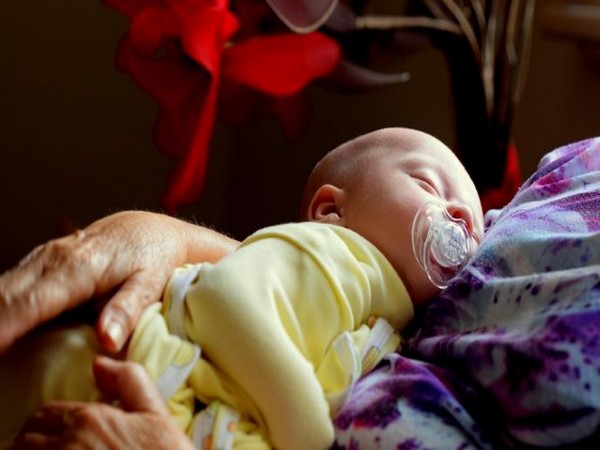
Representative Image

Virginia [US], January 3 (ANI): A study published in 'The New England Journal of Medicine' compared thresholds for blood transfusions in premature babies to examine their severe and long-term impacts.
A team lead by researchers of George Mason University claimed that very low birth weight infants are at high risk for anaemia and often need blood transfusions to survive.
Some doctors use a higher level and some use a lower level of red blood cells to order a transfusion. A National Institutes of Health-funded study suggests that providing a higher threshold of red cells within clinically accepted limits (i.e., using a higher level of red blood cells when ordering a transfusion) offers no advantage in survival or reduction in neurological impairment over a lower threshold.
Very preterm infants (born before 29 weeks of pregnancy) and those weighing less than 1,000 grams (slightly more than 2 pounds) are at high risk for anaemia because of their early stage of development, reduced ability to produce red blood cells, and need for blood sampling as part of their intensive medical care.
Previous studies suggest that anaemic infants who received transfusions at a higher haemoglobin threshold within the currently accepted range would have a lower risk of death or developmental problems. Measuring haemoglobin, a protein produced in red blood cells, indicates the proportion of red blood cells. Haemoglobin transfusion thresholds for preterm infants vary according to weight, stage of maturity and other factors.
Of 845 infants assigned to a higher haemoglobin threshold, 50.1% died or survived with neurodevelopmental impairment, compared to 49.8% of 847 infants assigned to a lower threshold. When the two-component outcomes were evaluated separately, the two groups also had similar rates of death (16.2% vs. 15%) and of neurodevelopmental impairment (39.6% vs 40.3%).
The authors evaluated the babies at two years of age and conclude that a higher haemoglobin threshold increased the number of transfusions, but did not improve the chance of survival without neurodevelopmental impairment.
"The findings are likely to be used to guide transfusion practice in the future for these infants; studies in premature infants are needed to guide care for these small and vulnerable infants; studies funded by NIH in multi-site networks are vitally important to the health of these fragile babies," explains Higgins. (ANI)


Get the App

What to Read Next

Science

Amphibians bounce-back from Earth’s greatest mass extinction

Amphibians bounce-back from Earth’s greatest mass extinction

Researchers at the University of Bristol discovered that ancient frog ancestors survived the biggest mass extinction of species by eating on freshwater prey that evaded terrestrial predators.

Read More
Science

New insights into how cancer evades the immune system: Study

New insights into how cancer evades the immune system: Study

Immunotherapy research primarily focuses on better recognition of cancer cells by the body's own immune system. Researchers at Amsterdam UMC and Moffitt Cancer Center have taken a different approach.

Read More
Science

Scientists use AI to better understand nanoparticles: Study

Scientists use AI to better understand nanoparticles: Study

A group of scientists has created a way to illuminate the dynamic behavior of nanoparticles, which are essential components in the production of pharmaceuticals, electronics, and industrial and energy-conversion materials.

Read More
Science

COVID-19 severity may be predicted by White Blood Cell Count

COVID-19 severity may be predicted by White Blood Cell Count

A COVID-19 diagnosis is no longer as frightening as it used to be, thanks to developments in treatment choices. However, a new study reveals that leukocyte (white blood cell) count may now be used to identify who is more likely to develop more significant disease symptoms.

Read More
Science

New technology enhances gravitational-wave detection: Study

New technology enhances gravitational-wave detection: Study

A team of physicists led by Jonathan Richardson of the University of California, Riverside, demonstrated how new optical technology can extend the detection range of gravitational-wave observatories such as the Laser Interferometer Gravitational-Wave Observatory, or LIGO, and pave the way for future observatories.

Read More
Home About Us Our Products Advertise Contact Us Terms & Condition Privacy Policy

Copyright © aninews.in | All Rights Reserved.


