

ADD ANI AS A TRUSTED SOURCE
googleads
ANI Logo
Menu
Science

Study highlights noticing one driving hazard leads to other being unnoticed

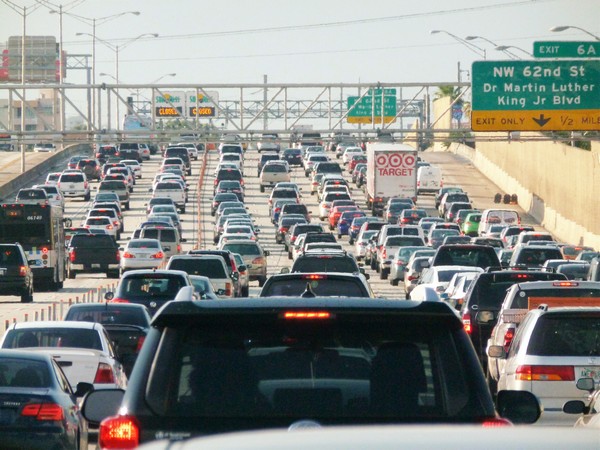
Washington D.C. [USA], July 28 (ANI): People who notice one traffic hazard are less likely to notice other hazards, says a recent study. The finding applies both on the driver training and the development of automated vehicle safety.

ANI Jul 28, 2019 23:51 IST googleads

Talking about the results, Robert Sall, first author of the study, said:

Washington D.C. [USA], July 28 (ANI): People who notice one traffic hazard are less likely to notice other hazards, says a recent study. The finding applies both on the driver training and the development of automated vehicle safety.
The study was published in the journal -- 'Accident Analysis and Prevention.'
Jing Feng, the corresponding author of the research, said: "This is a phenomenon called a subsequent search miss (SSM), which was first described in the context of doctors evaluating medical images -- their ability to spot a problem was hindered if they had already found another problem in the same image."
To bring into the test, researchers conducted three studies. Each study asked participants to evaluate 100 traffic images and identify any potential hazards that would prevent them from driving in a given direction.
Each image contained between zero and two hazards. Some hazards were "high-salience" targets, meaning they were glaringly obvious -- like a red sports car. Other hazards were low-salience targets such as drably dressed pedestrians.
In the first study, the researchers gave 20 participants approximately one second to identify any hazards. The participants were able to detect 70 per cent of low-salience targets if they were the only hazard in the scene.
But only 30 per cent of the low-salience targets were identified when there were two hazards in the scene. In other words, low-salience hazards were 40 per cent less likely to be identified when they appeared in the same scene as a high-salience hazard.
In the final study, researchers gave 30 participants up to five seconds to identify any hazards -- but there was a twist. Scenes were introduced as having either high risk or low risk of containing multiple targets.
Talking about the results, Robert Sall, first author of the study, said: "Here, we found that participants spent more time evaluating traffic scenes after being told the scenes were high risk. However, there was still a distinct pattern of performance that could be attributed to SSMs."
"Our findings will also likely be useful for those whose work involves traffic accident diagnostics," Feng says.
"It's now clear that SSMs have the potential to prevent drivers from noticing important pieces of visual information, which may contribute to lapses in driving performance. A great deal of work now needs to be done to determine the scope of the problem and what we can do about it, "he concluded. (ANI)

Get the App

What to Read Next

Science

Key protein helps prevent excessive bone loss in osteoporosis

Key protein helps prevent excessive bone loss in osteoporosis

Osteoporosis, a disorder characterised by porous and weak bones, is a major hazard to skeletal health. As the foundation of the human body, bones provide critical structural support. When bone mass decreases, it not only weakens this support but also lowers general function, resulting in a lower quality of life.

Read More
Science

Study reveals positive effect of midazolam after cardiac arrest

Study reveals positive effect of midazolam after cardiac arrest

When the patient required anesthesia following successful resuscitation, midazolam increased the likelihood of adequate oxygen saturation and CO2 levels in the blood. The risk of a subsequent decline in blood pressure or circulatory arrest did not increase.

Read More
Science

Men have greater risk of fractures from falls than women: Study

Men have greater risk of fractures from falls than women: Study

A recent study titled "A meta-analysis of previous falls and subsequent fracture risk in cohort studies" found links between self-reported falls and increased fracture risk, as well as a slightly greater risk of fracture in men than in women.

Read More
Science

Researchers create method to detect landslides tsunamis

Researchers create method to detect landslides tsunamis

Researchers have developed a method for remotely detecting massive landslides within minutes of their occurrence and determining whether they are near open water and pose a tsunami hazard.

Read More
Science

Peregrine falcons set out false alarms to easily catch prey

Peregrine falcons set out false alarms to easily catch prey

Researchers have discovered proof that the birds purposefully exhaust their victims to increase the success of subsequent hunts.

Read More
Science

Returning home for vacations may help bilingual children

Returning home for vacations may help bilingual children

It is difficult to keep a language alive in the family. Many people who relocate to new nations discover that their native language has become a heritage language, passed down to subsequent generations with variable degrees of success.

Read More
Science

Employee surveys may miss out uncovering toxic leadership practic

Employee surveys may miss out uncovering toxic leadership practic

According to new research from Binghamton University's School of Management (SOM), standard and excessively simplistic questionnaires merely scratch the surface of what employees think of their leaders, and negative behaviour may be slipping through the cracks.

Read More
Science

Researchers devise new test to detect cervical cancers

Researchers devise new test to detect cervical cancers

Scientists at the National Cancer Institute (NCI)-designated Montefiore Einstein Cancer Centre (MECC) have devised a test for detecting a kind of cervical cancer that Pap tests frequently miss in potentially significant discoveries for cervical cancer screening

Read More
Science

Research reveals self-driving cars could make traffic slower

Research reveals self-driving cars could make traffic slower

According to a new study, "connected" vehicles, which wirelessly share data with one another, greatly enhance travel time through intersections – while automated vehicles can actually slow travel time through intersections if they are not connected to one another. The culprit? Safety.

Read More
Science

Self-driving cars could make traffic slower: Research

Self-driving cars could make traffic slower: Research

According to a new study, "connected" vehicles, which wirelessly share data with one another, greatly enhance travel time through intersections – while automated vehicles can actually slow travel time through intersections if they are not connected to one another. The culprit? Safety.

Read More
Home About Us Our Products Advertise Contact Us Terms & Condition Privacy Policy

Copyright © aninews.in | All Rights Reserved.




