

ADD ANI AS A TRUSTED SOURCE
googleads
ANI Logo
Menu
Science

Study highlights importance of routinely imaging brain tumour patients

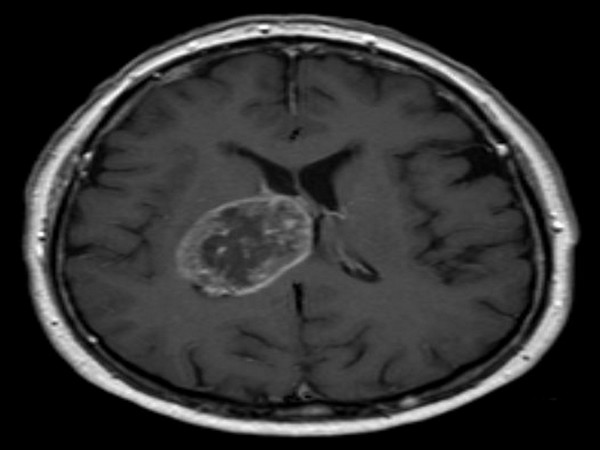
London [UK], February 13 (ANI): A team of researchers during a recent study explored the best way to monitor brain tumour. The team consisted of experts from the UK and stakeholders who met to discuss the value of routinely imaging brain tumour patients to assess their tumour treatment response, which is known as "interval imaging".

ANI Feb 13, 2021 23:38 IST googleads

Representative Image

London [UK], February 13 (ANI): A team of researchers during a recent study explored the best way to monitor brain tumour. The team consisted of experts from the UK and stakeholders who met to discuss the value of routinely imaging brain tumour patients to assess their tumour treatment response, which is known as "interval imaging".
The results of the study have been published in the open-access journal 'Frontiers in Oncology'.
Their verdict: there is very limited evidence to support the practice at present. However, the article also discusses how future research could determine and maximise the value of interval imaging by assessing its cost-effectiveness and how it affects patient quality of life, treatment, and survival.
Medical staff use brain scans at predetermined times to assess if a brain tumour patient is responding to treatment, but scanning frequency can range from every few weeks to every few months. Different countries and hospitals use different approaches, but what is the best approach, and is any of this based on science?
Getting things right is important. Not scanning someone enough could mean that doctors miss the signs that a patient requires further treatment. Conversely, scanning someone excessively is inconvenient and impractical for patients and medical staff alike, and can cause patient anxiety, especially if the results of the scan are unclear.
Scanning patients is also expensive, and with limited budgets, healthcare facilities need to use their resources as cost-effectively as possible. Most interval imaging aims to find increases in tumour size, but tumours grow differently in different patients, which sometimes makes it difficult to draw concrete conclusions from interval imaging results. Would patients be better off receiving scans only if they experience new symptoms?
A group of experts and other stakeholders met to discuss these issues in London in 2019. The group was diverse and included numerous people with an interest in these issues. "Charity representatives, neuro-oncologists, neuro-surgeons, neuro-radiologists, neuro-psychologists, trialists, health economists, data scientists, and the imaging industry were all represented," said Dr. Thomas Booth of King's College London and the lead author on the article. Their findings are presented in this latest Position Statement.
The group discussed the evidence behind current interval imaging practices in the UK. "We found that there is very little evidence to support the currently used imaging interval schedules and that the status quo is no more than considered opinion," said Prof. Michael Jenkinson of the University of Liverpool, and senior author of the article.
So, how can we determine if interval imaging is valuable? The meeting participants also discussed a variety of potential research approaches that could cast light on the most important factors - patient's quality of life, patient's survival, and cost-effectiveness. However, this is not without its challenges.
"The treatment complexity and relative rarity of brain tumours mean that solutions beyond traditional 'randomised controlled trials' alone are required to obtain the necessary evidence," said Booth. "We propose a range of incremental research solutions."
These include economic and statistical analyses, surveys to measure patient attitudes and quality of life while undergoing interval imaging, and even machine-learning methods to obtain more accurate predictions about the value of interval imaging from large datasets. Future targeted research is key to assessing and maximising the potential of interval imaging, and this article lights the way. (ANI)


Get the App

What to Read Next

Science

Amphibians bounce-back from Earth’s greatest mass extinction

Amphibians bounce-back from Earth’s greatest mass extinction

Researchers at the University of Bristol discovered that ancient frog ancestors survived the biggest mass extinction of species by eating on freshwater prey that evaded terrestrial predators.

Read More
Science

Scientists use AI to better understand nanoparticles: Study

Scientists use AI to better understand nanoparticles: Study

A group of scientists has created a way to illuminate the dynamic behavior of nanoparticles, which are essential components in the production of pharmaceuticals, electronics, and industrial and energy-conversion materials.

Read More
Science

COVID-19 severity may be predicted by White Blood Cell Count

COVID-19 severity may be predicted by White Blood Cell Count

A COVID-19 diagnosis is no longer as frightening as it used to be, thanks to developments in treatment choices. However, a new study reveals that leukocyte (white blood cell) count may now be used to identify who is more likely to develop more significant disease symptoms.

Read More
Science

New technology enhances gravitational-wave detection: Study

New technology enhances gravitational-wave detection: Study

A team of physicists led by Jonathan Richardson of the University of California, Riverside, demonstrated how new optical technology can extend the detection range of gravitational-wave observatories such as the Laser Interferometer Gravitational-Wave Observatory, or LIGO, and pave the way for future observatories.

Read More
Science

Astronomers find the smallest main-belt asteroids ever detected:

Astronomers find the smallest main-belt asteroids ever detected:

The majority of known asteroids orbit inside the main asteroid belt, which is positioned between Mars and Jupiter at an average distance of around 250 million km from Earth. Since the discovery of the first asteroid in 1801, about 750.000 asteroids have been identified, primarily in the last decade thanks to several optical surveys that examine the sky on clear nights.

Read More
Science

Study finds connection between quantum theory, information theory

Study finds connection between quantum theory, information theory

"Our results have no clear or direct application right now. It's basic research that lays the foundation for future technologies in quantum information and quantum computers. There's enormous potential for complete discoveries in many different research fields," said Guilherme B Xavier, a researcher in quantum communication at Linkoping University, Sweden.

Read More
Science

When devices can read human emotions without a camera: Study

When devices can read human emotions without a camera: Study

Tokyo Metropolitan University researchers employed long-term skin conductance measurements to distinguish between emotions. Volunteers were given videos representing frightening scenarios, family bonding, and humour, while their skin conductance was measured.

Read More
Science

'Nuroscience study results can be better predicted by AI'

'Nuroscience study results can be better predicted by AI'

Large language models, a type of AI that analyses text, can anticipate the results of proposed neuroscience studies more correctly than human experts, according to a new study led by UCL (University College London) researchers.

Read More
Science

Thermal imaging may help fruits, veggies stay fresher longer: Study

Thermal imaging may help fruits, veggies stay fresher longer: Study

Before your favourite produce arrives at the grocery store, it must be carefully harvested and stored for extended periods of time. A recent University of Georgia assessment argues that new temperature sensing devices could make that procedure considerably easier, as agricultural issues are exacerbated by changing climates.

Read More
Science

Cancer cells of fat may enhance cancer treatment

Cancer cells of fat may enhance cancer treatment

A study by Van Andel Institute scientists suggests that restricting cancer cells' access to fat may enhance the effectiveness of certain cancer treatments.

Read More
Home About Us Our Products Advertise Contact Us Terms & Condition Privacy Policy

Copyright © aninews.in | All Rights Reserved.


