

ADD ANI AS A TRUSTED SOURCE
googleads
ANI Logo
Menu
Science

Study focuses on using landscape connectivity to control deadly mosquito-borne viruses

Washington [US], February 26 (ANI): A recent study led researchers at Yale School of the Environment has developed a new method for tracking how the deadly yellow fever mosquito moves through the environment, a potentially critical tool for controlling the insect and the diseases it spreads.

ANI Feb 26, 2021 23:24 IST googleads

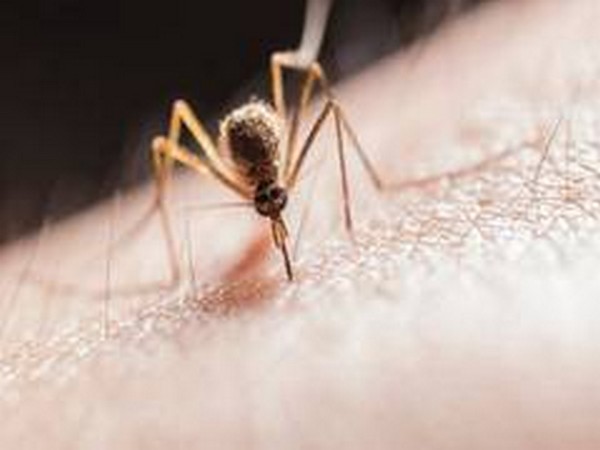
Representative Image

Washington [US], February 26 (ANI): A recent study led researchers at Yale School of the Environment has developed a new method for tracking how the deadly yellow fever mosquito moves through the environment, a potentially critical tool for controlling the insect and the diseases it spreads.
The recent study was published in the journal Proceedings of the National Academy of Sciences.
The yellow fever mosquito (Aedes aegypti) is a main vector of deadly diseases like dengue fever, chikungunya, and the Zika virus, which result in hundreds of thousands of deaths worldwide each year. Because Ae. aegypti prefers to bite humans and there are no vaccines for many of these diseases they carry, developing methods to control these insects is imperative in the fight to control illness.
A Yale-led research team developed a new method to track how Ae. aegypti move through the environment. By combining genetic data from the mosquitoes and environmental data from satellites, the authors mapped "landscape connectivity" -- defined as how a landscape facilitates the movements of organisms and their genes across large areas. In particular, the researchers developed a new workflow that more effectively models how Ae. aegypti are moving through the landscape in the southern U.S.
"Connectivity maps allow managers to make informed decisions based on how mosquitoes are likely to move through a landscape," says Evlyn Pless, a postdoctoral researcher at the University of California, Davis and a PhD graduate of Yale's Department of Ecology and Evolutionary Biology. "Our results suggest that in the southern U.S., Ae. aegypti travels by a mix of natural and human-aided dispersal, taking advantage of regions that are warmer and flatter, as well as human transportation networks."
Plessco-authored the paper with Giuseppe Amatulli, a research scientist with the Center for Research Computing and the Yale School of the Environment; Norah Saarman, assistant professor of biology at Utah State University; and Jeffrey Powell and Adalgisa Caccone from the Department of Ecology and Evolutionary Biology at Yale.
Now, the most common method for controlling invasive, disease-carrying species like Ae. aegypti is by using pesticides, which are not eco-friendly. "We now know some pesticides cause environmental harm, including harm to humans," says Saarman. "At the same time, mosquitoes are evolving resistance to the pesticides that we have found to be safe for the environment.
"This creates a challenge that can only be solved by more information on where mosquitoes live and how they get around."
One cutting-edge method of control is releasing genetically-modified mosquitoes into existing populations, in an effort to stunt reproduction and spread of the disease. The authors say they expect connectivity maps like those they've created to be useful in designing more strategic releases of modified mosquitoes.
"By integrating machine learning with an optimization process, our approach overcomes constraints of previous methods and should be helpful for more precise planning of vector control actions," says Amatulli.
The authors also believe this novel advance could have broader applications, including in conservation and environmental protection.
"Connectivity maps can also be essential for the protection of endangered native species,'' says Pless, "for example, in designing corridors to connect fragmented populations." (ANI)


Get the App

What to Read Next

Science

New method guides magnetism without magnets

New method guides magnetism without magnets

Researchers at Paul Scherrer Institute PSI have demonstrated an innovative method to control magnetism in materials using an energy-efficient electric field.

Read More
Science

Amphibians bounce-back from Earth’s greatest mass extinction

Amphibians bounce-back from Earth’s greatest mass extinction

Researchers at the University of Bristol discovered that ancient frog ancestors survived the biggest mass extinction of species by eating on freshwater prey that evaded terrestrial predators.

Read More
Science

New insights into how cancer evades the immune system: Study

New insights into how cancer evades the immune system: Study

Immunotherapy research primarily focuses on better recognition of cancer cells by the body's own immune system. Researchers at Amsterdam UMC and Moffitt Cancer Center have taken a different approach.

Read More
Science

Scientists use AI to better understand nanoparticles: Study

Scientists use AI to better understand nanoparticles: Study

A group of scientists has created a way to illuminate the dynamic behavior of nanoparticles, which are essential components in the production of pharmaceuticals, electronics, and industrial and energy-conversion materials.

Read More
Science

New device could allow you to taste cake in virtual reality

New device could allow you to taste cake in virtual reality

The 'e-Taste' interface employs sensors and wireless chemical dispensers to enable remote taste perception, often known as gestation. Field testing done by researchers at The Ohio State University confirmed the device's ability to digitally simulate a range of taste intensities, while still offering variety and safety for the user.

Read More
Science

Study reveals impact of animals as architects of Earth

Study reveals impact of animals as architects of Earth

A new study led by Professor Gemma Harvey from Queen Mary University of London has revealed how hundreds of species shape the landscapes we depend on, from termite mounds visible from space to beavers creating wetlands and hippos carving drainage systems.

Read More
Science

Opposing arrows of time emerge from certain quantum systems

Opposing arrows of time emerge from certain quantum systems

Researchers at the University of Surrey made a thought-provoking discovery. A new study reveals that opposing arrows of time can theoretically emerge from certain quantum systems.

Read More
Science

COVID-19 severity may be predicted by White Blood Cell Count

COVID-19 severity may be predicted by White Blood Cell Count

A COVID-19 diagnosis is no longer as frightening as it used to be, thanks to developments in treatment choices. However, a new study reveals that leukocyte (white blood cell) count may now be used to identify who is more likely to develop more significant disease symptoms.

Read More
Science

Seals can essentially act as 'smart sensors': Study

Seals can essentially act as 'smart sensors': Study

A new study by marine biologists reports that seals can essentially act as 'smart sensors' for monitoring fish populations in the ocean's eerily dim 'twilight zone.'

Read More
Science

New technology enhances gravitational-wave detection: Study

New technology enhances gravitational-wave detection: Study

A team of physicists led by Jonathan Richardson of the University of California, Riverside, demonstrated how new optical technology can extend the detection range of gravitational-wave observatories such as the Laser Interferometer Gravitational-Wave Observatory, or LIGO, and pave the way for future observatories.

Read More
Home About Us Our Products Advertise Contact Us Terms & Condition Privacy Policy

Copyright © aninews.in | All Rights Reserved.


