

ADD ANI AS A TRUSTED SOURCE
googleads
ANI Logo
Menu
Science

Study focuses on genes that help cancer cells to penetrate brain

Moscow [Russia], Aug 16 (ANI): An international team of researchers reviewed scientific articles on proteins (and genes encoding them) that help cancer cells enter the brain. The study, that tried to understand the processes that facilitate the formation of metastases in the brain, was published in the journal Trends in Cancer.

ANI Aug 16, 2020 14:49 IST googleads

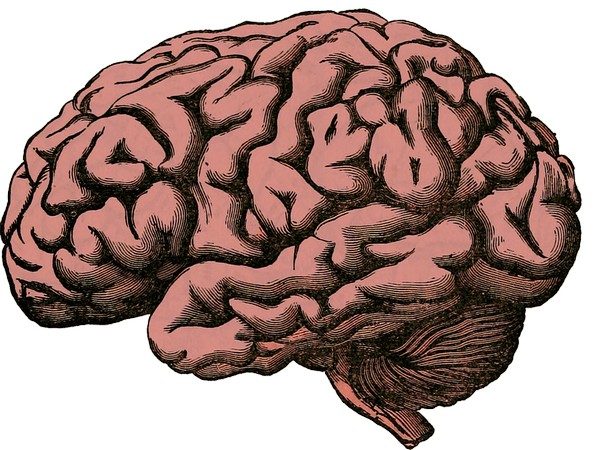
Representative image.

Moscow [Russia], Aug 16 (ANI): An international team of researchers reviewed scientific articles on proteins (and genes encoding them) that help cancer cells enter the brain. The study, that tried to understand the processes that facilitate the formation of metastases in the brain, was published in the journal Trends in Cancer.
Brain tissues are very sensitive to changes in the levels of many substances and to the penetration of microorganisms and immune cells, but they need a large number of nutrients and oxygen. Satisfying the needs of the brain requires a dense network of thin blood vessels, covered with a special shell that lets in essential substances and blocks all other compounds and cells.
This shell, consisting of adjacent endothelial cells tightly connected to each other by special proteins, forms the blood-brain barrier (BBB), which prevents the free exchange of substances between blood vessels and brain tissues.
BBB works very well (letting in less than 2 per cent of the molecules), but it is still not perfect: cancer cells sometimes manage to slip through it and trigger the development of metastases; since many drugs cannot get into the brain, this significantly complicates cancer treatment and worsens the prognosis for patients with metastases. The authors of the article decided to find out which genes give cancer cells such a 'superpower'.
'Metastasis formation is controlled by proteins and genes encoding these proteins. The purpose of this work was to systematise experimentally or clinically proven findings of the proteins and microRNAs that allow migration of tumour cells to the brain. It turned out that their production is typical for a number of metastases, while most of the cell molecules described in the literature are unique for a particular type of tumour.
Thus, the possibility of regulating genes that stimulate the migration of tumour cells to the brain may be a challenge faced by doctors in reducing the formation of intracerebral metastases in the future,' said Ilya Ulasov, one of the authors, a leading researcher at the Institute of Regenerative Medicine, Sechenov University.
Tumour cells are known to enter the brain both through dense contacts between the cells of the tunicae (layers of the blood vessels) and through these cells themselves. In the first case, cancer cells use enzymes and/or microRNAs to disrupt the structure of the dense contacts and increase the permeability of the BBB.
One of these enzymes is cathepsin C: it destroys the proteins of the dense contacts, and its inhibitors (substances that slow down its action) can suppress the growth of metastases in breast cancer. Two other enzymes - seprase and urokinase-type plasminogen activator - have shown similar effects in melanoma, and some metalloproteinases may be possible targets for anti-cancer therapy. Another protein, placental growth factor, triggers a chain of reactions to facilitate the development of metastases in lung, gastric or colorectal cancer.
MicroRNAs enable communication between cancer cells and their environment, including BBB cells and proteins. For example, miR-105 affects ZO-1 protein, contributing to the formation of metastases in breast cancer, while miR-143-3p can enhance BBB permeability in lung cancer.
The second way - penetration of cancer cells through BBB cells - is possible due to proteins of the cell wall, integrins, and certain groups of enzymes. In several types of cancer, metastasis cells showed an increased content of integrins avb3 and avb8. It is possible that they are involved in the formation of metastases in the brain and can serve as a biomarker of the disease. Another integrin, VLA-4, is produced in the metastases of most melanoma patients and promotes the binding of cancer cells and BBB cells, which opens the way to the brain.
In total, the authors reviewed 44 proteins, described the mechanism of their influence on the formation of metastases and listed the genes encoding them. The study will help scientists work out new ways to prevent and treat cancer, stroke and Alzheimer's disease, which also affect BBB integrity. (ANI)


Get the App

What to Read Next

Science

New method guides magnetism without magnets

New method guides magnetism without magnets

Researchers at Paul Scherrer Institute PSI have demonstrated an innovative method to control magnetism in materials using an energy-efficient electric field.

Read More
Science

Amphibians bounce-back from Earth’s greatest mass extinction

Amphibians bounce-back from Earth’s greatest mass extinction

Researchers at the University of Bristol discovered that ancient frog ancestors survived the biggest mass extinction of species by eating on freshwater prey that evaded terrestrial predators.

Read More
Science

New insights into how cancer evades the immune system: Study

New insights into how cancer evades the immune system: Study

Immunotherapy research primarily focuses on better recognition of cancer cells by the body's own immune system. Researchers at Amsterdam UMC and Moffitt Cancer Center have taken a different approach.

Read More
Science

Scientists use AI to better understand nanoparticles: Study

Scientists use AI to better understand nanoparticles: Study

A group of scientists has created a way to illuminate the dynamic behavior of nanoparticles, which are essential components in the production of pharmaceuticals, electronics, and industrial and energy-conversion materials.

Read More
Science

New device could allow you to taste cake in virtual reality

New device could allow you to taste cake in virtual reality

The 'e-Taste' interface employs sensors and wireless chemical dispensers to enable remote taste perception, often known as gestation. Field testing done by researchers at The Ohio State University confirmed the device's ability to digitally simulate a range of taste intensities, while still offering variety and safety for the user.

Read More
Science

Strand Life Sciences launches portal for rare disease diagnosis

Strand Life Sciences launches portal for rare disease diagnosis

Marking Rare Disease Day, Strand Life Sciences, a subsidiary of Reliance Industries and a leading genomics research company, has launched the StrandOmics Portal, an innovative digital platform designed to assist doctors in diagnosing rare diseases more efficiently.

Read More
Science

Study reveals impact of animals as architects of Earth

Study reveals impact of animals as architects of Earth

A new study led by Professor Gemma Harvey from Queen Mary University of London has revealed how hundreds of species shape the landscapes we depend on, from termite mounds visible from space to beavers creating wetlands and hippos carving drainage systems.

Read More
Science

Opposing arrows of time emerge from certain quantum systems

Opposing arrows of time emerge from certain quantum systems

Researchers at the University of Surrey made a thought-provoking discovery. A new study reveals that opposing arrows of time can theoretically emerge from certain quantum systems.

Read More
Science

COVID-19 severity may be predicted by White Blood Cell Count

COVID-19 severity may be predicted by White Blood Cell Count

A COVID-19 diagnosis is no longer as frightening as it used to be, thanks to developments in treatment choices. However, a new study reveals that leukocyte (white blood cell) count may now be used to identify who is more likely to develop more significant disease symptoms.

Read More
Science

Seals can essentially act as 'smart sensors': Study

Seals can essentially act as 'smart sensors': Study

A new study by marine biologists reports that seals can essentially act as 'smart sensors' for monitoring fish populations in the ocean's eerily dim 'twilight zone.'

Read More
Home About Us Our Products Advertise Contact Us Terms & Condition Privacy Policy

Copyright © aninews.in | All Rights Reserved.


