

ADD ANI AS A TRUSTED SOURCE
googleads
ANI Logo
Menu
Science

Study finds why some COVID cases are more critical than others

New Haven [US], December 20 (ANI): A new study has found that some COVID cases are more critical than others due to the antiviral inflammatory response to the virus, with the help of humanized mice.

ANI Dec 20, 2021 14:01 IST googleads

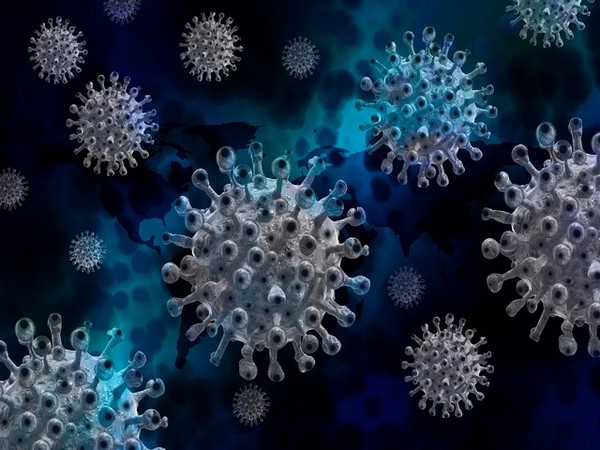
Representative image

New Haven [US], December 20 (ANI): A new study has found that some COVID cases are more critical than others due to the antiviral inflammatory response to the virus, with the help of humanized mice.
The study, led by Yale University's Richard Flavell, has been published in the 'Nature Biotechnology Journal'.
The study also showed that two well-known therapies - the use of monoclonal antibodies and the steroid dexamethasone -- can help treat COVID-19 infections. But in the case of the antibodies, treatment is only effective if administered early in the course of the disease. In the case of steroids, it's only effective if administered during later stages of the disease.
The different immune system responses to the virus as observed in standard laboratory animals and humans have made it difficult for scientists to pinpoint the tipping point between mild and severe cases of COVID-19. But Flavell's mice, which were engineered to have a human-like immune system, offered an opportunity to answer the question.
"If you infect a standard laboratory mouse with SARS-CoV-2 they will get infected, but not get seriously ill," said Flavell, Sterling Professor of Immunobiology at Yale and senior author of the paper.
"But our humanized mice get sick and just don't get better. Their whole immune system is on fire," he added.
The research team -- which was led by first author Esen Sefik, a Howard Hughes Medical Institute (HHMI) Fellow at the Damon Runyon Cancer Research Foundation -- introduced the SARS-CoV-2 virus taken from seriously ill human patients into the nasal passages of their humanized mice and then followed the course of the disease.
They found that the infected mice exhibited the same symptoms as severely ill human patients, such as lung damage, weight loss, and a heightened, persistent inflammatory immune response that damaged tissues.
They then treated the mice with monoclonal antibodies provided by Michel Nussenzweig, an immunologist at Rockefeller University and, like Flavell, an HHMI investigator. These antibodies, which specifically targeted the virus, were effective if given before or very early after infection but did little to stifle symptoms if administered in later stages of infections, they found.
Conversely, during the early stages of infection, the immune suppressant dexamethasone was fatal to mice when it suppressed the initial immune response that was crucial to combat the virus. However, it helped clear infection during later stages of the disease by suppressing the inflammatory response that had begun damaging organs.
"Early in the course of the disease, a strong immune response is crucial for survival. Later in the disease, it can be fatal," Sefik said.
The humanized mice models might also reveal strong clues to the causes and potential treatments of so-called long and severe COVID, the scientists said.
The research was done in collaboration with Yale's Akiko Iwasaki, Craig Wilen, Yuval Kluger, Eric Meffre, and Stephanie Halene. (ANI)


Get the App

What to Read Next

Science

Amphibians bounce-back from Earth’s greatest mass extinction

Amphibians bounce-back from Earth’s greatest mass extinction

Researchers at the University of Bristol discovered that ancient frog ancestors survived the biggest mass extinction of species by eating on freshwater prey that evaded terrestrial predators.

Read More
Science

Scientists use AI to better understand nanoparticles: Study

Scientists use AI to better understand nanoparticles: Study

A group of scientists has created a way to illuminate the dynamic behavior of nanoparticles, which are essential components in the production of pharmaceuticals, electronics, and industrial and energy-conversion materials.

Read More
Science

COVID-19 severity may be predicted by White Blood Cell Count

COVID-19 severity may be predicted by White Blood Cell Count

A COVID-19 diagnosis is no longer as frightening as it used to be, thanks to developments in treatment choices. However, a new study reveals that leukocyte (white blood cell) count may now be used to identify who is more likely to develop more significant disease symptoms.

Read More
Science

New technology enhances gravitational-wave detection: Study

New technology enhances gravitational-wave detection: Study

A team of physicists led by Jonathan Richardson of the University of California, Riverside, demonstrated how new optical technology can extend the detection range of gravitational-wave observatories such as the Laser Interferometer Gravitational-Wave Observatory, or LIGO, and pave the way for future observatories.

Read More
Science

Astronomers find the smallest main-belt asteroids ever detected:

Astronomers find the smallest main-belt asteroids ever detected:

The majority of known asteroids orbit inside the main asteroid belt, which is positioned between Mars and Jupiter at an average distance of around 250 million km from Earth. Since the discovery of the first asteroid in 1801, about 750.000 asteroids have been identified, primarily in the last decade thanks to several optical surveys that examine the sky on clear nights.

Read More
Science

Study finds connection between quantum theory, information theory

Study finds connection between quantum theory, information theory

"Our results have no clear or direct application right now. It's basic research that lays the foundation for future technologies in quantum information and quantum computers. There's enormous potential for complete discoveries in many different research fields," said Guilherme B Xavier, a researcher in quantum communication at Linkoping University, Sweden.

Read More
Science

When devices can read human emotions without a camera: Study

When devices can read human emotions without a camera: Study

Tokyo Metropolitan University researchers employed long-term skin conductance measurements to distinguish between emotions. Volunteers were given videos representing frightening scenarios, family bonding, and humour, while their skin conductance was measured.

Read More
Science

'Nuroscience study results can be better predicted by AI'

'Nuroscience study results can be better predicted by AI'

Large language models, a type of AI that analyses text, can anticipate the results of proposed neuroscience studies more correctly than human experts, according to a new study led by UCL (University College London) researchers.

Read More
Science

Thermal imaging may help fruits, veggies stay fresher longer: Study

Thermal imaging may help fruits, veggies stay fresher longer: Study

Before your favourite produce arrives at the grocery store, it must be carefully harvested and stored for extended periods of time. A recent University of Georgia assessment argues that new temperature sensing devices could make that procedure considerably easier, as agricultural issues are exacerbated by changing climates.

Read More
Science

Study finds new ways to prevent, treat type 2 diabetes

Study finds new ways to prevent, treat type 2 diabetes

Pancreatic cells, like human cells, have a limit to how much stress they can handle before they start to break down. Through overstimulation of these cells, certain stresses like inflammation and hyperglycemia lead to the onset of type 2 diabetes.

Read More
Home About Us Our Products Advertise Contact Us Terms & Condition Privacy Policy

Copyright © aninews.in | All Rights Reserved.


