

ADD ANI AS A TRUSTED SOURCE
googleads
ANI Logo
Menu
Science

Study finds vitamin B6 may help keep COVID-19's cytokine storms at bay

Hiroshima [Japan], February 26 (ANI): A recent study led by food scientist Thanutchaporn Kumrungsee can be the first step in showing vitamin B6's potential in lowering the odds of patients becoming seriously ill with the coronavirus.

ANI Feb 26, 2021 15:23 IST googleads

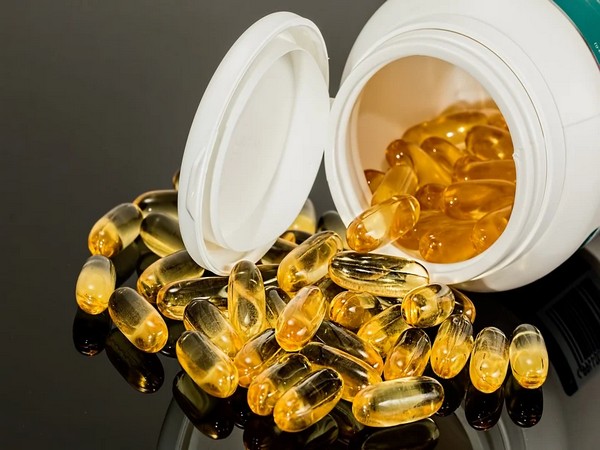
Representative image

Hiroshima [Japan], February 26 (ANI): A recent study led by food scientist Thanutchaporn Kumrungsee can be the first step in showing vitamin B6's potential in lowering the odds of patients becoming seriously ill with the coronavirus.
The study paper published in the journal Frontiers in Nutrition found that vitamin B6 may help calm cytokine storms and unclog blood clots linked to COVID-19's lethality. But the research on it is lacking.
Studies have so far explored the benefits of vitamins D and C and minerals like zinc and magnesium in fortifying immune response against COVID-19. But research on vitamin B6 has been mostly missing.
"In addition to washing your hands, food and nutrition are among the first lines of defense against Covid-19 virus infection. Food is our first medicine and kitchen is our first pharmacy," Kumrungsee, an associate professor at Hiroshima University's Graduate School of Integrated Sciences for Life, said.
"Recently, many scientists have published papers regarding the role of diets and nutrients in the protection against COVID-19. However, very few scientists are paying attention to the important role of vitamin B6," she added.
In their paper, she and her fellow researchers pointed out growing evidence showing that vitamin B6 exerts a protective effect against chronic illnesses such as cardiovascular diseases and diabetes by suppressing inflammation, inflammasomes, oxidative stress, and carbonyl stress.
"Coronaviruses and influenza are among the viruses that can cause lethal lung injuries and death from acute respiratory distress syndrome worldwide. Viral infections evoke a 'cytokine storm,' leading to lung capillary endothelial cell inflammation, neutrophil infiltration, and increased oxidative stress," they said.
Kumrungsee explained that thrombosis (blood clotting) and cytokine storm (hyper inflammation) might be closely linked to the graveness of COVID-19. Cytokine storms happen when the immune system dangerously goes into overdrive and starts attacking even the healthy cells. Meanwhile, blood clots linked to COVID-19 can block capillaries, damaging vital organs like the heart, lungs, liver, and kidneys.
Vitamin B6 is a known anti-thrombosis and anti-inflammation nutrient. Deficiency in this vitamin is also associated with lower immune function and higher susceptibility to viral infections.
"Vitamin B6 has a close relationship with the immune system. Its levels always drop in people under chronic inflammation such as obesity, diabetes, and heart diseases. We can see from the news that obese and diabetic people are at high risk for COVID-19," Kumrungsee said.
"Thus, our attempt in this paper is to shed light on the possible involvement of vitamin B6 in decreasing the severity of COVID-19."
The associate professor said she is looking forward to clinical trials that would test their hypothesis.
"It is of great interest to examine if vitamin B6 exerts protection against novel types of virus infection and pneumonia which will be encountered in the future. At present, there is few information regarding the protective role of nutrients against pneumonia and lung diseases," she said.
"After COVID-19, we should develop the area of nutrition for lung diseases such as pneumonia and lung cancer." (ANI)


Get the App

What to Read Next

Science

New method guides magnetism without magnets

New method guides magnetism without magnets

Researchers at Paul Scherrer Institute PSI have demonstrated an innovative method to control magnetism in materials using an energy-efficient electric field.

Read More
Science

Amphibians bounce-back from Earth’s greatest mass extinction

Amphibians bounce-back from Earth’s greatest mass extinction

Researchers at the University of Bristol discovered that ancient frog ancestors survived the biggest mass extinction of species by eating on freshwater prey that evaded terrestrial predators.

Read More
Science

New insights into how cancer evades the immune system: Study

New insights into how cancer evades the immune system: Study

Immunotherapy research primarily focuses on better recognition of cancer cells by the body's own immune system. Researchers at Amsterdam UMC and Moffitt Cancer Center have taken a different approach.

Read More
Science

Scientists use AI to better understand nanoparticles: Study

Scientists use AI to better understand nanoparticles: Study

A group of scientists has created a way to illuminate the dynamic behavior of nanoparticles, which are essential components in the production of pharmaceuticals, electronics, and industrial and energy-conversion materials.

Read More
Science

New device could allow you to taste cake in virtual reality

New device could allow you to taste cake in virtual reality

The 'e-Taste' interface employs sensors and wireless chemical dispensers to enable remote taste perception, often known as gestation. Field testing done by researchers at The Ohio State University confirmed the device's ability to digitally simulate a range of taste intensities, while still offering variety and safety for the user.

Read More
Science

Strand Life Sciences launches portal for rare disease diagnosis

Strand Life Sciences launches portal for rare disease diagnosis

Marking Rare Disease Day, Strand Life Sciences, a subsidiary of Reliance Industries and a leading genomics research company, has launched the StrandOmics Portal, an innovative digital platform designed to assist doctors in diagnosing rare diseases more efficiently.

Read More
Science

Study reveals impact of animals as architects of Earth

Study reveals impact of animals as architects of Earth

A new study led by Professor Gemma Harvey from Queen Mary University of London has revealed how hundreds of species shape the landscapes we depend on, from termite mounds visible from space to beavers creating wetlands and hippos carving drainage systems.

Read More
Science

Opposing arrows of time emerge from certain quantum systems

Opposing arrows of time emerge from certain quantum systems

Researchers at the University of Surrey made a thought-provoking discovery. A new study reveals that opposing arrows of time can theoretically emerge from certain quantum systems.

Read More
Science

COVID-19 severity may be predicted by White Blood Cell Count

COVID-19 severity may be predicted by White Blood Cell Count

A COVID-19 diagnosis is no longer as frightening as it used to be, thanks to developments in treatment choices. However, a new study reveals that leukocyte (white blood cell) count may now be used to identify who is more likely to develop more significant disease symptoms.

Read More
Science

Seals can essentially act as 'smart sensors': Study

Seals can essentially act as 'smart sensors': Study

A new study by marine biologists reports that seals can essentially act as 'smart sensors' for monitoring fish populations in the ocean's eerily dim 'twilight zone.'

Read More
Home About Us Our Products Advertise Contact Us Terms & Condition Privacy Policy

Copyright © aninews.in | All Rights Reserved.


