

ADD ANI AS A TRUSTED SOURCE
googleads
Menu
Science

Study finds soft gingiva results in inflammation, hinders the development of gingival fibers

The many gingival fibres that connect the tooth to the gingiva, the tissue region that surrounds our teeth, allow healthy teeth to firmly rest in the gums. Fibroblasts, which are cells that help connective tissue form, are found in the gingiva. Researchers from Tohoku University have shown that gingival stiffness impacts the characteristics of gingival fibroblasts, which in turn affects the likelihood of inflammation and how challenging it is to generate gingival fibres.

ANI Mar 10, 2023 22:06 IST googleads

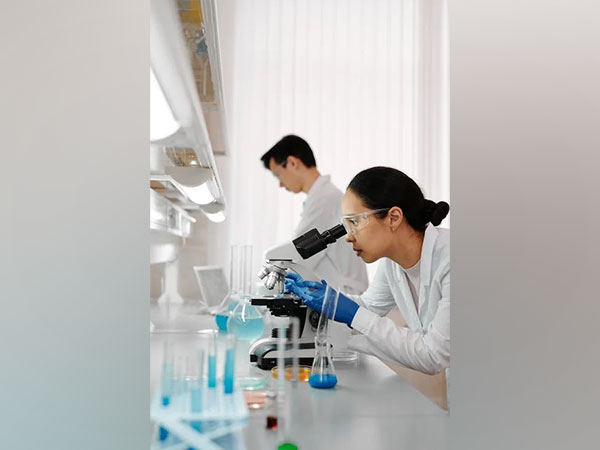
Representative Image

Tokyo [Japan], March 10 (ANI): The many gingival fibres that connect the tooth to the gingiva, the tissue region that surrounds our teeth, allow healthy teeth to firmly rest in the gums. Fibroblasts, which are cells that help connective tissue form, are found in the gingiva. Researchers from Tohoku University have shown that gingival stiffness impacts the characteristics of gingival fibroblasts, which in turn affects the likelihood of inflammation and how challenging it is to generate gingival fibres.
Their findings were published in the journal Scientific Reports on January 24, 2023.
"We discovered that soft gingiva results in inflammation and hinders the development of gingival fibers," says Associate Professor Masahiro Yamada from Tohoku University's Graduate School of Dentistry.
It has long been known that individuals with thick or stiff gingiva are less susceptible to gingival recessions. This is where the gingiva begins to recede and expose a tooth's root. Many factors can lead to gingival recession, such as gum disease, over-brushing, and chewing tobacco. But this is the first time that gingival stiffness has been attributed to biological reactions.
Although fibroblasts play an important role in the maintenance, repair and healing of the gingiva, they also produce various inflammatory and tissue-degrading biomolecules which degrade the gingival fibers. In addition, fibroblasts are associated with immune responses to pathogens.
Yamada, along with his colleague Professor Hiroshi Egusa, also from the Tohoku University's Graduate School of Dentistry, created an artificial culture environment that simulated soft or hard gingiva and cultured human gingival fibroblasts on them. They discovered that hard gingiva-simulated stiffness activated an intracellular anti-inflammatory system in the gingival fibroblasts that prevented inflammation. Yet, soft gingiva-simulated stiffness suppressed the fibroblastic anti-inflammatory system. This increased the likelihood of inflammation and resulted in less collagen synthesis.
"Our research is the first to demonstrate the biological mechanisms at play in regard to a patient's gingival properties," added Yamada. "The results are expected to accelerate the development of advanced biomaterials to control local inflammation or microdevices that simulate the microenvironment of inflammatory conditions." (ANI)


Get the App

What to Read Next

Science

Biomarker may predict response to immunotherapy in liver cancer

Biomarker may predict response to immunotherapy in liver cancer

According to a preclinical study conducted by Weill Cornell Medicine researchers, it may soon be feasible to detect whether individuals with hepatocellular carcinoma, a kind of liver cancer, may benefit from immunotherapy.

Read More
Science

Study finds new ways to prevent, treat type 2 diabetes

Study finds new ways to prevent, treat type 2 diabetes

Pancreatic cells, like human cells, have a limit to how much stress they can handle before they start to break down. Through overstimulation of these cells, certain stresses like inflammation and hyperglycemia lead to the onset of type 2 diabetes.

Read More
Science

Fever promotes increased activity, mitochondrial damage

Fever promotes increased activity, mitochondrial damage

Researchers at Vanderbilt University Medical Centre showed that fever temperatures increase immune cell metabolism, proliferation, and activity, but they also promote mitochondrial stress, DNA damage, and cell death in a specific subgroup of T cells.

Read More
Science

Researchers give insight into breast cancer tumor growth

Researchers give insight into breast cancer tumor growth

According to a recent study, Malassezia globosa, a common skin fungus, may penetrate deep tissues through the skin or by other methods, which can lead to tumor formation.

Read More
Science

Blood stem cell could transform bone marrow transplants

Blood stem cell could transform bone marrow transplants

Researchers in Melbourne have achieved a first for the world: they have successfully created blood stem cells that closely resemble human tissue. Additionally, the discovery may eventually result in customized therapies for kids suffering from bone marrow failure syndromes and leukaemia.

Read More
Home About Us Our Products Advertise Contact Us Terms & Condition Privacy Policy

Copyright © aninews.in | All Rights Reserved.
