

ADD ANI AS A TRUSTED SOURCE
googleads
ANI Logo
Menu
Science

Study finds smart greenhouses may slash electricity costs

Georgia [US], February 3 (ANI): A new study has found a new, internet-connected lighting system for greenhouses that could sharply reduce a farmer's electrical bill.

ANI Feb 03, 2022 18:15 IST googleads

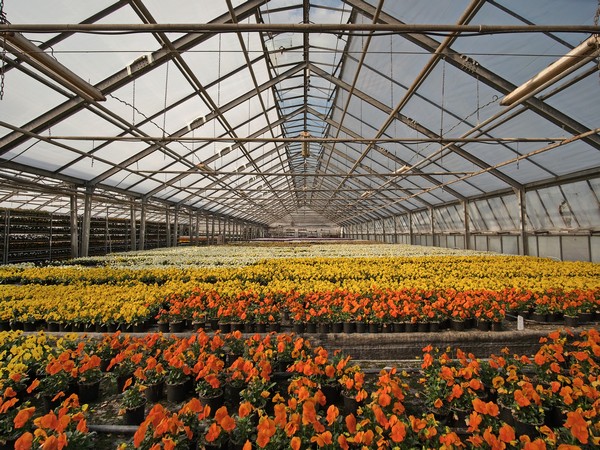
Representative image

Georgia [US], February 3 (ANI): A new study has found a new, internet-connected lighting system for greenhouses that could sharply reduce a farmer's electrical bill.
The research has been published in the 'Plants Journal'.
The study showed that a predictive lighting control system could optimize lighting for plants by predicting sunlight and only running the lights when needed. The data showed that farmers could reduce their greenhouse electrical costs by as much as 33 per cent by optimizing their lights.
On rainy or cloudy days, plants are given supplemental lighting to make up for the lack of sunlight. While effective, these lights can be expensive, inefficient and consume huge amounts of electricity. A 2017 report from the U.S. Department of Energy estimated that horticultural lighting consumed USD 600 million worth of electricity every year.
"When LED lights first came to market, they gave us an opportunity to control greenhouse lighting on a level that was not possible before," said Marc Van Iersel, a professor in the College of Agricultural and Environmental Sciences.
"At the time, a lot of research was happening to optimize the lights themselves, but almost no one was working on smart control of the lighting system," he added.
"The electricity used for the lights is anywhere from 10 per cent to 30 per cent of the cost of running a greenhouse," Van Iersel said.
"Our research began with the idea that, if we can reduce this cost, we can very quickly have an impact on the efficiency and sustainability of greenhouses," he added.
A team of University of Georgia researchers designed a new lighting system that could reduce a greenhouse's electrical demand without hurting the plants.
Electrical engineering master's student Shirin Afazli built a control system that used sensors to measure current weather conditions, and Ph.D. student Sahand Mosharafian and associate professor Javad Mohammadpour Velni developed light-predicting algorithms in their laboratories.
In combination, the system can predict the amount of sunlight in the future. This allows it to optimize the lights inside the greenhouse and give plants the correct amount of light.
Greenhouses are predominantly used during the winter and spring, so the team tested their system during both growing seasons. While both experiments showed reduced costs while maintaining plant growth, the new system made a bigger impact during the spring. It reduced costs by 33 per cent in the spring but only 4 per cent in the winter. The system generated the most savings while the sun is shining. Because winter months have shorter days, the lights are required to be on more often.
According to the researchers, the actual cost savings could be even higher. Their experiments assumed a fixed cost for electricity, but in the real world, farms are subject to variable pricing. The team has already programmed the system to account for this variable and plans to publish future research that shows higher savings rates. As the planet's population continues to rise, finding ways to produce more food with fewer resources becomes increasingly important. (ANI)


Get the App

What to Read Next

Science

Amphibians bounce-back from Earth’s greatest mass extinction

Amphibians bounce-back from Earth’s greatest mass extinction

Researchers at the University of Bristol discovered that ancient frog ancestors survived the biggest mass extinction of species by eating on freshwater prey that evaded terrestrial predators.

Read More
Science

New insights into how cancer evades the immune system: Study

New insights into how cancer evades the immune system: Study

Immunotherapy research primarily focuses on better recognition of cancer cells by the body's own immune system. Researchers at Amsterdam UMC and Moffitt Cancer Center have taken a different approach.

Read More
Science

Scientists use AI to better understand nanoparticles: Study

Scientists use AI to better understand nanoparticles: Study

A group of scientists has created a way to illuminate the dynamic behavior of nanoparticles, which are essential components in the production of pharmaceuticals, electronics, and industrial and energy-conversion materials.

Read More
Science

New device could allow you to taste cake in virtual reality

New device could allow you to taste cake in virtual reality

The 'e-Taste' interface employs sensors and wireless chemical dispensers to enable remote taste perception, often known as gestation. Field testing done by researchers at The Ohio State University confirmed the device's ability to digitally simulate a range of taste intensities, while still offering variety and safety for the user.

Read More
Science

Strand Life Sciences launches portal for rare disease diagnosis

Strand Life Sciences launches portal for rare disease diagnosis

Marking Rare Disease Day, Strand Life Sciences, a subsidiary of Reliance Industries and a leading genomics research company, has launched the StrandOmics Portal, an innovative digital platform designed to assist doctors in diagnosing rare diseases more efficiently.

Read More
Science

Study reveals impact of animals as architects of Earth

Study reveals impact of animals as architects of Earth

A new study led by Professor Gemma Harvey from Queen Mary University of London has revealed how hundreds of species shape the landscapes we depend on, from termite mounds visible from space to beavers creating wetlands and hippos carving drainage systems.

Read More
Science

Opposing arrows of time emerge from certain quantum systems

Opposing arrows of time emerge from certain quantum systems

Researchers at the University of Surrey made a thought-provoking discovery. A new study reveals that opposing arrows of time can theoretically emerge from certain quantum systems.

Read More
Science

Seals can essentially act as 'smart sensors': Study

Seals can essentially act as 'smart sensors': Study

A new study by marine biologists reports that seals can essentially act as 'smart sensors' for monitoring fish populations in the ocean's eerily dim 'twilight zone.'

Read More
Science

'Creation of black holes without singularities through gravity'

'Creation of black holes without singularities through gravity'

Traditional black holes, as predicted by Albert Einstein's theory of General Relativity, contain what are known as singularities, i.e. points where the laws of physics break down. Identifying how singularities are resolved in the context of quantum gravity is one of the fundamental problems in theoretical physics. Now, a team of experts has described the creation of regular black holes from gravitational effects without the need for the existence of exotic matter required by some previous models.

Read More
Science

New technology enhances gravitational-wave detection: Study

New technology enhances gravitational-wave detection: Study

A team of physicists led by Jonathan Richardson of the University of California, Riverside, demonstrated how new optical technology can extend the detection range of gravitational-wave observatories such as the Laser Interferometer Gravitational-Wave Observatory, or LIGO, and pave the way for future observatories.

Read More
Home About Us Our Products Advertise Contact Us Terms & Condition Privacy Policy

Copyright © aninews.in | All Rights Reserved.


