

ADD ANI AS A TRUSTED SOURCE
googleads
ANI Logo
Menu
Science

Study finds seasonal temperature may impact patient lab results

Washington [US], December 12 (ANI): According to new research, seasonal temperature impacts the results of some of the most used laboratory tests, and these distortions likely affect medical decision making, such as whether to prescribe medications or not.

ANI Dec 12, 2021 13:30 IST googleads

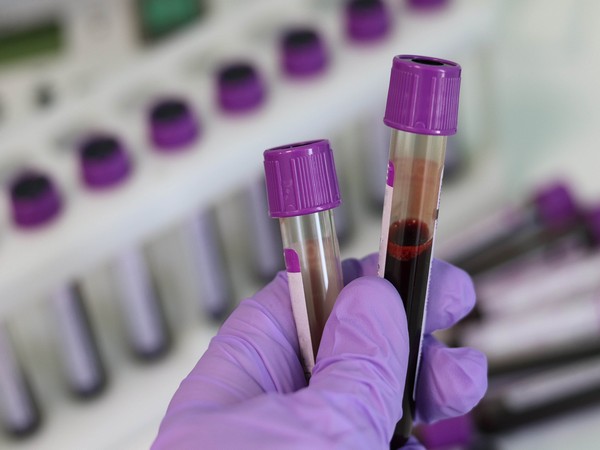
Representative image

Washington [US], December 12 (ANI): According to new research, seasonal temperature impacts the results of some of the most used laboratory tests, and these distortions likely affect medical decision making, such as whether to prescribe medications or not.
The study has been published in the 'Med Journal'.
"When a doctor orders a laboratory test, she uses it to shed light on what's going on inside your body, but we wondered if the results of those tests could also reflect something that's going on outside of your body," said study co-author Ziad Obermeyer of the University of California, Berkeley.
"This is exactly the kind of pattern that doctors might miss. We're not looking for it, and lab tests are noisy," Obermeyer added.
To explore this question, Obermeyer and Devin Pope of the University of Chicago analyzed a large dataset of test results from 2009 to 2015, spanning several climate zones. In a sample of more than four million patients, they modelled more than two million test results as a function of temperature. They measured how day-to-day temperature fluctuations affected results, over and above the patients' average values, and seasonal variation.
The results showed that temperature affected more than 90 per cent of individual tests and 51 of 75 assays, including measures of kidney function, cellular blood components, and lipids such as cholesterol and triglycerides.
"It's important to note that these changes were small: less than one per cent differences in most tests under normal temperature conditions," Obermeyer said.
These small, day-to-day fluctuations did not likely reflect long-term physiological trends. For example, lipid panels checked on cooler days appeared to suggest a lower cardiovascular risk, leading to almost 10 per cent fewer prescriptions for cholesterol-lowering drugs called statins to patients tested on the coolest days compared to the warmest days, even though these results probably did not reflect stable changes in cardiovascular risk.
Because the study wasn't an experiment, the researchers could not pinpoint the exact mechanisms underlying the fluctuations in lab results. Possible explanations included blood volume, specific assay performance, specimen transport, or changes in lab equipment.
"Whatever their cause, temperature produces undesirable variability in at least some tests, which in turn leads to distortions in important medical decisions," Pope said.
One practical implication of the study was that laboratories could statistically adjust for ambient temperature on the test day when reporting lab results. Doing so could reduce weather-related variability at a lower cost than new laboratory assay technology or investments in temperature control in transport vans. In practice, decisions on adjustment would need to be at the discretion of the laboratory staff and the treating physician, potentially on a case-by-case basis.
According to the authors, the study may also have broader clinical implications.
"The textbook way of thinking about medical research is a bench to bedside. First, we come up with a hypothesis, based on theory, then we test it with data," Obermeyer said.
"As more and more big data comes online, like the massive dataset of lab tests we used, we can flip that process on its head: discover fascinating new patterns and then use bench science to get to the bottom of it. I think this bedside-to-bench model is just as important as its better-known cousin because it can open up totally new questions in human physiology," Obermeyer concluded. (ANI)


Get the App

What to Read Next

Science

Amphibians bounce-back from Earth’s greatest mass extinction

Amphibians bounce-back from Earth’s greatest mass extinction

Researchers at the University of Bristol discovered that ancient frog ancestors survived the biggest mass extinction of species by eating on freshwater prey that evaded terrestrial predators.

Read More
Science

Scientists use AI to better understand nanoparticles: Study

Scientists use AI to better understand nanoparticles: Study

A group of scientists has created a way to illuminate the dynamic behavior of nanoparticles, which are essential components in the production of pharmaceuticals, electronics, and industrial and energy-conversion materials.

Read More
Science

COVID-19 severity may be predicted by White Blood Cell Count

COVID-19 severity may be predicted by White Blood Cell Count

A COVID-19 diagnosis is no longer as frightening as it used to be, thanks to developments in treatment choices. However, a new study reveals that leukocyte (white blood cell) count may now be used to identify who is more likely to develop more significant disease symptoms.

Read More
Science

New technology enhances gravitational-wave detection: Study

New technology enhances gravitational-wave detection: Study

A team of physicists led by Jonathan Richardson of the University of California, Riverside, demonstrated how new optical technology can extend the detection range of gravitational-wave observatories such as the Laser Interferometer Gravitational-Wave Observatory, or LIGO, and pave the way for future observatories.

Read More
Science

Discovering the genetics of climate adaptation 

Discovering the genetics of climate adaptation 

As climate change accelerates, plants are under increasing pressure to adapt to changing habitats and environmental conditions.

Read More
Science

Astronomers find the smallest main-belt asteroids ever detected:

Astronomers find the smallest main-belt asteroids ever detected:

The majority of known asteroids orbit inside the main asteroid belt, which is positioned between Mars and Jupiter at an average distance of around 250 million km from Earth. Since the discovery of the first asteroid in 1801, about 750.000 asteroids have been identified, primarily in the last decade thanks to several optical surveys that examine the sky on clear nights.

Read More
Science

Study finds connection between quantum theory, information theory

Study finds connection between quantum theory, information theory

"Our results have no clear or direct application right now. It's basic research that lays the foundation for future technologies in quantum information and quantum computers. There's enormous potential for complete discoveries in many different research fields," said Guilherme B Xavier, a researcher in quantum communication at Linkoping University, Sweden.

Read More
Science

When devices can read human emotions without a camera: Study

When devices can read human emotions without a camera: Study

Tokyo Metropolitan University researchers employed long-term skin conductance measurements to distinguish between emotions. Volunteers were given videos representing frightening scenarios, family bonding, and humour, while their skin conductance was measured.

Read More
Science

'Nuroscience study results can be better predicted by AI'

'Nuroscience study results can be better predicted by AI'

Large language models, a type of AI that analyses text, can anticipate the results of proposed neuroscience studies more correctly than human experts, according to a new study led by UCL (University College London) researchers.

Read More
Science

Thermal imaging may help fruits, veggies stay fresher longer: Study

Thermal imaging may help fruits, veggies stay fresher longer: Study

Before your favourite produce arrives at the grocery store, it must be carefully harvested and stored for extended periods of time. A recent University of Georgia assessment argues that new temperature sensing devices could make that procedure considerably easier, as agricultural issues are exacerbated by changing climates.

Read More
Home About Us Our Products Advertise Contact Us Terms & Condition Privacy Policy

Copyright © aninews.in | All Rights Reserved.


