

ADD ANI AS A TRUSTED SOURCE
googleads
ANI Logo
Menu
Science

Study finds reason why batteries can't charge in minutes

Washington [US], December 4 (ANI): According to new research, there is a new issue that complicates the fast charging of batteries.

ANI Dec 04, 2021 16:16 IST googleads

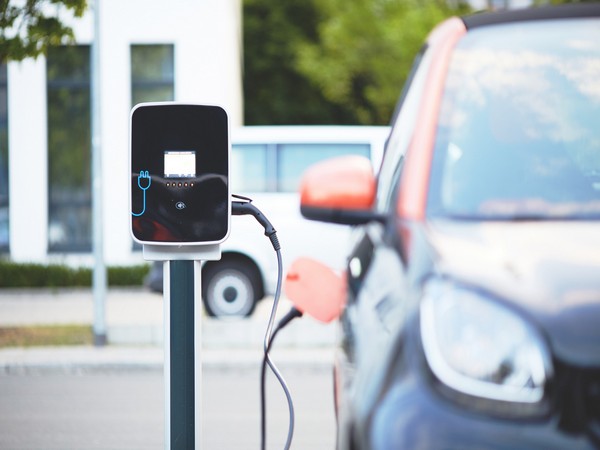
Representative image

Washington [US], December 4 (ANI): According to new research, there is a new issue that complicates the fast charging of batteries.
The study has been published in the 'The Electrochemical Society Journal'.
Haste makes waste, as the saying goes. Such a maxim may be especially true of batteries, thanks to a new study that seeks to identify the reasons that cause the performance of fast charged lithium-ion batteries to degrade in electric vehicles.
In new research from the U.S. Department of Energy's (DOE) Argonne National Laboratory, scientists have found interesting chemical behaviour of one of the battery's two terminals as the battery is charged and discharged.
Lithium-ion batteries contain both a positively charged cathode and a negatively charged anode, which are separated by a material called an electrolyte that moves lithium ions between them. The anode in these batteries is typically made out of graphite -- the same material found in many pencils. In lithium-ion batteries, however, the graphite is assembled out of small particles. Inside these particles, the lithium ions can insert themselves in a process called intercalation. When intercalation happens properly, the battery can successfully charge and discharge.
When a battery is charged too quickly, however, intercalation becomes a trickier business. Instead of smoothly getting into the graphite, the lithium ions tend to aggregate on top of the anode's surface, resulting in a "plating" effect that can cause terminal damage -- no pun intended -- to a battery.
"Plating is one of the main causes of impaired battery performance during fast charging," said Argonne battery scientist Daniel Abraham, an author of the study.
"As we charged the battery quickly, we found that in addition to the plating on the anode surface there was a build-up of reaction products inside the electrode pores," he added.
As a result, the anode itself undergoes some degree of irreversible expansion, impairing battery performance.
Using a technique called scanning electron nano diffraction, Abraham and his colleagues from the University of Illinois Urbana-Champaign observed another notable change to the graphite particles. At the atomic level, the lattice of graphite atoms at the particle edges becomes distorted because of the repeated fast charging, hindering the intercalation process.
"Basically, what we see is that the atomic network in the graphite becomes warped, and this prevents lithium ions from finding their 'home' inside the particles -- instead, they plate on the particles," he said.
"The faster we charge our battery, the more atomically disordered the anode will become, which will ultimately prevent the lithium ions from being able to move back and forth," Abraham said.
"The key is to find ways to either prevent this loss of organization or to somehow modify the graphite particles so that the lithium ions can intercalate more efficiently," he concluded. (ANI)


Get the App

What to Read Next

Science

New method guides magnetism without magnets

New method guides magnetism without magnets

Researchers at Paul Scherrer Institute PSI have demonstrated an innovative method to control magnetism in materials using an energy-efficient electric field.

Read More
Science

Amphibians bounce-back from Earth’s greatest mass extinction

Amphibians bounce-back from Earth’s greatest mass extinction

Researchers at the University of Bristol discovered that ancient frog ancestors survived the biggest mass extinction of species by eating on freshwater prey that evaded terrestrial predators.

Read More
Science

Scientists use AI to better understand nanoparticles: Study

Scientists use AI to better understand nanoparticles: Study

A group of scientists has created a way to illuminate the dynamic behavior of nanoparticles, which are essential components in the production of pharmaceuticals, electronics, and industrial and energy-conversion materials.

Read More
Science

New technology enhances gravitational-wave detection: Study

New technology enhances gravitational-wave detection: Study

A team of physicists led by Jonathan Richardson of the University of California, Riverside, demonstrated how new optical technology can extend the detection range of gravitational-wave observatories such as the Laser Interferometer Gravitational-Wave Observatory, or LIGO, and pave the way for future observatories.

Read More
Science

Astronomers find the smallest main-belt asteroids ever detected:

Astronomers find the smallest main-belt asteroids ever detected:

The majority of known asteroids orbit inside the main asteroid belt, which is positioned between Mars and Jupiter at an average distance of around 250 million km from Earth. Since the discovery of the first asteroid in 1801, about 750.000 asteroids have been identified, primarily in the last decade thanks to several optical surveys that examine the sky on clear nights.

Read More
Science

Study finds connection between quantum theory, information theory

Study finds connection between quantum theory, information theory

"Our results have no clear or direct application right now. It's basic research that lays the foundation for future technologies in quantum information and quantum computers. There's enormous potential for complete discoveries in many different research fields," said Guilherme B Xavier, a researcher in quantum communication at Linkoping University, Sweden.

Read More
Science

When devices can read human emotions without a camera: Study

When devices can read human emotions without a camera: Study

Tokyo Metropolitan University researchers employed long-term skin conductance measurements to distinguish between emotions. Volunteers were given videos representing frightening scenarios, family bonding, and humour, while their skin conductance was measured.

Read More
Science

'Nuroscience study results can be better predicted by AI'

'Nuroscience study results can be better predicted by AI'

Large language models, a type of AI that analyses text, can anticipate the results of proposed neuroscience studies more correctly than human experts, according to a new study led by UCL (University College London) researchers.

Read More
Science

Thermal imaging may help fruits, veggies stay fresher longer: Study

Thermal imaging may help fruits, veggies stay fresher longer: Study

Before your favourite produce arrives at the grocery store, it must be carefully harvested and stored for extended periods of time. A recent University of Georgia assessment argues that new temperature sensing devices could make that procedure considerably easier, as agricultural issues are exacerbated by changing climates.

Read More
Science

Contrail avoidance is less likely to damage climate by mistake

Contrail avoidance is less likely to damage climate by mistake

A new study allays concerns that rerouting planes to avoid producing climate-warming contrails may accidentally exacerbate climate change.

Read More
Home About Us Our Products Advertise Contact Us Terms & Condition Privacy Policy

Copyright © aninews.in | All Rights Reserved.


