

ADD ANI AS A TRUSTED SOURCE
googleads
ANI Logo
Menu
Science

Study finds method to reactivate aging stem cells in the brain

Bern [Switzerland], February 24 (ANI): A study led by researchers of the University of Zurich has discovered a mechanism linked to stem cell aging that leads to a decline in memory function and how the production of neurons can be reactivated.

ANI Feb 24, 2021 22:55 IST googleads

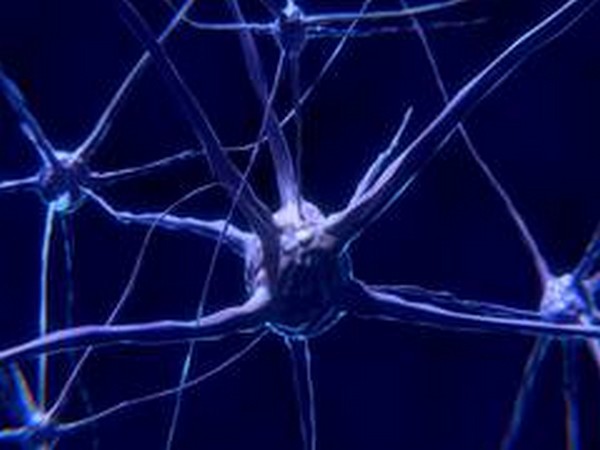
Representative image

Bern [Switzerland], February 24 (ANI): A study led by researchers of the University of Zurich has discovered a mechanism linked to stem cell aging that leads to a decline in memory function and how the production of neurons can be reactivated.
As people get older, their neural stem cells lose the ability to proliferate and produce new neurons, leading to a decline in memory function.
The stem cells in our brain generate new neurons throughout life, for example in the hippocampus. This region of the brain plays a key role in a range of memory processes.
With increasing age, and in patients suffering from Alzheimer's disease, the hippocampus' ability to create new neurons declines steadily and with it, its memory functions.
A study conducted by the research group of Sebastian Jessberger, a professor at the Brain Research Institute of the University of Zurich, shows how the formation of new neurons is impaired with advancing age.
Protein structures in the nuclei of neural stem cells make sure that harmful proteins accumulating over time are unevenly distributed onto the two daughter cells during cell division. This seems to be an important part of the cells' ability to proliferate over a long time in order to maintain the supply of neurons.
With advancing age, however, the amounts of nucleic proteins change, resulting in the defective distribution of harmful proteins between the two daughter cells. This results in a decrease in the numbers of newly generated neurons in the brains of older mice.
The central element in this process is a nuclear protein called lamin B1, the levels of which decrease as people age. When the researchers increased lamin B1 levels in experiments in aging mice, stem cell division improved and the number of new neurons grew. "As we get older, stem cells throughout the body gradually lose their ability to proliferate.
Using genetic engineering and cutting-edge microscope technology, we were able to identify a mechanism that is associated with this process," says doctoral candidate and first author Khadeesh bin Imtiaz.
The research is part of several ongoing projects aiming to reactivate aging stem cells. The ability to regenerate damaged tissue generally declines with age, thus affecting almost all types of stem cells in the body.
"While our study was limited to brain stem cells, similar mechanisms are likely to play a key role when it comes to the aging process of other stem cells," says Sebastian Jessberger.
These latest findings are an important step towards exploring age-dependent changes in the behavior of stem cells.
"We now know that we can reactivate aging stem cells in the brain. Our hope is that these findings will one-day help increase levels of neurogenesis, for example in older people or those suffering from degenerative diseases such as Alzheimer's. Even if this may still be many years in the future," says Jessberger. (ANI)


Get the App

What to Read Next

Science

New method guides magnetism without magnets

New method guides magnetism without magnets

Researchers at Paul Scherrer Institute PSI have demonstrated an innovative method to control magnetism in materials using an energy-efficient electric field.

Read More
Science

Amphibians bounce-back from Earth’s greatest mass extinction

Amphibians bounce-back from Earth’s greatest mass extinction

Researchers at the University of Bristol discovered that ancient frog ancestors survived the biggest mass extinction of species by eating on freshwater prey that evaded terrestrial predators.

Read More
Science

New insights into how cancer evades the immune system: Study

New insights into how cancer evades the immune system: Study

Immunotherapy research primarily focuses on better recognition of cancer cells by the body's own immune system. Researchers at Amsterdam UMC and Moffitt Cancer Center have taken a different approach.

Read More
Science

Scientists use AI to better understand nanoparticles: Study

Scientists use AI to better understand nanoparticles: Study

A group of scientists has created a way to illuminate the dynamic behavior of nanoparticles, which are essential components in the production of pharmaceuticals, electronics, and industrial and energy-conversion materials.

Read More
Science

New device could allow you to taste cake in virtual reality

New device could allow you to taste cake in virtual reality

The 'e-Taste' interface employs sensors and wireless chemical dispensers to enable remote taste perception, often known as gestation. Field testing done by researchers at The Ohio State University confirmed the device's ability to digitally simulate a range of taste intensities, while still offering variety and safety for the user.

Read More
Science

Study reveals impact of animals as architects of Earth

Study reveals impact of animals as architects of Earth

A new study led by Professor Gemma Harvey from Queen Mary University of London has revealed how hundreds of species shape the landscapes we depend on, from termite mounds visible from space to beavers creating wetlands and hippos carving drainage systems.

Read More
Science

Opposing arrows of time emerge from certain quantum systems

Opposing arrows of time emerge from certain quantum systems

Researchers at the University of Surrey made a thought-provoking discovery. A new study reveals that opposing arrows of time can theoretically emerge from certain quantum systems.

Read More
Science

COVID-19 severity may be predicted by White Blood Cell Count

COVID-19 severity may be predicted by White Blood Cell Count

A COVID-19 diagnosis is no longer as frightening as it used to be, thanks to developments in treatment choices. However, a new study reveals that leukocyte (white blood cell) count may now be used to identify who is more likely to develop more significant disease symptoms.

Read More
Science

Seals can essentially act as 'smart sensors': Study

Seals can essentially act as 'smart sensors': Study

A new study by marine biologists reports that seals can essentially act as 'smart sensors' for monitoring fish populations in the ocean's eerily dim 'twilight zone.'

Read More
Science

New technology enhances gravitational-wave detection: Study

New technology enhances gravitational-wave detection: Study

A team of physicists led by Jonathan Richardson of the University of California, Riverside, demonstrated how new optical technology can extend the detection range of gravitational-wave observatories such as the Laser Interferometer Gravitational-Wave Observatory, or LIGO, and pave the way for future observatories.

Read More


