

ADD ANI AS A TRUSTED SOURCE
googleads
ANI Logo
Menu
Science

Study finds masks not enough to stop COVID-19's spread without distancing

Washington [US], December 23 (ANI): Simply wearing a mask may not be enough to prevent the spread of COVID-19 without social distancing, suggest the findings of a new study.

ANI Dec 23, 2020 16:46 IST googleads

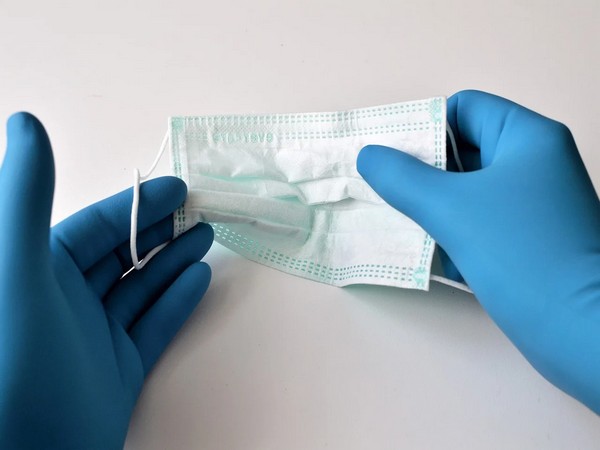
Representative image

Washington [US], December 23 (ANI): Simply wearing a mask may not be enough to prevent the spread of COVID-19 without social distancing, suggest the findings of a new study.
In Physics of Fluids by AIP Publishing, researchers tested how five different types of mask materials impacted the spread of droplets that carry the coronavirus when we cough or sneeze.
Every material tested dramatically reduced the number of droplets that were spread. But at distances of less than 6 feet, enough droplets to potentially cause illness still made it through several of the materials.
"A mask definitely helps, but if the people are very close to each other, there is still a chance of spreading or contracting the virus," said Krishna Kota, an associate professor at New Mexico State University and one of the article's authors. "It does not just mask that will help. It's both the masks and distancing."
At the university, researchers built a machine that uses an air generator to mimic human coughs and sneezes. The generator was used to blow tiny liquid particles, like the airborne droplets of sneezes and coughs, through laser sheets in an airtight square tube with a camera.
They blocked the flow of the droplets in the tube with five different types of mask materials -- a regular cloth mask, a two-layer cloth mask, a wet two-layer cloth mask, a surgical mask, and a medical-grade N-95 mask.
Each of the masks captured the vast majority of droplets, ranging from the regular cloth mask, which allowed about 3.6% of the droplets to go through, to the N-95 mask, which statistically stopped 100% of the droplets. But at distances of less than 6 feet, even those small percentages of droplets can be enough to get someone sick, especially if a person with COVID-19 sneezes or coughs multiple times.
A single sneeze can carry up to 200 million tiny virus particles, depending on how sick the carrier is. Even if a mask blocks a huge percentage of those particles, enough could escape to get someone sick if that person is close to the carrier.
"Without a face mask, it is almost certain that many foreign droplets will transfer to the susceptible person," Kota said. "Wearing a mask will offer substantial, but not complete, protection to a susceptible person by decreasing the number of foreign airborne sneeze and cough droplets that would otherwise enter the person without the mask. Consideration must be given to minimize or avoid close face-to-face or frontal human interactions, if possible."
The study also did not account for leakage from masks, whether worn properly or improperly, which can add to the number of droplets that make their way into the air. (ANI)


Get the App

What to Read Next

Science

New method guides magnetism without magnets

New method guides magnetism without magnets

Researchers at Paul Scherrer Institute PSI have demonstrated an innovative method to control magnetism in materials using an energy-efficient electric field.

Read More
Science

Amphibians bounce-back from Earth’s greatest mass extinction

Amphibians bounce-back from Earth’s greatest mass extinction

Researchers at the University of Bristol discovered that ancient frog ancestors survived the biggest mass extinction of species by eating on freshwater prey that evaded terrestrial predators.

Read More
Science

New insights into how cancer evades the immune system: Study

New insights into how cancer evades the immune system: Study

Immunotherapy research primarily focuses on better recognition of cancer cells by the body's own immune system. Researchers at Amsterdam UMC and Moffitt Cancer Center have taken a different approach.

Read More
Science

Scientists use AI to better understand nanoparticles: Study

Scientists use AI to better understand nanoparticles: Study

A group of scientists has created a way to illuminate the dynamic behavior of nanoparticles, which are essential components in the production of pharmaceuticals, electronics, and industrial and energy-conversion materials.

Read More
Science

New device could allow you to taste cake in virtual reality

New device could allow you to taste cake in virtual reality

The 'e-Taste' interface employs sensors and wireless chemical dispensers to enable remote taste perception, often known as gestation. Field testing done by researchers at The Ohio State University confirmed the device's ability to digitally simulate a range of taste intensities, while still offering variety and safety for the user.

Read More
Science

Study reveals impact of animals as architects of Earth

Study reveals impact of animals as architects of Earth

A new study led by Professor Gemma Harvey from Queen Mary University of London has revealed how hundreds of species shape the landscapes we depend on, from termite mounds visible from space to beavers creating wetlands and hippos carving drainage systems.

Read More
Science

Opposing arrows of time emerge from certain quantum systems

Opposing arrows of time emerge from certain quantum systems

Researchers at the University of Surrey made a thought-provoking discovery. A new study reveals that opposing arrows of time can theoretically emerge from certain quantum systems.

Read More
Science

COVID-19 severity may be predicted by White Blood Cell Count

COVID-19 severity may be predicted by White Blood Cell Count

A COVID-19 diagnosis is no longer as frightening as it used to be, thanks to developments in treatment choices. However, a new study reveals that leukocyte (white blood cell) count may now be used to identify who is more likely to develop more significant disease symptoms.

Read More
Science

Seals can essentially act as 'smart sensors': Study

Seals can essentially act as 'smart sensors': Study

A new study by marine biologists reports that seals can essentially act as 'smart sensors' for monitoring fish populations in the ocean's eerily dim 'twilight zone.'

Read More
Science

New technology enhances gravitational-wave detection: Study

New technology enhances gravitational-wave detection: Study

A team of physicists led by Jonathan Richardson of the University of California, Riverside, demonstrated how new optical technology can extend the detection range of gravitational-wave observatories such as the Laser Interferometer Gravitational-Wave Observatory, or LIGO, and pave the way for future observatories.

Read More
Home About Us Our Products Advertise Contact Us Terms & Condition Privacy Policy

Copyright © aninews.in | All Rights Reserved.


