

ADD ANI AS A TRUSTED SOURCE
googleads
ANI Logo
Menu
Science

Study finds leaf-eating Asian monkeys do not have a sweet tooth

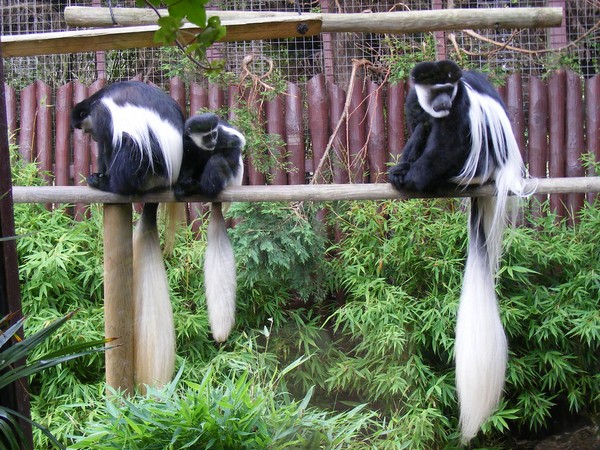
Washington D.C. [USA], Sep 1 (ANI): Asian Colobine monkeys are unable to taste natural sugars, and in fact have a generally poor sense of taste as the receptors on their tongues do not function in the same way as for fruit-eating monkeys, found biologists.

ANI Sep 01, 2019 17:04 IST googleads

Representative image

Washington D.C. [USA], Sep 1 (ANI): Asian Colobine monkeys are unable to taste natural sugars, and in fact have a generally poor sense of taste as the receptors on their tongues do not function in the same way as for fruit-eating monkeys, found biologists.
According to the study published in the journal, 'Primates,' mammals, in general, are able to taste sugary flavours thanks to the sweet taste receptor gene TAS1R2/TAS1R3 and related taste buds on the tongue.
However, in a previous study, the same group of researchers showed that Colobine monkeys do not pick up bitter tastes.
Nishi and her colleagues conducted a series of laboratory and genetic tests to investigate these protein-expressing cells reconstructed from leaf-eating Javan lutung monkeys (Trachypithecus auratus), which are part of the Colobinae subfamily of monkeys.
These cells showed no reaction when natural sugars such as sucrose contained in sugarcane, fructose in fruit and maltose in fermented foods. Although the receptor genes are present, they seem not to function.
In a further behavioural test, Nishi and her colleagues watched what happened when silvery lutung (Trachypithecus cristatus) and Hanuman langur (Semnopithecus entellus) in captivity were given the choice between baskets of jellies with or without sugar added to them.
The animals ate all of the jellies, without preferring the sweet type over the bland version.
Nishi and her colleagues speculated that the animals' lack of interest in foods containing natural sugars and the functional decline of TAS1R2/TAS1R3 might be related to their feeding habits.
They are primarily leaf eaters and very seldom eat fruits containing many simple sugars. Nishi further explained that the slim bodies of Colobines are not geared towards digesting sweet-tasting, energy-rich foods.
Their peculiar ruminant-like stomach helped them digest cellulose and hemicellulose contained in leaves through a fermentation process involving bacteria.
"The consumption of too many ripe fruits might contribute to rapid overfermentation and the overproduction of volatile fatty acids, leading to an increase in acid levels in animals' body," Nishi explained.
Colobine monkeys' low sensitivity to maltose or malt sugar further suggested that the leaves they eat do not have to be starch-rich. In fact, eating too many carbohydrates and sugars rather than fibre-rich food is known to give these monkeys diarrhea and other digestive problems.
Javan lutungs, for instance, are known to prefer leaves that are easily digestible and fibre-rich to ones that are rich in starches.
"Some mammals with specialized feeding habits and less exposure to specific tastes lose sensitivity to particular tastes, as has happened in panda and members of the cat family," Nishi said. (ANI)

Get the App

What to Read Next

Science

Amphibians bounce-back from Earth’s greatest mass extinction

Amphibians bounce-back from Earth’s greatest mass extinction

Researchers at the University of Bristol discovered that ancient frog ancestors survived the biggest mass extinction of species by eating on freshwater prey that evaded terrestrial predators.

Read More
Science

Role of omega-3 fatty acid in prevention of arrhythmias

Role of omega-3 fatty acid in prevention of arrhythmias

Scientists have produced an enormous amount of evidence in the last few decades that indicates eating a diet high in saturated fats is sufficient to induce heart disease. Saturated fats have also been connected to potentially fatal arrhythmias, in addition to other issues including diabetes and atherosclerosis.

Read More
Science

Study gives insight into significance of genetic sequencing

Study gives insight into significance of genetic sequencing

Brazilian researchers described the case of a nine-year-old boy admitted to the hospital with multiple symptoms and overlapping conditions that made diagnosis difficult, including short stature, thin tooth enamel (dental enamel hypoplasia), moderate mental deficiency, speech delay, asthma, mildly altered blood sugar, and a history of recurring infections in infancy.

Read More
Science

'Watching people dislike veggies can impact onlookers too' 

'Watching people dislike veggies can impact onlookers too' 

In a new study, researchers in the UK investigated whether observing others' facial expressions while eating raw broccoli influenced young women's liking and desire to eat raw broccoli

Read More
Science

Do you know immune system can alter behaviour?

Do you know immune system can alter behaviour?

Those who are allergic to seafood may become extremely ill simply by smelling it, making them more prone to avoid it. People who get food illness after eating a specific meal demonstrate the same avoidance behaviour.

Read More
Science

 Adverse childhood experiences connected with muscle dysmorphia

 Adverse childhood experiences connected with muscle dysmorphia

According to a recent study, adolescents and young adults who had adverse childhood experiences (ACEs) before the age of 18 had a substantially higher risk of presenting indications of muscular dysmorphia.

Read More
Science

Study finds fasting for 14 hours increases sleep, hunger

Study finds fasting for 14 hours increases sleep, hunger

According to new data from the largest UK community research study, eating within a 10-hour window gives health benefits regarding mood, energy, and hunger.

Read More
Science

Use of social media is linked with unhealthy behaviours

Use of social media is linked with unhealthy behaviours

Researchers found that youths who use social media are more likely to engage in dangerous health behaviours, such as increased use of alcohol, drugs, and tobacco, antisocial conduct, risky sexual behaviour, and gambling.

Read More
Science

Poor eating choices are linked to poor mental health

Poor eating choices are linked to poor mental health

According to the findings, mental problems like depression and anxiety raise the likelihood of having Type 2 diabetes, and diabetes raises the risk of developing depression and anxiety. Nutritional therapies can help with both of these health problems.

Read More
Science

Our sense of taste helps us pace our eating: Study

Our sense of taste helps us pace our eating: Study

It has been generally held that when you eagerly dig into a long-awaited dinner, signals from your stomach to your brain keep you from eating so much you'll regret it. A team of scientists at UC San Francisco recently decided to test the theory and the picture, it turns out, is a little different

Read More
Home About Us Our Products Advertise Contact Us Terms & Condition Privacy Policy

Copyright © aninews.in | All Rights Reserved.




