

ADD ANI AS A TRUSTED SOURCE
googleads
ANI Logo
Menu
Science

Study finds how plants respond to heat stress

Washington [US], January 5 (ANI): A new study has found that to survive short periods of heat stress, plants activate a molecular pathway called the heat-shock response.

ANI Jan 05, 2022 14:14 IST googleads

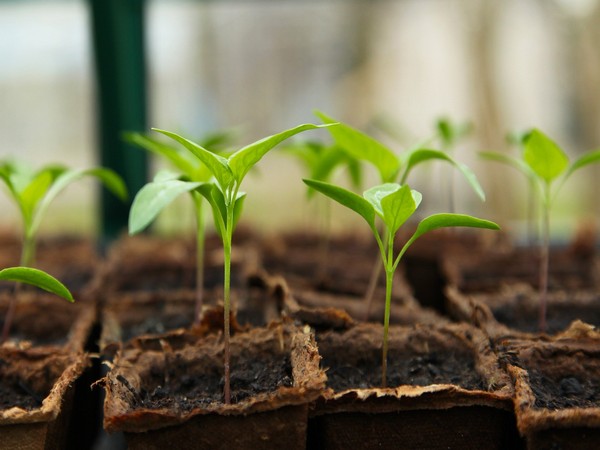
Representative image

Washington [US], January 5 (ANI): A new study has found that to survive short periods of heat stress, plants activate a molecular pathway called the heat-shock response.
The research has been published in the 'EMBO Journal'.
This heat-shock response (common to all organisms) protects cells from damage inflicted by proteotoxic stress, which damages proteins. Such stress is not only caused by heat but can also result from exposure to certain toxins, UV light, or soil salinity.
The heat shock response protects cells in various ways, one of them being the production of so-called heat-shock proteins, which serve as molecular shields that protect proteins by preventing misfolding.
Plants respond to heat stress by activating heat shock factors and also other molecular players. In particular, hormones as chemical messengers are involved. Among the hormones that plants produce are brassinosteroids, which primarily regulate their growth and development.
But, in addition to their growth-promoting properties, brassinosteroids have other interesting abilities, one of them being their ability to increase the heat stress resistance of plants, and researchers at TUM have recently discovered what contributes to this protective ability.
Using the model plant Arabidopsis thaliana, a research group led by Prof. Brigitte Poppenberger was able to elucidate how a specific transcription factor - a special protein responsible for switching certain sections of the DNA on or off - is regulated by brassinosteroids. This transcription factor, called BES1, can interact with heat shock factors thereby allowing genetic information to be targeted towards the increased synthesis of heat shock proteins.
When BES1 activity was increased, plants became more resistant to heat stress, and when it is decreased, they became more sensitive to it. Furthermore, the group demonstrated that BES1 was activated by heat stress and that this activation is stimulated by brassinosteroids.
"These results are not only of interest to biologists trying to expand our understanding of the heat shock response but also have the potential for practical application in agriculture and horticulture," said Prof. Poppenberger.
Bio-stimulants containing brassinosteroids are available and can be tested for their ability to increase heat stress resistance in plants. Such substances are natural products that are approved for organic farming and thus could be used without problems.
Alternatively, BES1 may be an interesting target for breeding approaches. This could be used to create varieties that are more resistant to heat stress and thus provide more stable yields in the event of future heat waves. (ANI)


Get the App

What to Read Next

Science

Amphibians bounce-back from Earth’s greatest mass extinction

Amphibians bounce-back from Earth’s greatest mass extinction

Researchers at the University of Bristol discovered that ancient frog ancestors survived the biggest mass extinction of species by eating on freshwater prey that evaded terrestrial predators.

Read More
Science

Scientists use AI to better understand nanoparticles: Study

Scientists use AI to better understand nanoparticles: Study

A group of scientists has created a way to illuminate the dynamic behavior of nanoparticles, which are essential components in the production of pharmaceuticals, electronics, and industrial and energy-conversion materials.

Read More
Science

New technology enhances gravitational-wave detection: Study

New technology enhances gravitational-wave detection: Study

A team of physicists led by Jonathan Richardson of the University of California, Riverside, demonstrated how new optical technology can extend the detection range of gravitational-wave observatories such as the Laser Interferometer Gravitational-Wave Observatory, or LIGO, and pave the way for future observatories.

Read More
Science

Discovering the genetics of climate adaptation 

Discovering the genetics of climate adaptation 

As climate change accelerates, plants are under increasing pressure to adapt to changing habitats and environmental conditions.

Read More
Science

Astronomers find the smallest main-belt asteroids ever detected:

Astronomers find the smallest main-belt asteroids ever detected:

The majority of known asteroids orbit inside the main asteroid belt, which is positioned between Mars and Jupiter at an average distance of around 250 million km from Earth. Since the discovery of the first asteroid in 1801, about 750.000 asteroids have been identified, primarily in the last decade thanks to several optical surveys that examine the sky on clear nights.

Read More
Science

Study finds connection between quantum theory, information theory

Study finds connection between quantum theory, information theory

"Our results have no clear or direct application right now. It's basic research that lays the foundation for future technologies in quantum information and quantum computers. There's enormous potential for complete discoveries in many different research fields," said Guilherme B Xavier, a researcher in quantum communication at Linkoping University, Sweden.

Read More
Science

Tool for detecting problems during protein synthesis

Tool for detecting problems during protein synthesis

Protein synthesis in eukaryotic cells--found in plants, animals, and fungi--involves more than just the straightforward ribosome assembly of amino acids.

Read More
Science

When devices can read human emotions without a camera: Study

When devices can read human emotions without a camera: Study

Tokyo Metropolitan University researchers employed long-term skin conductance measurements to distinguish between emotions. Volunteers were given videos representing frightening scenarios, family bonding, and humour, while their skin conductance was measured.

Read More
Science

'Nuroscience study results can be better predicted by AI'

'Nuroscience study results can be better predicted by AI'

Large language models, a type of AI that analyses text, can anticipate the results of proposed neuroscience studies more correctly than human experts, according to a new study led by UCL (University College London) researchers.

Read More
Science

Gut microbes play role in regulating stress responsiveness

Gut microbes play role in regulating stress responsiveness

A groundbreaking study has revealed the critical role of gut bacteria in regulating stress responses through interactions with the body's circadian rhythms.

Read More
Home About Us Our Products Advertise Contact Us Terms & Condition Privacy Policy

Copyright © aninews.in | All Rights Reserved.


