

ADD ANI AS A TRUSTED SOURCE
googleads
ANI Logo
Menu
Science

Study finds how forests benefit from variety of tree species, genetic diversity

According to a study, reforestation operations should contain a variety of tree species and ensure genetic diversity within each species to maximize the health and production of new forests.

ANI Nov 29, 2022 23:08 IST googleads

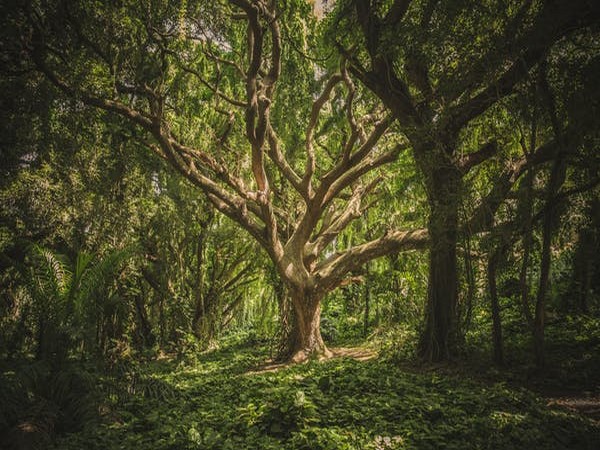
Representative image

Washington [US], November 29 (ANI): According to a study, reforestation operations should contain a variety of tree species and ensure genetic diversity within each species to maximize the health and production of new forests.
The study was published today in eLife.
The findings suggest that complex interactions between trees and other organisms should be carefully considered when determining the combination of trees in a forest to ensure a functional ecosystem is maintained.
Diversity is essential to healthy ecosystems. Forests made up of a variety of tree species are more productive, as they make more efficient use of resources. This is because different species fill distinct niches - meaning they have different optimal physical and environmental conditions, such as their terrain, and have different interactions with other species such as predation events, meaning they compete less. Additionally, having multiple tree species can reduce the negative impacts of herbivores and soil fungi that might compete for the trees' nutrients. Few studies have looked at the role of genetic diversity within each tree species in a forest, but some plant studies suggest that genetic diversity within a species is also beneficial to the ecosystem.
"To better understand the effects of genetic diversity in forests and guide reforestation efforts, we looked at how both the variety of species and genetic diversity within species affect forest productivity," says Ting Tang, the co-lead author of the study, a doctoral student at the University of the Chinese Academy of Sciences in Beijing, China.
Tang and colleagues used data from a long-term large tree species and genetic diversity experiment in a subtropical forest (www.bef-china.com, Bruelheide et al., 2014). Tree species diversity and genetic diversity within species were manipulated to generate four different plant diversity levels and the team measured five structural and chemical leaf traits that are known to be highly variable and relate to rates of resource acquisition.
The team's investigations showed that trees grown in forests with multiple tree species were more productive than those grown in single-species (or monoculture) forests. Forests with four different tree species had less diversity in soil fungi than monoculture forests, reducing the need for the trees to compete with fungi for resources. There was also less pressure from herbivores than in monoculture forests.
The team did not see reduced soil fungi diversity or herbivore pressure in forests that included one tree species with four distinct genetic backgrounds. But forests that had four different tree species - with individual trees from four genetically distinct family groups in each - did result in beneficial effects on both fungi diversity and herbivore pressure.
"We found that both species and genetic diversity promote forest productivity by increasing the ability of trees to maximise the use of resources while reducing damage caused by herbivores and competition from soil fungi," Tang comments.
The results suggest that species and genetic diversity could help reduce the number and variety of tree competitors - for example, by reducing the toll that herbivores take on trees, the costs to trees of producing defensive compounds to deter them, or reducing the competition from fungi for nutrients. They also suggest trees in more diverse forests can better exploit individual niches.
"Reforestation projects are critical to mitigating atmospheric carbon levels and helping countries realise the full ecological and economic benefits of healthy forests," says Xiaojuan Liu, associate professor at the Institute of Botany, Chinese Academy of Sciences, Beijing. "Our results suggest that scientists leading reforestation projects should include multiple species of trees and genetically diverse individual trees within each species to ensure healthier forests." (ANI)


Get the App

What to Read Next

Science

New method guides magnetism without magnets

New method guides magnetism without magnets

Researchers at Paul Scherrer Institute PSI have demonstrated an innovative method to control magnetism in materials using an energy-efficient electric field.

Read More
Science

Amphibians bounce-back from Earth’s greatest mass extinction

Amphibians bounce-back from Earth’s greatest mass extinction

Researchers at the University of Bristol discovered that ancient frog ancestors survived the biggest mass extinction of species by eating on freshwater prey that evaded terrestrial predators.

Read More
Science

New insights into how cancer evades the immune system: Study

New insights into how cancer evades the immune system: Study

Immunotherapy research primarily focuses on better recognition of cancer cells by the body's own immune system. Researchers at Amsterdam UMC and Moffitt Cancer Center have taken a different approach.

Read More
Science

Scientists use AI to better understand nanoparticles: Study

Scientists use AI to better understand nanoparticles: Study

A group of scientists has created a way to illuminate the dynamic behavior of nanoparticles, which are essential components in the production of pharmaceuticals, electronics, and industrial and energy-conversion materials.

Read More
Science

New device could allow you to taste cake in virtual reality

New device could allow you to taste cake in virtual reality

The 'e-Taste' interface employs sensors and wireless chemical dispensers to enable remote taste perception, often known as gestation. Field testing done by researchers at The Ohio State University confirmed the device's ability to digitally simulate a range of taste intensities, while still offering variety and safety for the user.

Read More
Science

Strand Life Sciences launches portal for rare disease diagnosis

Strand Life Sciences launches portal for rare disease diagnosis

Marking Rare Disease Day, Strand Life Sciences, a subsidiary of Reliance Industries and a leading genomics research company, has launched the StrandOmics Portal, an innovative digital platform designed to assist doctors in diagnosing rare diseases more efficiently.

Read More
Science

Study reveals impact of animals as architects of Earth

Study reveals impact of animals as architects of Earth

A new study led by Professor Gemma Harvey from Queen Mary University of London has revealed how hundreds of species shape the landscapes we depend on, from termite mounds visible from space to beavers creating wetlands and hippos carving drainage systems.

Read More
Science

Opposing arrows of time emerge from certain quantum systems

Opposing arrows of time emerge from certain quantum systems

Researchers at the University of Surrey made a thought-provoking discovery. A new study reveals that opposing arrows of time can theoretically emerge from certain quantum systems.

Read More
Science

COVID-19 severity may be predicted by White Blood Cell Count

COVID-19 severity may be predicted by White Blood Cell Count

A COVID-19 diagnosis is no longer as frightening as it used to be, thanks to developments in treatment choices. However, a new study reveals that leukocyte (white blood cell) count may now be used to identify who is more likely to develop more significant disease symptoms.

Read More
Science

Seals can essentially act as 'smart sensors': Study

Seals can essentially act as 'smart sensors': Study

A new study by marine biologists reports that seals can essentially act as 'smart sensors' for monitoring fish populations in the ocean's eerily dim 'twilight zone.'

Read More
Home About Us Our Products Advertise Contact Us Terms & Condition Privacy Policy

Copyright © aninews.in | All Rights Reserved.
