

ADD ANI AS A TRUSTED SOURCE
googleads
ANI Logo
Menu
Science

Study finds Earth's most devastating mass extinctions triggered by slowing of continental plates

Washington [US], September 14 (ANI): Scientists have shed new light on the timing and likely cause of major volcanic events that occurred millions of years ago and caused such climatic and biological upheaval that they drove some of the most devastating extinction events in Earth's history. Surprisingly the new research suggests a slowing of continental plate movement was the critical event that enabled magma to rise to the Earth's surface and deliver the devastating knock-on impacts.

ANI Sep 14, 2022 17:58 IST googleads

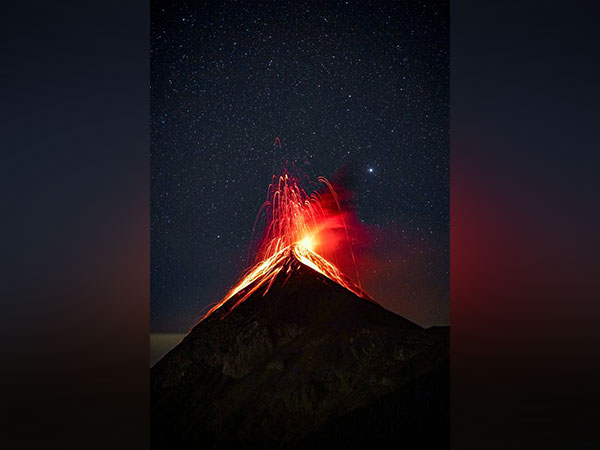
Representative Image

Washington [US], September 14 (ANI): Scientists have shed new light on the timing and likely cause of major volcanic events that occurred millions of years ago and caused such climatic and biological upheaval that they drove some of the most devastating extinction events in Earth's history. Surprisingly the new research suggests a slowing of continental plate movement was the critical event that enabled magma to rise to the Earth's surface and deliver the devastating knock-on impacts.
Surprisingly the new research, published today in the journal Science Advances, suggests a slowing of continental plate movement was the critical event that enabled magma to rise to the Earth's surface and deliver the devastating knock-on impacts.
Earth's history has been marked by major volcanic events, called Large Igneous Provinces (LIPs) -- the largest of which have caused major increases in atmospheric carbon emissions that warmed Earth's climate, drove unprecedented changes to ecosystems and resulted in mass extinctions on land and in the oceans.
Using chemical data from ancient mudstone deposits obtained from a 1.5 km-deep borehole in Wales, an international team led by scientists from Trinity College Dublin's School of Natural Sciences was able to link two key events from around 183 million years ago (the Toarcian period).
The team discovered that this time period, which was characterised by some of the most severe climatic and environmental changes ever, directly coincided with the occurrence of major volcanic activity and associated greenhouse gas release on the southern hemisphere, in what is nowadays known as the southern Africa, Antarctica and Australia.
On further investigation -- and more importantly -- the team's plate reconstruction models helped them discover the key fundamental geological process that seemed to control the timing and onset of this volcanic event and others of great magnitude.
Micha Ruhl, Assistant Professor in Trinity's School of Natural Sciences, led the team. He said:
"Scientists have long thought that the onset of upwelling of molten volcanic rock, or magma, from deep in Earth's interior, as mantle plumes, was the instigator of such volcanic activity but the new evidence shows that the normal rate of continental plate movement of several centimetres per year effectively prevents magma from penetrating Earth's continental crust.
"It seems it is only when the speed of continental plate movement slows down to near zero that magmas from mantle plumes can effectively make their way to the surface, causing major large igneous province volcanic eruptions and their associated climatic perturbations and mass extinctions.
"Crucially, the further assessment shows that a reduction in continental plate movement likely controlled the onset and duration of many of the major volcanic events throughout Earth's history, making it a fundamental process in controlling the evolution of climate and life at Earth's surface throughout the history of this planet."
The study of past global change events, such as in the Toarcian, allows scientists to disentangle the different processes that control the causes and consequences of global carbon cycle change and constrain fundamental Earth system processes that control tipping points in Earth's climate system. (ANI)


Get the App

What to Read Next

Science

Amphibians bounce-back from Earth’s greatest mass extinction

Amphibians bounce-back from Earth’s greatest mass extinction

Researchers at the University of Bristol discovered that ancient frog ancestors survived the biggest mass extinction of species by eating on freshwater prey that evaded terrestrial predators.

Read More
Science

New insights into how cancer evades the immune system: Study

New insights into how cancer evades the immune system: Study

Immunotherapy research primarily focuses on better recognition of cancer cells by the body's own immune system. Researchers at Amsterdam UMC and Moffitt Cancer Center have taken a different approach.

Read More
Science

Discovering the genetics of climate adaptation 

Discovering the genetics of climate adaptation 

As climate change accelerates, plants are under increasing pressure to adapt to changing habitats and environmental conditions.

Read More
Science

Weather change linked to heightened risk of Salmonella outbreaks

Weather change linked to heightened risk of Salmonella outbreaks

According to new research from the University of Surrey, climate change has an impact on Salmonella spread. This study builds on prior work by the researchers, which discovered that weather change is contributing to the spread of deadly diarrhoeal illnesses.

Read More
Science

Bacterial vaccine demonstrates potential as cancer treatment

Bacterial vaccine demonstrates potential as cancer treatment

Columbia researchers developed probiotic bacteria that train the immune system to eliminate cancer cells, paving the way for a new class of cancer vaccinations that take advantage of bacteria's innate tumour-targeting abilities. These microbial cancer vaccines can be tailored to each person's specific original tumour and metastases, perhaps preventing future recurrences.

Read More
Science

Alternate method to study changes during DNA replication process

Alternate method to study changes during DNA replication process

Researchers at Colorado State University discovered an alternative way for studying alterations during the DNA replication process in lab settings using genetically modified yeast. The novel methodology provides a clearer picture than current pharmacological methods for understanding cell cycle arrest, a fundamental mechanism critical to cancer treatment and genetic concerns.

Read More
Science

Cancer cells may be using lipids to hide from immune system

Cancer cells may be using lipids to hide from immune system

Cancer cells rarely begin stealthily. Quite the contrary, they alert the immune system to their presence by displaying chemical red flags on their membranes. When detected, the body's defences can swoop in and destroy renegade cells before they can do significant damage. Lipids, fatty molecules traditionally thought to be largely a fuel supply for developing tumours, are at the heart of this early detection system.

Read More
Science

Contrail avoidance is less likely to damage climate by mistake

Contrail avoidance is less likely to damage climate by mistake

A new study allays concerns that rerouting planes to avoid producing climate-warming contrails may accidentally exacerbate climate change.

Read More
Science

Study finds how cancer develops when immune system fails

 Study finds how cancer develops when immune system fails

It has been suggested that the immune system is unable to eradicate invasive tumour cells by referring to cancer as "a wound that does not heal."

Read More
Science

Weight loss could reduce chances of severe infections in people

Weight loss could reduce chances of severe infections in people

According to new research, weight loss therapies may lower the risk of severe flu cases and other infections in patients with diabetes.

Read More
Home About Us Our Products Advertise Contact Us Terms & Condition Privacy Policy

Copyright © aninews.in | All Rights Reserved.


