

ADD ANI AS A TRUSTED SOURCE
googleads
ANI Logo
Menu
Science

Study finds early humans breastfed their infants for longer duration

Washington D.C. [USA], Sept 7 (ANI): As researchers studied the fossilised teeth of a few ancient humans, they found that those ancestors breastfed their newborns for longer periods than their contemporary relatives.

ANI Sep 07, 2019 21:45 IST googleads

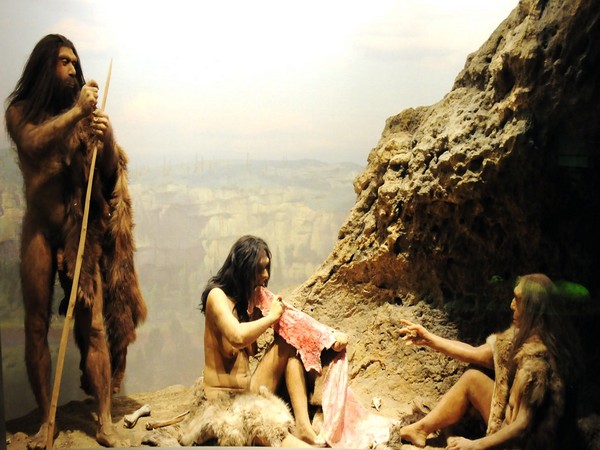
Representative image

Washington D.C. [USA], Sept 7 (ANI): As researchers studied the fossilised teeth of a few ancient humans, they found that those ancestors breastfed their newborns for longer periods than their contemporary relatives.
The results, published in the journal -- Science Advances -- provided the first insight into the practice of weaning that remain otherwise unseen in the fossil record.
The team sampled minute amounts from nearly 40 fossilised teeth of South African fossil relatives such as early Homo, Paranthropus Robustus and Australopithecus africanus.
They measured the proportions of their stable calcium isotopes in the tooth enamel, which are a function of the mother milk intake by infants.
By reconstructing the age at tooth enamel development, they show that early Homo offspring was breastfed in significant proportions until the age of around three to four years, which likely played a role in the apparition of traits that are specific to the human lineages, such as the brain development.
In contrast, infants of Paranthropus Robustus, that became extinct around one million years ago and were a more robust species in terms of dental anatomy, as well as infants of Australopithecus africanus, stopped drinking sizeable proportions of mother milk in the course of the first months of life.
These differences in nursing behaviours likely come with major changes in the social structures of groups as well as the time between the birth of one child and the birth of the next.
"The practice of weaning -- the duration of breastfeeding, age at non-milk food introduction and the age at cessation of suckling -- differs among the modern members of the hominid family which includes humans and modern great apes: orangutan, gorillas, chimpanzees and bonobos," said, one of the study's lead authors, Dr Theo Tacail from the University of Bristol's School of Earth Sciences.
The development of such behavioural differences played major roles in the evolution of the members of the human lineage, being associated for instance with size and structure of social groups, brain development or demography.
However, getting insights into these behavioural changes from fossils that are millions of years old is a challenge and, so far, little evidence allows discussing nursing practices in these fossil species.
The findings stress the need for further exploration of calcium stables isotopes compositions in the fossil record in order to understand the co-evolution of weaning practices with other traits such as brain size or social behaviours. (ANI)

Get the App

What to Read Next

Science

Study finds novel approach to treat neurological diseases

Study finds novel approach to treat neurological diseases

The matter of what causes complicated neurological disorders like Alzheimer's or multiple sclerosis continues to perplex scientists and doctors, with unknowns impeding early diagnosis and successful treatment.

Read More
Science

Surrogacy linked with higher risk of severe pregnancy results

Surrogacy linked with higher risk of severe pregnancy results

According to new research, individuals who are gestational carriers (also known as "surrogates") may be more susceptible to severe complications during pregnancy and the early postpartum period, hypertension during pregnancy, and postpartum hemorrhage than those who conceive naturally or through IVF.

Read More
Science

'Bone marrow cancer drug shows success in blood disorder'

'Bone marrow cancer drug shows success in blood disorder'

When researchers discovered enough proof that a medication used to treat bone marrow cancer and Kaposi sarcoma is safe and effective in treating hereditary hemorrhagic telangiectasia (HHT), a rare bleeding disorder that affects 1 in 5,000 people worldwide, they decided to terminate an early clinical trial funded by the National Institutes of Health

Read More
Science

Cancer cells may be using lipids to hide from immune system

Cancer cells may be using lipids to hide from immune system

Cancer cells rarely begin stealthily. Quite the contrary, they alert the immune system to their presence by displaying chemical red flags on their membranes. When detected, the body's defences can swoop in and destroy renegade cells before they can do significant damage. Lipids, fatty molecules traditionally thought to be largely a fuel supply for developing tumours, are at the heart of this early detection system.

Read More
Science

Researchers give more insight into heat perception in humans

Researchers give more insight into heat perception in humans

The Medical University of Vienna's research has significantly advanced our knowledge of how humans perceive heat. A group of scientists has discovered a particular type of cell structure involved in heat recognition.

Read More
Science

More insight into cardiovascular health in early pregnancy

More insight into cardiovascular health in early pregnancy

According to research, maintaining good cardiovascular health during the first trimester of pregnancy may mitigate the genetic risk of developing preeclampsia and/or gestational hypertension.

Read More
Science

Research sheds more light on staging of pancreatic cancer

Research sheds more light on staging of pancreatic cancer

A recent Cedars-Sinai Cancer study found that up to 80 per cent of the time, patients with early pancreatic cancer are incorrectly staged. The discovery highlights the critical need for improvements in staging and diagnostic technology, which could have a substantial impact on early pancreatic cancer research and therapy.

Read More
Science

Fossil study finds how sea level changes shaped early life

Fossil study finds how sea level changes shaped early life

A newly developed timeline of early animal fossils suggests a relationship between sea level fluctuations, variations in marine oxygen, and the appearance of the earliest ancestors of present-day animals.

Read More
Science

Study finds how new blood test helps improve cancer treatments

Study finds how new blood test helps improve cancer treatments

The likelihood that treatment will be successful for cancer increases with early detection. Almost every kind of cancer is covered by this. Evaluating the advantages and disadvantages of each type of therapy on an individual basis and keeping a regular eye on treatment outcomes are also essential components of effective patient care.

Read More
Science

Study reveals type of childhood leukaemia originates

Study reveals type of childhood leukaemia originates

Acute myeloid leukaemia is the second most prevalent type of acute leukaemia in childhood, and it can be detected within a few months of life. The disease's early beginning raised the possibility that the cancer originated before birth. However, validating this notion has been difficult due to the scarcity of prenatal or newborn samples.

Read More
Home About Us Our Products Advertise Contact Us Terms & Condition Privacy Policy

Copyright © aninews.in | All Rights Reserved.




