

ADD ANI AS A TRUSTED SOURCE
googleads
ANI Logo
Menu
Science

Study finds catchment restoration in mountains can reduce climate change impact on drought

Cape Town [South Africa], March 10 (ANI): A new research led by the University of Cape Town (UCT) has shown how catchment restoration through the management of alien tree infestation in the mountains of the South-Western Cape could have lessened the impact of climate change on low river flows during the cape Town 'Day Zero' drought.

ANI Mar 10, 2022 13:59 IST googleads

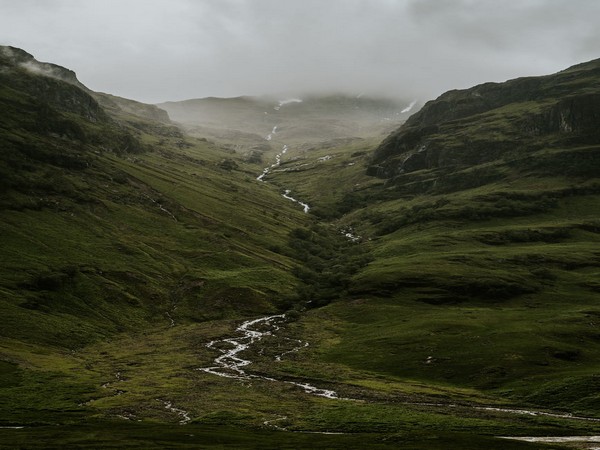
Representative image

Cape Town [South Africa], March 10 (ANI): A new research led by the University of Cape Town (UCT) has shown how catchment restoration through the management of alien tree infestation in the mountains of the South-Western Cape could have lessened the impact of climate change on low river flows during the cape Town 'Day Zero' drought.
The study was published in the journal, 'Nature'.
Climate change is impacting extreme weather events such as droughts and floods. Nature-based solutions, such as catchment restoration, involve working with ecosystems and landscapes to addressing societal challenges. These challenges include the impacts of climate change on water resources. Up to now, studies have not separated the role of nature-based solutions in reducing the human-driven climate change impacts of extreme events on water availability from that of natural climate variability. Their focus was on a typical type of catchment restoration in South Africa - invasive alien tree management.
"Invasive alien trees have higher transpiration rates, compared to the native vegetation of the Cape mountains, and thus reduce streamflow," Holden explained.
The research team linked climate models and a hydrological model to simulate streamflow during the "Day Zero" drought. They then tested how severe the hydrological drought would have been if there had been no human-driven climate change. Their focus was specifically on the impacts of climate change and alien tree management on streamflow from mountainous catchments that supply dams critical for water supply to Cape Town.
Holden shared, "Existing studies do not isolate the effect of nature-based solutions on the anthropogenically derived (i.e., human-derived) portion of climate change, especially for drought events that have already occurred. Few studies attribute biophysical impacts to human-caused climate change impact on drought events while simultaneously investigating the role of nature-based solutions in modulating this impact."
This new analysis showed that climate change reduced streamflow during the drought by 12-29 per cent relative to a world without human influence on the climate. Furthermore, it showed that clearing alien trees that were present in the catchments before the drought-hit could have reduced the anthropogenic climate change impact on streamflow, but the effect was dependent on the extent of invasion.
Clearing moderate levels of invasion (such as 40 per cent coverages seen in some catchments) would have resulted in a 3-16 per cent amelioration of the human-derived climate change impact on streamflow. Preventing the spread of alien trees from current levels to full catchment invasion avoided additional reductions of 10-27 per cent in streamflow due to anthropogenic climate change.
The researchers also found that the impact of climate change was amplified due to catchment hydrological processes. For example, the reductions in streamflow (12-29 per cent) were larger than the reductions in rainfall caused by anthropogenic climate change (7-15 per cent). Despite the role that evapotranspiration can play in drought events, the researchers found some but not a large impact of climate change on reference evapotranspiration.
This is an important study for highlighting the power of quantitative assessments for informing climate change adaptation planning. The researchers were able to show that catchment restoration reduced the impact of anthropogenic climate change but was not able to remove the full signal of human-driven climate change completely, even under current levels of warnings. Given this, the researchers highlighted that it is critical to combine nature-based solutions with other adaptation strategies and options for water resource planning to combat accelerated climate change impacts.
"Teasing out the contribution of adaptation strategies - be they nature-based or not - for buffering society from human-driven versus natural variability in climate can be challenging. However, it is important to inform adaptation planning so that climate risk management strategies can be combined in ways that consider thresholds and limits to change," concluded Holden. (ANI)


Get the App

What to Read Next

Science

Amphibians bounce-back from Earth’s greatest mass extinction

Amphibians bounce-back from Earth’s greatest mass extinction

Researchers at the University of Bristol discovered that ancient frog ancestors survived the biggest mass extinction of species by eating on freshwater prey that evaded terrestrial predators.

Read More
Science

Scientists use AI to better understand nanoparticles: Study

Scientists use AI to better understand nanoparticles: Study

A group of scientists has created a way to illuminate the dynamic behavior of nanoparticles, which are essential components in the production of pharmaceuticals, electronics, and industrial and energy-conversion materials.

Read More
Science

New technology enhances gravitational-wave detection: Study

New technology enhances gravitational-wave detection: Study

A team of physicists led by Jonathan Richardson of the University of California, Riverside, demonstrated how new optical technology can extend the detection range of gravitational-wave observatories such as the Laser Interferometer Gravitational-Wave Observatory, or LIGO, and pave the way for future observatories.

Read More
Science

Discovering the genetics of climate adaptation 

Discovering the genetics of climate adaptation 

As climate change accelerates, plants are under increasing pressure to adapt to changing habitats and environmental conditions.

Read More
Science

Weather change linked to heightened risk of Salmonella outbreaks

Weather change linked to heightened risk of Salmonella outbreaks

According to new research from the University of Surrey, climate change has an impact on Salmonella spread. This study builds on prior work by the researchers, which discovered that weather change is contributing to the spread of deadly diarrhoeal illnesses.

Read More
Science

Astronomers find the smallest main-belt asteroids ever detected:

Astronomers find the smallest main-belt asteroids ever detected:

The majority of known asteroids orbit inside the main asteroid belt, which is positioned between Mars and Jupiter at an average distance of around 250 million km from Earth. Since the discovery of the first asteroid in 1801, about 750.000 asteroids have been identified, primarily in the last decade thanks to several optical surveys that examine the sky on clear nights.

Read More
Science

Study finds connection between quantum theory, information theory

Study finds connection between quantum theory, information theory

"Our results have no clear or direct application right now. It's basic research that lays the foundation for future technologies in quantum information and quantum computers. There's enormous potential for complete discoveries in many different research fields," said Guilherme B Xavier, a researcher in quantum communication at Linkoping University, Sweden.

Read More
Science

When devices can read human emotions without a camera: Study

When devices can read human emotions without a camera: Study

Tokyo Metropolitan University researchers employed long-term skin conductance measurements to distinguish between emotions. Volunteers were given videos representing frightening scenarios, family bonding, and humour, while their skin conductance was measured.

Read More
Science

'Nuroscience study results can be better predicted by AI'

'Nuroscience study results can be better predicted by AI'

Large language models, a type of AI that analyses text, can anticipate the results of proposed neuroscience studies more correctly than human experts, according to a new study led by UCL (University College London) researchers.

Read More
Science

Thermal imaging may help fruits, veggies stay fresher longer: Study

Thermal imaging may help fruits, veggies stay fresher longer: Study

Before your favourite produce arrives at the grocery store, it must be carefully harvested and stored for extended periods of time. A recent University of Georgia assessment argues that new temperature sensing devices could make that procedure considerably easier, as agricultural issues are exacerbated by changing climates.

Read More
Home About Us Our Products Advertise Contact Us Terms & Condition Privacy Policy

Copyright © aninews.in | All Rights Reserved.


