

ADD ANI AS A TRUSTED SOURCE
googleads
ANI Logo
Menu
Science

Study finds cancer cells use 'tiny tentacles' to suppress immune system

Boston (Massachusetts) [US], November 18 (ANI): Investigators from Brigham and Women's Hospital and MIT used the power of nanotechnology to discover a new way that cancer can disarm its would-be cellular attackers by extending out nanoscale tentacles that can reach into an immune cell and pull out its powerpack.

ANI Nov 18, 2021 22:03 IST googleads

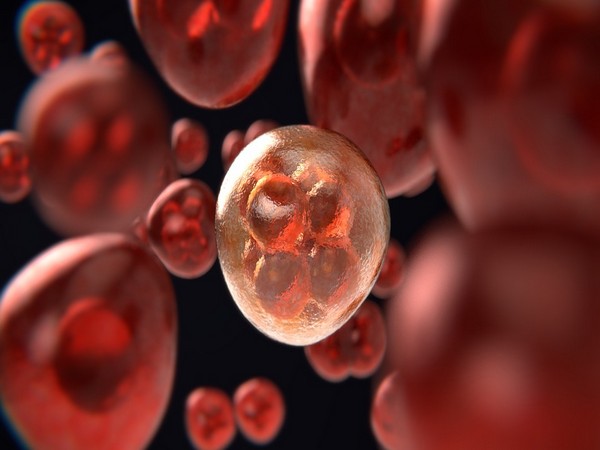
Representative image

Boston (Massachusetts) [US], November 18 (ANI): Investigators from Brigham and Women's Hospital and MIT used the power of nanotechnology to discover a new way that cancer can disarm its would-be cellular attackers by extending out nanoscale tentacles that can reach into an immune cell and pull out its powerpack.
Slurping out the immune cell's mitochondria powers up the cancer cell and depletes the immune cell. The new findings, published in Nature Nanotechnology, could lead to new targets for developing the next generation of immunotherapy against cancer.
"Cancer kills when the immune system is suppressed and cancer cells are able to metastasize, and it appears that nanotubes can help them do both," said corresponding author Shiladitya Sengupta, PhD, co-director of the Brigham's Center for Engineered Therapeutics. "This is a completely new mechanism by which cancer cells evade the immune system and it gives us a new target to go after."
To investigate how cancer cells and immune cells interact at the nanoscale level, Sengupta and colleagues set up experiments in which they co-cultured breast cancer cells and immune cells, such as T cells. Using field-emission scanning electron microscopy, they caught a glimpse of something unusual: Cancer cells and immune cells appeared to be physically connected by tiny tendrils, with widths mostly in the 100-1000 nanometer range. (For comparison, a human hair is approximately 80,000 to 100,000 nanometers).
In some cases, the nanotubes came together to form thicker tubes. The team then stained mitochondria -- which provide energy for cells -- from the T cells with a fluorescent dye and watched as bright green mitochondria were pulled out of the immune cells, through the nanotubes, and into the cancer cells.
"By carefully preserving the cell culture condition and observing intracellular structures, we saw these delicate nanotubes and they were stealing the immune cells' energy source," said co-corresponding author Hae Lin Jang, PhD, a principal investigator in the Center for Engineered Therapeutics. "It was very exciting because this kind of behaviour had never been observed before in cancer cells. This was a tough project as the nanotubes are fragile and we had to handle the cells very gently to not break them."
The researchers then looked to see what would happen if they prevented the cancer cells from hijacking mitochondria. When they injected an inhibitor of nanotube formation into mouse models used for studying lung cancer and breast cancer, they saw a significant reduction in tumour growth.
"One of the goals in cancer immunotherapy is to find combinations of therapies that can improve outcomes," said lead author Tanmoy Saha, PhD, a postdoctoral researcher in the Center for Engineered Therapeutics. "Based on our observations, there is evidence that an inhibitor of nanotube formation could be combined with cancer immunotherapies and tested to see if it can improve outcomes for patients." (ANI)


Get the App

What to Read Next

Science

Amphibians bounce-back from Earth’s greatest mass extinction

Amphibians bounce-back from Earth’s greatest mass extinction

Researchers at the University of Bristol discovered that ancient frog ancestors survived the biggest mass extinction of species by eating on freshwater prey that evaded terrestrial predators.

Read More
Science

New insights into how cancer evades the immune system: Study

New insights into how cancer evades the immune system: Study

Immunotherapy research primarily focuses on better recognition of cancer cells by the body's own immune system. Researchers at Amsterdam UMC and Moffitt Cancer Center have taken a different approach.

Read More
Science

Scientists use AI to better understand nanoparticles: Study

Scientists use AI to better understand nanoparticles: Study

A group of scientists has created a way to illuminate the dynamic behavior of nanoparticles, which are essential components in the production of pharmaceuticals, electronics, and industrial and energy-conversion materials.

Read More
Science

New technology enhances gravitational-wave detection: Study

New technology enhances gravitational-wave detection: Study

A team of physicists led by Jonathan Richardson of the University of California, Riverside, demonstrated how new optical technology can extend the detection range of gravitational-wave observatories such as the Laser Interferometer Gravitational-Wave Observatory, or LIGO, and pave the way for future observatories.

Read More
Science

Astronomers find the smallest main-belt asteroids ever detected:

Astronomers find the smallest main-belt asteroids ever detected:

The majority of known asteroids orbit inside the main asteroid belt, which is positioned between Mars and Jupiter at an average distance of around 250 million km from Earth. Since the discovery of the first asteroid in 1801, about 750.000 asteroids have been identified, primarily in the last decade thanks to several optical surveys that examine the sky on clear nights.

Read More
Science

Study finds connection between quantum theory, information theory

Study finds connection between quantum theory, information theory

"Our results have no clear or direct application right now. It's basic research that lays the foundation for future technologies in quantum information and quantum computers. There's enormous potential for complete discoveries in many different research fields," said Guilherme B Xavier, a researcher in quantum communication at Linkoping University, Sweden.

Read More
Science

Tool for detecting problems during protein synthesis

Tool for detecting problems during protein synthesis

Protein synthesis in eukaryotic cells--found in plants, animals, and fungi--involves more than just the straightforward ribosome assembly of amino acids.

Read More
Science

When devices can read human emotions without a camera: Study

When devices can read human emotions without a camera: Study

Tokyo Metropolitan University researchers employed long-term skin conductance measurements to distinguish between emotions. Volunteers were given videos representing frightening scenarios, family bonding, and humour, while their skin conductance was measured.

Read More
Science

'Nuroscience study results can be better predicted by AI'

'Nuroscience study results can be better predicted by AI'

Large language models, a type of AI that analyses text, can anticipate the results of proposed neuroscience studies more correctly than human experts, according to a new study led by UCL (University College London) researchers.

Read More
Science

Thermal imaging may help fruits, veggies stay fresher longer: Study

Thermal imaging may help fruits, veggies stay fresher longer: Study

Before your favourite produce arrives at the grocery store, it must be carefully harvested and stored for extended periods of time. A recent University of Georgia assessment argues that new temperature sensing devices could make that procedure considerably easier, as agricultural issues are exacerbated by changing climates.

Read More
Home About Us Our Products Advertise Contact Us Terms & Condition Privacy Policy

Copyright © aninews.in | All Rights Reserved.


