

ADD ANI AS A TRUSTED SOURCE
googleads
ANI Logo
Menu
Science

Study finds bird malaria is spreading via global hotspots

Brisbane [Australia], September 8 (ANI): A new research has found the reason behind why bird species across the globe are suffering and dying from a type of malaria.

ANI Sep 08, 2021 18:47 IST googleads

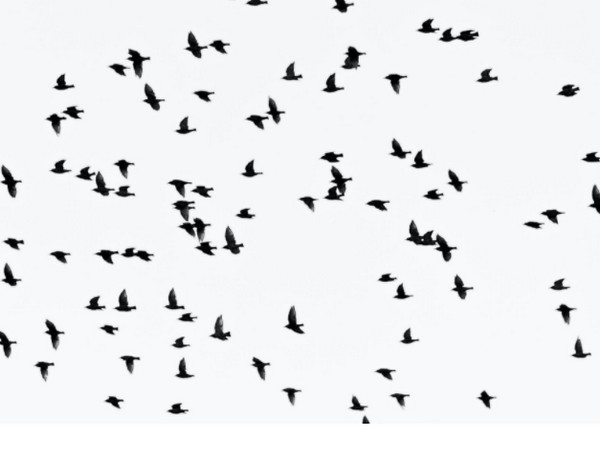
Representative image

Brisbane [Australia], September 8 (ANI): A new research has found the reason behind why bird species across the globe are suffering and dying from a type of malaria.
The findings of the study were published in the journal 'Global Ecology and Biogeography'.
An international team, including The University of Queensland's Dr Nicholas Clark, has been conducting research to understand where and why the disease has been spreading so rapidly. While these strains are not infectious to humans, they're spreading quickly through global transmission hotspots.
"Avian malaria now affects somewhere between 13 and 14 per cent -- on average -- of all wild birds worldwide. It's caused by a group of blood parasites -- known as haemosporidian parasites -- and, much like human malaria, is transmitted via blood-feeding insects like mosquitos," Dr Clark said.
"It can't harm humans but is known to have significant impacts on bird populations. For example, when avian malaria was introduced into Hawaii in the late 1800s to early 1900s, it was one of the major causes of extinction of about one-third of the 55 known species of Hawaiian honeycreepers," Dr Clark added.
"We've found that there are hotspots transmitting these parasites across the world. The most significant hotspot was in the Sahara-Arabian region, with local hotspots in North America, Europe and Australia, depending on different parasite variants," Dr Clark continued.
"In fact, here in Australia, some of these blood parasites are causing high infection rates in our songbirds, including silvereyes (Zosterops lateralis) and many species of honeyeaters (the Meliphagidae family)," Dr Clark further said.
The research team compiled and analysed what is likely the largest data set of wild bird infections with avian malaria parasites to date, with more than 53,000 wild birds examined.
They combined infection data with remotely sensed environmental data, such as climate or forest conditions, and birdlife history information, such as body size and migration patterns, into computer models to identify which factors best described the infection risk with avian malaria parasites.
Dr Konstans Wells, who leads the Biodiversity and Health Ecology research group at Swansea University, said predicting which conditions facilitate the infection of wild birds with avian malaria is crucial for understanding infectious disease hazards.
"Since each bird species is unique in its ecological niche and is differently exposed to disease-transmitting insects during breeding and migration, infection risks are not the same for different bird species," he said.
"Conditions that enable infection in different areas across the world are completely context-dependent. For example, long-distance migrating birds were more likely to be infected in some continents but less likely in others," he added.
"There's no easy answer with so many factors at play, but we're going to continue to research to find out how to best protect the world's bird species from this deadly disease," he concluded. (ANI)


Get the App

What to Read Next

Science

New method guides magnetism without magnets

New method guides magnetism without magnets

Researchers at Paul Scherrer Institute PSI have demonstrated an innovative method to control magnetism in materials using an energy-efficient electric field.

Read More
Science

Amphibians bounce-back from Earth’s greatest mass extinction

Amphibians bounce-back from Earth’s greatest mass extinction

Researchers at the University of Bristol discovered that ancient frog ancestors survived the biggest mass extinction of species by eating on freshwater prey that evaded terrestrial predators.

Read More
Science

New insights into how cancer evades the immune system: Study

New insights into how cancer evades the immune system: Study

Immunotherapy research primarily focuses on better recognition of cancer cells by the body's own immune system. Researchers at Amsterdam UMC and Moffitt Cancer Center have taken a different approach.

Read More
Science

Scientists use AI to better understand nanoparticles: Study

Scientists use AI to better understand nanoparticles: Study

A group of scientists has created a way to illuminate the dynamic behavior of nanoparticles, which are essential components in the production of pharmaceuticals, electronics, and industrial and energy-conversion materials.

Read More
Science

New device could allow you to taste cake in virtual reality

New device could allow you to taste cake in virtual reality

The 'e-Taste' interface employs sensors and wireless chemical dispensers to enable remote taste perception, often known as gestation. Field testing done by researchers at The Ohio State University confirmed the device's ability to digitally simulate a range of taste intensities, while still offering variety and safety for the user.

Read More
Science

Study reveals impact of animals as architects of Earth

Study reveals impact of animals as architects of Earth

A new study led by Professor Gemma Harvey from Queen Mary University of London has revealed how hundreds of species shape the landscapes we depend on, from termite mounds visible from space to beavers creating wetlands and hippos carving drainage systems.

Read More
Science

Opposing arrows of time emerge from certain quantum systems

Opposing arrows of time emerge from certain quantum systems

Researchers at the University of Surrey made a thought-provoking discovery. A new study reveals that opposing arrows of time can theoretically emerge from certain quantum systems.

Read More
Science

COVID-19 severity may be predicted by White Blood Cell Count

COVID-19 severity may be predicted by White Blood Cell Count

A COVID-19 diagnosis is no longer as frightening as it used to be, thanks to developments in treatment choices. However, a new study reveals that leukocyte (white blood cell) count may now be used to identify who is more likely to develop more significant disease symptoms.

Read More
Science

Seals can essentially act as 'smart sensors': Study

Seals can essentially act as 'smart sensors': Study

A new study by marine biologists reports that seals can essentially act as 'smart sensors' for monitoring fish populations in the ocean's eerily dim 'twilight zone.'

Read More
Science

New technology enhances gravitational-wave detection: Study

New technology enhances gravitational-wave detection: Study

A team of physicists led by Jonathan Richardson of the University of California, Riverside, demonstrated how new optical technology can extend the detection range of gravitational-wave observatories such as the Laser Interferometer Gravitational-Wave Observatory, or LIGO, and pave the way for future observatories.

Read More
Home About Us Our Products Advertise Contact Us Terms & Condition Privacy Policy

Copyright © aninews.in | All Rights Reserved.


