

ADD ANI AS A TRUSTED SOURCE
googleads
ANI Logo
Menu
Science

Study finds autistic people find it harder to identify anger in facial expressions

Birmingham [UK], June 2 (ANI): Autistic people's ability to accurately identify facial expressions is affected by the speed at which the expression is produced and its intensity, according to new research at the University of Birmingham.

ANI Jun 02, 2021 20:17 IST googleads

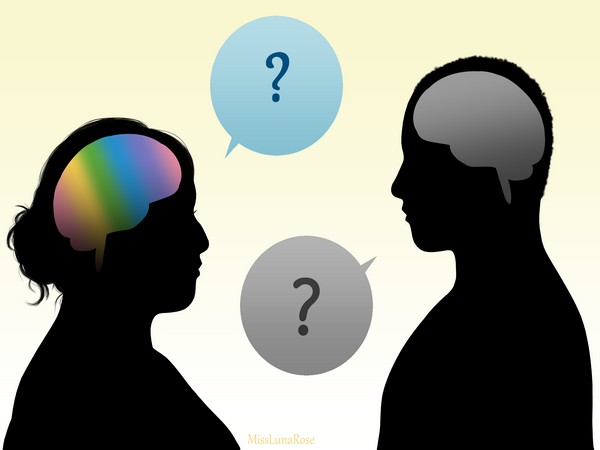
Representative image

Birmingham [UK], June 2 (ANI): Autistic people's ability to accurately identify facial expressions is affected by the speed at which the expression is produced and its intensity, according to new research at the University of Birmingham.
In particular, autistic people tend to be less able to accurately identify anger from facial expressions produced at a normal 'real world' speed. The researchers also found that for people with a related disorder, alexithymia, all expressions appeared more intensely emotional.
The question of how people with autism recognise and relate to emotional expression has been debated by scientists for more than three decades and it's only in the past 10 years that the relationship between autism and alexithymia has been explored.
This new study, published in the Journal of Autism and Developmental Disorders, uses new techniques to explore the different impacts of autism and alexithymia on a person's ability to accurately gauge the emotions suggested by different facial expressions.
Connor Keating, a PhD researcher in the University of Birmingham's School of Psychology and Centre for Human Brain Health, is lead author of the study. He says: "We identified that autistic people had a specific difficulty recognising anger which we are starting to think may relate to differences in the way autistic and non-autistic people produce these expressions. If this is true, it may not be accurate to talk about autistic people as having an 'impairment' or 'deficit' in recognising emotion- it's more that autistic and non-autistic faces may be speaking a different language when it comes to conveying emotion".
In the study, 31 autistic and 29 non-autistic participants were asked to identify emotions from a series of moving images made up of dots representing the key dynamic points of a facial expression - a little bit like the dots used to translate human movement into CGI animation. The images were displayed at a range of emotional intensities by varying the amount of movement in each expression, and at a variety of speeds.
The team found that both autistic and non-autistic participants had similar recognition capabilities at different speeds and intensities across all the emotions shown, except for one particular aspect - the autistic group were less able to identify angry expressions produced at normal speed and intensity. These represented the sorts of angry expressions that might be encountered in everyday life.
"When we looked at how well participants could recognise angry expressions, we found that it was definitely autistic traits that contribute, but not alexithymic traits," explained Connor. "That suggests recognising anger is a difficulty that's specific to autism."
A key trait that the team found was specific to participants with alexithymia was a tendency to perceive the expressions to be intensely emotional. Interestingly though, people with alexithymia were more likely to give higher correct and incorrect emotion ratings to the expressions. To give an example, those with alexithymia would rate a happy expression as more intensely happy and more intensely angry and sad than someone without alexithymia.
Connor explains: "One idea is that people with alexithymia are less able to gauge the intensity of emotional expressions and are more likely to get confused about which emotion is being presented."
He adds: "Everyone will know or meet somebody with autism at some point in their lives.By better understanding how people with autism perceive and understand the world we can start to develop training and other interventions for both autistic and non-autistic people to overcome some of the barriers to interacting successfully." (ANI)


Get the App

What to Read Next

Science

New method guides magnetism without magnets

New method guides magnetism without magnets

Researchers at Paul Scherrer Institute PSI have demonstrated an innovative method to control magnetism in materials using an energy-efficient electric field.

Read More
Science

Amphibians bounce-back from Earth’s greatest mass extinction

Amphibians bounce-back from Earth’s greatest mass extinction

Researchers at the University of Bristol discovered that ancient frog ancestors survived the biggest mass extinction of species by eating on freshwater prey that evaded terrestrial predators.

Read More
Science

New insights into how cancer evades the immune system: Study

New insights into how cancer evades the immune system: Study

Immunotherapy research primarily focuses on better recognition of cancer cells by the body's own immune system. Researchers at Amsterdam UMC and Moffitt Cancer Center have taken a different approach.

Read More
Science

Scientists use AI to better understand nanoparticles: Study

Scientists use AI to better understand nanoparticles: Study

A group of scientists has created a way to illuminate the dynamic behavior of nanoparticles, which are essential components in the production of pharmaceuticals, electronics, and industrial and energy-conversion materials.

Read More
Science

New device could allow you to taste cake in virtual reality

New device could allow you to taste cake in virtual reality

The 'e-Taste' interface employs sensors and wireless chemical dispensers to enable remote taste perception, often known as gestation. Field testing done by researchers at The Ohio State University confirmed the device's ability to digitally simulate a range of taste intensities, while still offering variety and safety for the user.

Read More
Science

Study reveals impact of animals as architects of Earth

Study reveals impact of animals as architects of Earth

A new study led by Professor Gemma Harvey from Queen Mary University of London has revealed how hundreds of species shape the landscapes we depend on, from termite mounds visible from space to beavers creating wetlands and hippos carving drainage systems.

Read More
Science

Opposing arrows of time emerge from certain quantum systems

Opposing arrows of time emerge from certain quantum systems

Researchers at the University of Surrey made a thought-provoking discovery. A new study reveals that opposing arrows of time can theoretically emerge from certain quantum systems.

Read More
Science

COVID-19 severity may be predicted by White Blood Cell Count

COVID-19 severity may be predicted by White Blood Cell Count

A COVID-19 diagnosis is no longer as frightening as it used to be, thanks to developments in treatment choices. However, a new study reveals that leukocyte (white blood cell) count may now be used to identify who is more likely to develop more significant disease symptoms.

Read More
Science

Seals can essentially act as 'smart sensors': Study

Seals can essentially act as 'smart sensors': Study

A new study by marine biologists reports that seals can essentially act as 'smart sensors' for monitoring fish populations in the ocean's eerily dim 'twilight zone.'

Read More
Science

New technology enhances gravitational-wave detection: Study

New technology enhances gravitational-wave detection: Study

A team of physicists led by Jonathan Richardson of the University of California, Riverside, demonstrated how new optical technology can extend the detection range of gravitational-wave observatories such as the Laser Interferometer Gravitational-Wave Observatory, or LIGO, and pave the way for future observatories.

Read More
Home About Us Our Products Advertise Contact Us Terms & Condition Privacy Policy

Copyright © aninews.in | All Rights Reserved.
