ADD ANI AS A TRUSTED SOURCE
googleads
Menu
Science

Study finds artificial intelligence may decrease frequency of adverse drug events

Washington [US], January 21 (ANI): A new study has found that artificial intelligence (AI) could be harnessed to prevent or mitigate the effects of adverse drug events (ADEs).

ANI Jan 21, 2022 13:39 IST googleads

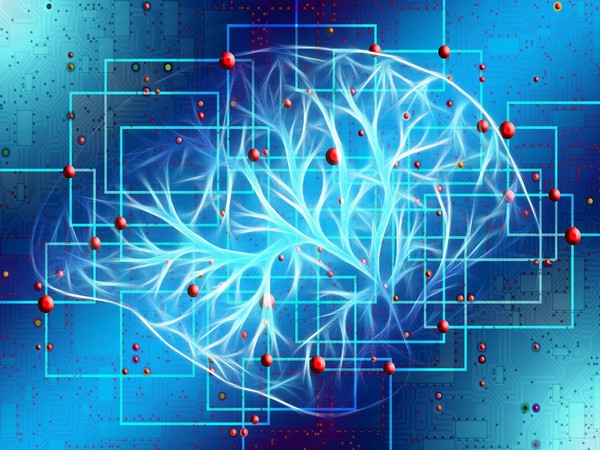
Representative image

Washington [US], January 21 (ANI): A new study has found that artificial intelligence (AI) could be harnessed to prevent or mitigate the effects of adverse drug events (ADEs).
The study has been published in 'The Lancet Digital Health Journal'.
The review's authors described the use of AI to reduce the frequency of ADEs as an emerging area of study and identify several use cases in which AI could contribute to reducing or preventing ADEs. Furthermore, genetic information is thought to be critical in improving the performance of AI algorithms.
With the prevalence of genotyping, researchers are confident that this type of data can be more accessible over time and ultimately used to improve AI algorithm functioning and patient health.
"One of our challenges is how to identify and select the most relevant genetic variables among large amounts of genetic profile information," said lead author Ania Syrowatka, PhD, of the Division of General Internal Medicine and Primary Care.
"Through this paper, we wanted to present a review of how AI could be used to prevent ADEs, and in the process, learned that we are still in the early stages of development and implementation. Systematic and comprehensive evaluations of these types of tools in prospective trials are necessary to generate the evidence to advance this field in a transparent, safe, and effective way," Syrowatka added. (ANI)

Get the App

What to Read Next

Science

Amphibians bounce-back from Earth’s greatest mass extinction

Amphibians bounce-back from Earth’s greatest mass extinction

Researchers at the University of Bristol discovered that ancient frog ancestors survived the biggest mass extinction of species by eating on freshwater prey that evaded terrestrial predators.

Read More
Science

Scientists use AI to better understand nanoparticles: Study

Scientists use AI to better understand nanoparticles: Study

A group of scientists has created a way to illuminate the dynamic behavior of nanoparticles, which are essential components in the production of pharmaceuticals, electronics, and industrial and energy-conversion materials.

Read More
Science

New technology enhances gravitational-wave detection: Study

New technology enhances gravitational-wave detection: Study

A team of physicists led by Jonathan Richardson of the University of California, Riverside, demonstrated how new optical technology can extend the detection range of gravitational-wave observatories such as the Laser Interferometer Gravitational-Wave Observatory, or LIGO, and pave the way for future observatories.

Read More
Science

AI can reveals hidden hazards of chemical mixtures in rivers

AI can reveals hidden hazards of chemical mixtures in rivers

Artificial intelligence can provide important insights into how complex chemical mixes in rivers affect aquatic life, paving the path for more effective environmental protection.

Read More
Science

Astronomers find the smallest main-belt asteroids ever detected:

Astronomers find the smallest main-belt asteroids ever detected:

The majority of known asteroids orbit inside the main asteroid belt, which is positioned between Mars and Jupiter at an average distance of around 250 million km from Earth. Since the discovery of the first asteroid in 1801, about 750.000 asteroids have been identified, primarily in the last decade thanks to several optical surveys that examine the sky on clear nights.

Read More
Home About Us Our Products Advertise Contact Us Terms & Condition Privacy Policy

Copyright © aninews.in | All Rights Reserved.