

ADD ANI AS A TRUSTED SOURCE
googleads
ANI Logo
Menu
Science

Study finds ageing stiffens blood vessels in women

Jyvaskyla [Finland], January 2 (ANI): According to a new study conducted at the University of Jyvaskyla in Finland, age is a strong determinant of arterial stiffness.

ANI Jan 02, 2022 13:56 IST googleads

Representative image

Jyvaskyla [Finland], January 2 (ANI): According to a new study conducted at the University of Jyvaskyla in Finland, age is a strong determinant of arterial stiffness.
Hormones, menstrual cycle phase, contraceptive pill phase and menopausal states are also associated with arterial stiffness.
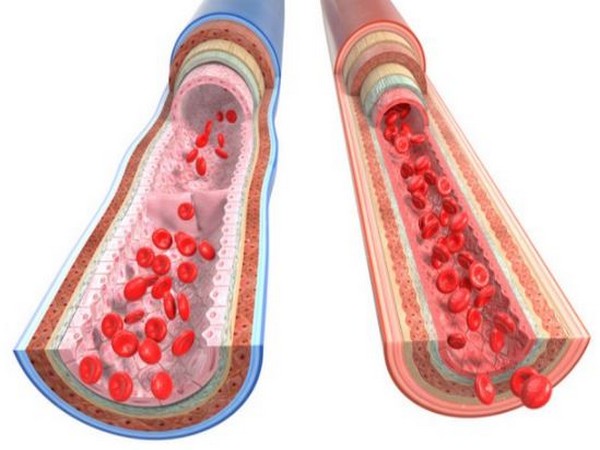
The human vasculature consists of arteries, veins, and capillaries where blood circulates in a certain direction. As the heart pumps blood, the arteries that carry blood throughout the body also work. The arteries alternately dilate and contract, allowing blood to progress. This propagation is known as a pulse wave. The walls of the arteries should be elastic enough, though not too much so, to allow the pulse wave to proceed without the walls of the arteries rupturing. As the blood vessels age, the arterial wall stiffens. Stiffening increases the risk of cardiovascular disease and the risk of cardiac mortality.
Female sex hormones have been shown to affect several factors that regulate vascular wall elasticity, so high estrogen levels are thought to be one of the mechanisms by which young adult women acquire a lower risk of cardiovascular disease than their male peers. Studies measuring both hormone levels and arterial stiffness in women differing due to their age or use of hormonal products are scarce.
"Our study combined two datasets including young adults and middle-aged women. It allowed for a comprehensive examination of the different hormonal statuses involved in women's lives," said Associate Professor Eija Laakkonen from the Gerontology Research Center and the Faculty of Sports and Health Science, University of Jyvaskyla.
"We were able to study the associations of the natural menstrual cycle and the use of birth control pills, as well as the natural menopause and the use of hormone therapy with the flexibility of the arteries," Laakkonen added.
The entire study consisted of women aged 19 to 58 years. The older the women were, the stiffer their arteries were. Of the hormones measured, estradiol and follicle-stimulating hormone were associated with arterial stiffness, but age was a stronger determinant of stiffness than hormone levels were. Examination of the subsets showed hormonal state to be associated with arterial stiffness. The attenuation of the pulse wave was faster in the late follicular and ovulation phases than it was during menstrual bleeding.
Combined oral contraceptive users have varying hormonal levels due to taking pills containing estrogen and progestogen for the first three weeks and then changing to hormone-free pills for a week during which withdrawal bleeding occurs. While taking the hormonal pills, the arteries were more elastic than they were during bleeding. Among menopausal women, postmenopausal women on hormone therapy had the stiffest arteries.
"Based on this study, we can conclude that age is a significant regulator of vascular functions, but hormones also play a role in regulating arterial elasticity at different stages of a woman's life," Laakkonen said.
"In future studies, it would be worthwhile to closely inspect and compare the effects of endogenous and exogenous hormones on arterial wall properties to better understand the regulation of arterial properties at different hormonal stages women live through. Such comprehensive studies have not been done yet," Laakkonen added. (ANI)


Get the App

What to Read Next

Science

Amphibians bounce-back from Earth’s greatest mass extinction

Amphibians bounce-back from Earth’s greatest mass extinction

Researchers at the University of Bristol discovered that ancient frog ancestors survived the biggest mass extinction of species by eating on freshwater prey that evaded terrestrial predators.

Read More
Science

Scientists use AI to better understand nanoparticles: Study

Scientists use AI to better understand nanoparticles: Study

A group of scientists has created a way to illuminate the dynamic behavior of nanoparticles, which are essential components in the production of pharmaceuticals, electronics, and industrial and energy-conversion materials.

Read More
Science

COVID-19 severity may be predicted by White Blood Cell Count

COVID-19 severity may be predicted by White Blood Cell Count

A COVID-19 diagnosis is no longer as frightening as it used to be, thanks to developments in treatment choices. However, a new study reveals that leukocyte (white blood cell) count may now be used to identify who is more likely to develop more significant disease symptoms.

Read More
Science

New technology enhances gravitational-wave detection: Study

New technology enhances gravitational-wave detection: Study

A team of physicists led by Jonathan Richardson of the University of California, Riverside, demonstrated how new optical technology can extend the detection range of gravitational-wave observatories such as the Laser Interferometer Gravitational-Wave Observatory, or LIGO, and pave the way for future observatories.

Read More
Science

Astronomers find the smallest main-belt asteroids ever detected:

Astronomers find the smallest main-belt asteroids ever detected:

The majority of known asteroids orbit inside the main asteroid belt, which is positioned between Mars and Jupiter at an average distance of around 250 million km from Earth. Since the discovery of the first asteroid in 1801, about 750.000 asteroids have been identified, primarily in the last decade thanks to several optical surveys that examine the sky on clear nights.

Read More
Science

Study finds connection between quantum theory, information theory

Study finds connection between quantum theory, information theory

"Our results have no clear or direct application right now. It's basic research that lays the foundation for future technologies in quantum information and quantum computers. There's enormous potential for complete discoveries in many different research fields," said Guilherme B Xavier, a researcher in quantum communication at Linkoping University, Sweden.

Read More
Science

When devices can read human emotions without a camera: Study

When devices can read human emotions without a camera: Study

Tokyo Metropolitan University researchers employed long-term skin conductance measurements to distinguish between emotions. Volunteers were given videos representing frightening scenarios, family bonding, and humour, while their skin conductance was measured.

Read More
Science

'Nuroscience study results can be better predicted by AI'

'Nuroscience study results can be better predicted by AI'

Large language models, a type of AI that analyses text, can anticipate the results of proposed neuroscience studies more correctly than human experts, according to a new study led by UCL (University College London) researchers.

Read More
Science

Thermal imaging may help fruits, veggies stay fresher longer: Study

Thermal imaging may help fruits, veggies stay fresher longer: Study

Before your favourite produce arrives at the grocery store, it must be carefully harvested and stored for extended periods of time. A recent University of Georgia assessment argues that new temperature sensing devices could make that procedure considerably easier, as agricultural issues are exacerbated by changing climates.

Read More
Science

Study finds novel approach to treat neurological diseases

Study finds novel approach to treat neurological diseases

The matter of what causes complicated neurological disorders like Alzheimer's or multiple sclerosis continues to perplex scientists and doctors, with unknowns impeding early diagnosis and successful treatment.

Read More
Home About Us Our Products Advertise Contact Us Terms & Condition Privacy Policy

Copyright © aninews.in | All Rights Reserved.


