

ADD ANI AS A TRUSTED SOURCE
googleads
ANI Logo
Menu
Science

Study finds additional antibodies might protect against COVID

Washington [US], January 21 (ANI): A new study has found that non-neutralising antibodies may also be important in providing protection against COVID-19.

ANI Jan 21, 2022 22:14 IST googleads

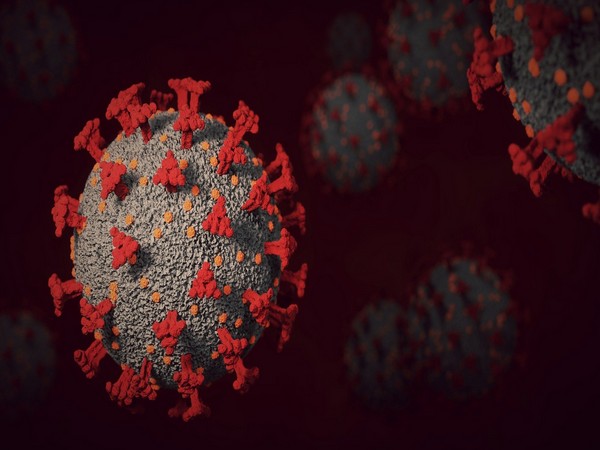
Representative image

Washington [US], January 21 (ANI): A new study has found that non-neutralising antibodies may also be important in providing protection against COVID-19.
The study has been published in the 'Frontiers in Immunology Journal'.
"Our results indicate that non-neutralising antibodies could also provide protection. This would mean that we have broader protection from antibodies than previously thought, making us less vulnerable to mutations of the virus. It warrants further investigation," said Pontus Nordenfelt who led the study and is a researcher at Lund University.
In its efforts to produce vaccines and treatments, the research community has focused on neutralising antibodies, which prevent the spike protein of the virus from binding to the surface protein on our cells.
In a large project led by researchers at Lund University, a more detailed study has been carried out on how the immune system also fights off the virus by means of phagocytosis, the ability to ingest foreign particles, in COVID-19 patients.
Phagocytosis is a type of cleansing mechanism during which the immune system's players target potential threats, such as bacteria or viruses, and ingests them, and this mechanism is facilitated if the harmful substance is marked by an antibody. The results indicated that non-neutralising antibodies are also important in the fight against COVID -- through this mechanism.
"We observed that many of the antibodies that develop in response to COVID-19 are opsonising, i.e. the signal to the immune system's phagocytes to ingest the virus. Our results indicate that non-neutralising antibodies, so long as they are able to opsonise, are also able to provide an effective response to the virus," said Pontus Nordenfelt.
The findings are supported by experiments on mice, in which the non-neutralising antibodies protected the animals from COVID-19 infection.
The research team also discovered that the amount of neutralising antibodies affected the process of phagocytosis.
The team identified and isolated immune system cells from the blood of recovered COVID-19 patients. Using several techniques, they mapped which immune cells interact with the virus's spike protein and identified the antibody binding sites. Then, using flow cytometry, they studied how these antibodies affect phagocytosis.
The researchers coated micrometre-sized beads with the spike protein and in doing so observed that the dosage of neutralising antibodies had an effect on the phagocytosis.
Opsonisation is the immune system mechanism in which an increase inbound antibodies triggers a stronger phagocyte response. Surprisingly, maximum opsonisation is already achieved at relatively low levels of antibodies.
Beyond this, the researchers observed a reduction in the effect. The antibody-binding itself continued to increase linearly, even when the phagocytosis decreased, demonstrating that it is the spike protein that does something that causes this reduced phagocytosis.
To ensure that this was not due to other factors, the researchers set up the same experiment, but this time they used only monoclonal antibodies. This meant that just one type of antibody (clone) was used instead of the standard combination of thousands of different antibodies.
"It showed the same trend. Up to a certain level, there is a linear dosage effect from the antibodies. After that, it dips. Basically, when you give a dose that is too high you don't get the protective effect," said Wael Bahnan, a researcher in infection medicine at Lund University and first author of the study.
"It looks like something is happening to the spike protein that results in reduced interaction with the white blood cells, leading to the immune system no longer binding to and neutralising the virus through phagocytosis. Similar phenomena have been described as the prozone effect and have been reported in experiments with pneumococcus and malaria. However, it has not been linked to reduced phagocytosis, so it is not certain that the effect relates to what we are observing in our experiments," concluded Wael Bahnan. (ANI)


Get the App

What to Read Next

Science

Amphibians bounce-back from Earth’s greatest mass extinction

Amphibians bounce-back from Earth’s greatest mass extinction

Researchers at the University of Bristol discovered that ancient frog ancestors survived the biggest mass extinction of species by eating on freshwater prey that evaded terrestrial predators.

Read More
Science

New insights into how cancer evades the immune system: Study

New insights into how cancer evades the immune system: Study

Immunotherapy research primarily focuses on better recognition of cancer cells by the body's own immune system. Researchers at Amsterdam UMC and Moffitt Cancer Center have taken a different approach.

Read More
Science

Scientists use AI to better understand nanoparticles: Study

Scientists use AI to better understand nanoparticles: Study

A group of scientists has created a way to illuminate the dynamic behavior of nanoparticles, which are essential components in the production of pharmaceuticals, electronics, and industrial and energy-conversion materials.

Read More
Science

COVID-19 severity may be predicted by White Blood Cell Count

COVID-19 severity may be predicted by White Blood Cell Count

A COVID-19 diagnosis is no longer as frightening as it used to be, thanks to developments in treatment choices. However, a new study reveals that leukocyte (white blood cell) count may now be used to identify who is more likely to develop more significant disease symptoms.

Read More
Science

New technology enhances gravitational-wave detection: Study

New technology enhances gravitational-wave detection: Study

A team of physicists led by Jonathan Richardson of the University of California, Riverside, demonstrated how new optical technology can extend the detection range of gravitational-wave observatories such as the Laser Interferometer Gravitational-Wave Observatory, or LIGO, and pave the way for future observatories.

Read More
Science

Astronomers find the smallest main-belt asteroids ever detected:

Astronomers find the smallest main-belt asteroids ever detected:

The majority of known asteroids orbit inside the main asteroid belt, which is positioned between Mars and Jupiter at an average distance of around 250 million km from Earth. Since the discovery of the first asteroid in 1801, about 750.000 asteroids have been identified, primarily in the last decade thanks to several optical surveys that examine the sky on clear nights.

Read More
Science

Study finds connection between quantum theory, information theory

Study finds connection between quantum theory, information theory

"Our results have no clear or direct application right now. It's basic research that lays the foundation for future technologies in quantum information and quantum computers. There's enormous potential for complete discoveries in many different research fields," said Guilherme B Xavier, a researcher in quantum communication at Linkoping University, Sweden.

Read More
Science

When devices can read human emotions without a camera: Study

When devices can read human emotions without a camera: Study

Tokyo Metropolitan University researchers employed long-term skin conductance measurements to distinguish between emotions. Volunteers were given videos representing frightening scenarios, family bonding, and humour, while their skin conductance was measured.

Read More
Science

'Nuroscience study results can be better predicted by AI'

'Nuroscience study results can be better predicted by AI'

Large language models, a type of AI that analyses text, can anticipate the results of proposed neuroscience studies more correctly than human experts, according to a new study led by UCL (University College London) researchers.

Read More
Science

Thermal imaging may help fruits, veggies stay fresher longer: Study

Thermal imaging may help fruits, veggies stay fresher longer: Study

Before your favourite produce arrives at the grocery store, it must be carefully harvested and stored for extended periods of time. A recent University of Georgia assessment argues that new temperature sensing devices could make that procedure considerably easier, as agricultural issues are exacerbated by changing climates.

Read More


