

ADD ANI AS A TRUSTED SOURCE
googleads
ANI Logo
Menu
Science

Study dicovers human impact on wildlife even in protected areas

A study led by Rice University ecologist Lydia Beaudrot and colleagues found that tropical mammals living within protected areas are not immune to the effects of human activity, even when it occurs outside of the protected boundaries.

ANI Jun 27, 2023 21:28 IST googleads

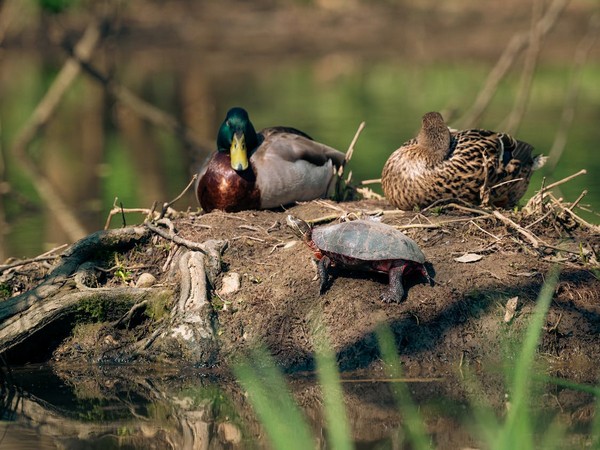
Representative image

Washington [US], June 27 (ANI): Researchers found that tropical mammals living within protected areas are not immune to the effects of human activity, even when it occurs outside of the protected boundaries.
The study, published in Nature Ecology and Evolution, could help 30 by 30 participants make biodiversity policy decisions.
Based on the largest long-term camera-trap wildlife survey of its kind to date, the study sheds light on how anthropogenic stressors like human population density and habitat fragmentation affect 159 mammal species across three biogeographic regions in 16 protected areas.
The data set was assembled by a large-scale network of research stations that agreed to implement a consistent data-collection protocol as part of a partnership between Conservation International, the Wildlife Conservation Society, and the Smithsonian Institution. It is made up of millions of images collected over multiple years from over 1,000 camera-trap sites.
"This data set is just phenomenal -- it was a herculean effort unlike anything attempted before," said Beaudrot, an assistant professor of biosciences.
The study found that specialist species -- which occupy specific habitats only -- thrive when habitat fragmentation is low and are generally more susceptible to the negative impacts of human activities like hunting and land use than generalist species, which are able to live in more diverse habitats.
Thus, a white-bellied pangolin living in the Bwindi Impenetrable National Park in Uganda should shuffle closer to its centre, since specialists are likely to fare better the farther inward they are from the edge of a protected area.
"Habitats are more varied at the edge of the protected area," said Asuncion Semper-Pascual, a postdoctoral researcher at the Norwegian University for Life Sciences and the lead author of the study.
"There is usually this difference between forest cover and open landscape, such as an area used for agriculture, etc. Some generalist species thrive in this diverse setting because it provides access to different resources."
Generalist species, such as the tayra -- a dog-sized omnivore in the weasel family that is at home both under forest cover and in grasslands or cropland, only thrive near the edge of protected areas if human population density there is low.
Understanding species-specific responses to different anthropogenic stressors can help set conservation priorities and guide protected-area management -- locally by focusing on the most vulnerable species in a region and globally by highlighting how landscape-scale factors impact biodiversity beyond the protected perimeter.
"We have to think about the situation holistically," Beaudrot said. "Conservation is going to work best when it's tackled in specific contexts and in concert with the people who live there so as to create win-win situations for both the people and the wildlife."
"As more protected areas are created, we need to think carefully about the factors both within and outside protected areas that influence biodiversity," Semper-Pascual said. (ANI)


Get the App

What to Read Next

Science

Amphibians bounce-back from Earth’s greatest mass extinction

Amphibians bounce-back from Earth’s greatest mass extinction

Researchers at the University of Bristol discovered that ancient frog ancestors survived the biggest mass extinction of species by eating on freshwater prey that evaded terrestrial predators.

Read More
Science

Scientists use AI to better understand nanoparticles: Study

Scientists use AI to better understand nanoparticles: Study

A group of scientists has created a way to illuminate the dynamic behavior of nanoparticles, which are essential components in the production of pharmaceuticals, electronics, and industrial and energy-conversion materials.

Read More
Science

Study reveals impact of animals as architects of Earth

Study reveals impact of animals as architects of Earth

A new study led by Professor Gemma Harvey from Queen Mary University of London has revealed how hundreds of species shape the landscapes we depend on, from termite mounds visible from space to beavers creating wetlands and hippos carving drainage systems.

Read More
Science

New technology enhances gravitational-wave detection: Study

New technology enhances gravitational-wave detection: Study

A team of physicists led by Jonathan Richardson of the University of California, Riverside, demonstrated how new optical technology can extend the detection range of gravitational-wave observatories such as the Laser Interferometer Gravitational-Wave Observatory, or LIGO, and pave the way for future observatories.

Read More
Science

Discovering the genetics of climate adaptation 

Discovering the genetics of climate adaptation 

As climate change accelerates, plants are under increasing pressure to adapt to changing habitats and environmental conditions.

Read More
Science

Weather change linked to heightened risk of Salmonella outbreaks

Weather change linked to heightened risk of Salmonella outbreaks

According to new research from the University of Surrey, climate change has an impact on Salmonella spread. This study builds on prior work by the researchers, which discovered that weather change is contributing to the spread of deadly diarrhoeal illnesses.

Read More
Science

Astronomers find the smallest main-belt asteroids ever detected:

Astronomers find the smallest main-belt asteroids ever detected:

The majority of known asteroids orbit inside the main asteroid belt, which is positioned between Mars and Jupiter at an average distance of around 250 million km from Earth. Since the discovery of the first asteroid in 1801, about 750.000 asteroids have been identified, primarily in the last decade thanks to several optical surveys that examine the sky on clear nights.

Read More
Science

Study finds connection between quantum theory, information theory

Study finds connection between quantum theory, information theory

"Our results have no clear or direct application right now. It's basic research that lays the foundation for future technologies in quantum information and quantum computers. There's enormous potential for complete discoveries in many different research fields," said Guilherme B Xavier, a researcher in quantum communication at Linkoping University, Sweden.

Read More
Science

When devices can read human emotions without a camera: Study

When devices can read human emotions without a camera: Study

Tokyo Metropolitan University researchers employed long-term skin conductance measurements to distinguish between emotions. Volunteers were given videos representing frightening scenarios, family bonding, and humour, while their skin conductance was measured.

Read More
Science

'Nuroscience study results can be better predicted by AI'

'Nuroscience study results can be better predicted by AI'

Large language models, a type of AI that analyses text, can anticipate the results of proposed neuroscience studies more correctly than human experts, according to a new study led by UCL (University College London) researchers.

Read More
Home About Us Our Products Advertise Contact Us Terms & Condition Privacy Policy

Copyright © aninews.in | All Rights Reserved.


