 हिंदी खबर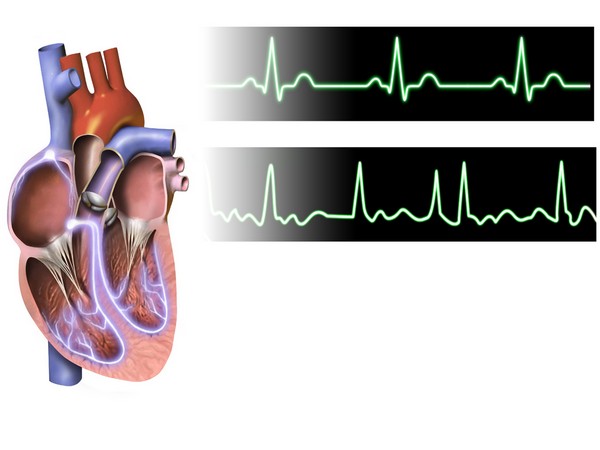

Washington [US], April 24 (ANI): Atrial fibrillation is the most common heart rhythm disorder, affecting more than 40 million people globally. A team of researchers presented a document on the management and outcomes of adults with atrial fibrillation at EHRA 2021, an online scientific congress of the European Society of Cardiology (ESC).
The document is published in EP Europace, a journal of the ESC.
Those with the disorder have increased risks of complications including stroke, heart failure and dementia, and are twice as likely to be admitted to hospital as their peers without the condition. The economic burden of atrial fibrillation is rising, mainly due to complications and hospitalisations. Effective therapies exist (e.g. to prevent stroke) but are not consistently used.
Lead author Dr Elena Arbelo of the University of Barcelona, Spain said: "We hope the quality indicators will help institutions to assess and monitor adherence to clinical practice guidelines. Ultimately this should lead to improved quality of care for patients with atrial fibrillation."
The expert group, which included patients with atrial fibrillation, used the ESC methodology for developing quality indicators.6 Briefly, this involved: 1) identifying domains of care for the diagnosis and management of atrial fibrillation; 2) reviewing the literature and constructing candidate quality indicators for each domain; 3) selecting the final set of quality indicators through a series of votes.
Six domains of care were identified: patient assessment at baseline and follow-up, anticoagulation therapy, rate control strategy, rhythm control strategy, risk factor management, and outcomes.
Quality indicators were chosen for each domain. For example, a quality indicator in the patient assessment domain was the proportion of patients assessed for stroke risk. In the anticoagulation domain, one quality indicator was the proportion of patients appropriately prescribed this stroke prevention therapy. For risk factor management, the indicator was the proportion of patients with these factors identified (eg obesity, smoking, high blood pressure, obstructive sleep apnoea, alcohol excess, lack of exercise, and poor glycaemic control).
The outcomes domain describes quality indicators for the consequences of the disease (eg stroke, hospitalisation), complications of treatment (eg bleeding), and patient-reported outcomes (eg assessment of the quality of life, symptoms, emotional well-being, and cognitive function).
"This should enhance their dissemination and uptake into clinical practice," said Dr Arbelo. "Modern healthcare demands that we evaluate the standard of care patients receive and their outcomes. It is essential that the patient's perspective is taken into account, particularly since most atrial fibrillation therapies aim to improve symptoms, well-being, and quality of life."
The statement was developed by the European Heart Rhythm Association (EHRA) of the ESC in collaboration with the Heart Rhythm Society (HRS), the Asia Pacific Heart Rhythm Society (APHRS), and the Latin American Heart Rhythm Society (LAHRS). (ANI)




