

ADD ANI AS A TRUSTED SOURCE
googleads
ANI Logo
Menu
Science

Study: Beta blockers can repair malformed blood vessels in the brain

Stockholm [Sweden], February 23 (ANI): A new study by researchers at Uppsala University claimed that Propranolol, a drug that is efficacious against infantile haemangiomas ('strawberry naevi', resembling birthmarks), can also be used to treat cerebral cavernous malformations, a condition characterised by misshapen blood vessels in the brain and elsewhere.

ANI Feb 23, 2021 20:12 IST googleads

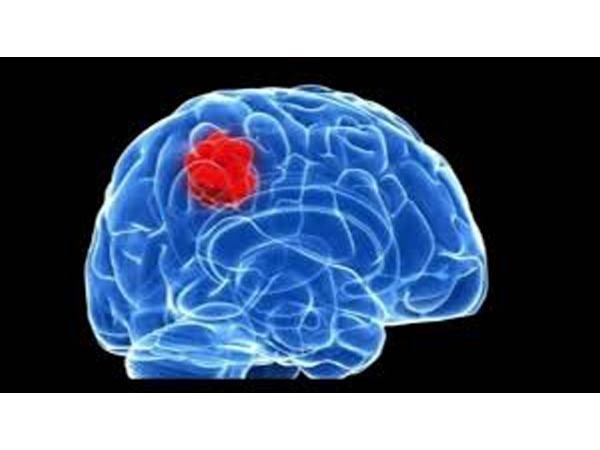
Representative Image

Stockholm [Sweden], February 23 (ANI): A new study by researchers at Uppsala University claimed that Propranolol, a drug that is efficacious against infantile haemangiomas ('strawberry naevi', resembling birthmarks), can also be used to treat cerebral cavernous malformations, a condition characterised by misshapen blood vessels in the brain and elsewhere.
Through the findings were published in the scientific journal Stroke Peetra Magnusson of the University's Department of Immunology, Genetics and Pathology, who headed the study said, "Up to now, there's been no drug treatment for these patients, so our results may become hugely important for them".
Cerebral cavernous malformations (CCMs, also called cavernous angiomas or cavernomas) are vascular lesions on blood vessels in the brain and elsewhere, caused by genetic changes that may be hereditary or arise spontaneously.
Today, an operation to remove these lesions is the only possible treatment. However, surgical interventions in the brain are highly risky. Since the vascular malformations, moreover, recur in the hereditary form of the condition, a drug treatment for CCMs is urgently required instead.
The uses of propranolol, a beta blocker, include treating cardiovascular diseases and conditions, such as high blood pressure. But it can also be used to treat a haemangioma ("strawberry naevus"), a common blood-vessel malformation in children. There are some indications that the preparation might work against CCMs as well.
The new study is a collaboration involving researchers at Uppsala University, the Swedish University of Agricultural Sciences and, in Italy, IFOM - The FIRC Institute of Molecular Oncology and the Mario Negri Institute of Pharmacological Research. The researchers have been investigating how propranolol affects the emergence of vascular lesions in the form of CCMs.
"We examined mice with vascular malformations in the brain - cavernomas or CCMs, as they're called - that corresponded to the hereditary form of the condition in humans. The mice were given propranolol in their drinking water, and we were able to see that the cavernomas were becoming fewer and smaller. The blood vessels functioned better, too, with less leaking and improved contacts between their cells," Magnusson says.
The propranolol dose administered to the animals was equivalent to the dose used to treat diseases in humans. Using an electron microscope, the researchers were able to study in detail how the drug affected the cavernomas.
The results show that propranolol can be used to shrink and stabilise vascular lesions, and may be a potential medicine for treating CCMs.
"What makes the study especially interesting is that right now, in Italy, a clinical study is under way in which CCM patients are to get two years' treatment with propranolol. During this period, they're being monitored by means of magnetic resonance imaging of the blood vessels, to see how the malformations are developing," says Professor Elisabetta Dejana of Uppsala University's Department of Immunology, Genetics and Pathology and IFOM in Italy. (ANI)


Get the App

What to Read Next

Science

New method guides magnetism without magnets

New method guides magnetism without magnets

Researchers at Paul Scherrer Institute PSI have demonstrated an innovative method to control magnetism in materials using an energy-efficient electric field.

Read More
Science

Amphibians bounce-back from Earth’s greatest mass extinction

Amphibians bounce-back from Earth’s greatest mass extinction

Researchers at the University of Bristol discovered that ancient frog ancestors survived the biggest mass extinction of species by eating on freshwater prey that evaded terrestrial predators.

Read More
Science

New insights into how cancer evades the immune system: Study

New insights into how cancer evades the immune system: Study

Immunotherapy research primarily focuses on better recognition of cancer cells by the body's own immune system. Researchers at Amsterdam UMC and Moffitt Cancer Center have taken a different approach.

Read More
Science

Scientists use AI to better understand nanoparticles: Study

Scientists use AI to better understand nanoparticles: Study

A group of scientists has created a way to illuminate the dynamic behavior of nanoparticles, which are essential components in the production of pharmaceuticals, electronics, and industrial and energy-conversion materials.

Read More
Science

New device could allow you to taste cake in virtual reality

New device could allow you to taste cake in virtual reality

The 'e-Taste' interface employs sensors and wireless chemical dispensers to enable remote taste perception, often known as gestation. Field testing done by researchers at The Ohio State University confirmed the device's ability to digitally simulate a range of taste intensities, while still offering variety and safety for the user.

Read More
Science

Strand Life Sciences launches portal for rare disease diagnosis

Strand Life Sciences launches portal for rare disease diagnosis

Marking Rare Disease Day, Strand Life Sciences, a subsidiary of Reliance Industries and a leading genomics research company, has launched the StrandOmics Portal, an innovative digital platform designed to assist doctors in diagnosing rare diseases more efficiently.

Read More
Science

Study reveals impact of animals as architects of Earth

Study reveals impact of animals as architects of Earth

A new study led by Professor Gemma Harvey from Queen Mary University of London has revealed how hundreds of species shape the landscapes we depend on, from termite mounds visible from space to beavers creating wetlands and hippos carving drainage systems.

Read More
Science

Opposing arrows of time emerge from certain quantum systems

Opposing arrows of time emerge from certain quantum systems

Researchers at the University of Surrey made a thought-provoking discovery. A new study reveals that opposing arrows of time can theoretically emerge from certain quantum systems.

Read More
Science

COVID-19 severity may be predicted by White Blood Cell Count

COVID-19 severity may be predicted by White Blood Cell Count

A COVID-19 diagnosis is no longer as frightening as it used to be, thanks to developments in treatment choices. However, a new study reveals that leukocyte (white blood cell) count may now be used to identify who is more likely to develop more significant disease symptoms.

Read More
Science

Seals can essentially act as 'smart sensors': Study

Seals can essentially act as 'smart sensors': Study

A new study by marine biologists reports that seals can essentially act as 'smart sensors' for monitoring fish populations in the ocean's eerily dim 'twilight zone.'

Read More
Home About Us Our Products Advertise Contact Us Terms & Condition Privacy Policy

Copyright © aninews.in | All Rights Reserved.
