

ADD ANI AS A TRUSTED SOURCE
googleads
ANI Logo
Menu
Science

Structure of family groups gives animals incentive to help or harm their social group: Study

Washington [US], October 1(ANI): According to new research, the structure of family groups provides animals with an incentive to help or harm their social group as they age.

ANI Oct 01, 2022 15:13 IST googleads

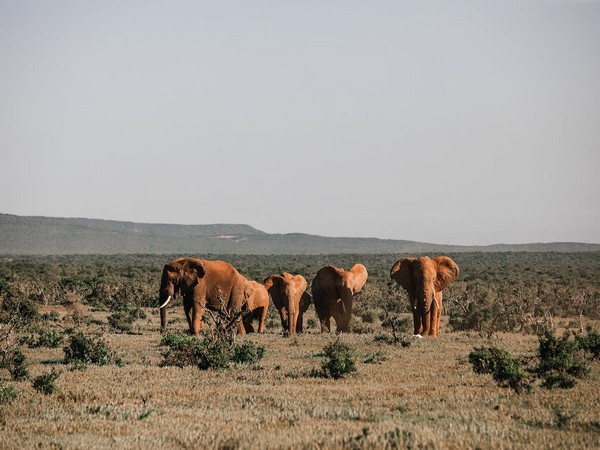
Representative Image

Washington [US], October 1(ANI): According to new research, the structure of family groups provides animals with an incentive to help or harm their social group as they age.
A team of scientists from 17 institutions in six countries, led by the University of Exeter, examined how "relatedness" (strength of genetic links to members of a social group) changes over a lifetime in seven mammal species.
This varies from species to species, depending on whether male or female offspring (or both) leave the group into which they are born.
For example, male and female killer whales both stay in the same group as their mother, so females have a growing number of close relatives (their children and grandchildren) around them as they age.
Other animals, such as female spotted hyenas, usually live among fewer close relatives as time passes.
Given that all animals have evolved to ensure their genes - and those of close relatives - survive, these long-term changes in relatedness to the family group give animals different incentives to engage in "helping and harming behaviour across the lifespan".
"We wanted to know how an individual's relatedness to their group changes as they age, and what consequences this might have for behaviour," said lead author Dr Sam Ellis, from Exeter's Centre for Research in Animal Behaviour.
"We made a model predict these changes and then tested it using data on banded mongooses, chimpanzees, badgers, killer whales, spotted hyenas, rhesus macaques and yellow baboons. Our model fitted the real data. This is exciting because it allows us to predict how and why social behaviours can change with age."
The "ultimate payoff" of behaviours for animals depends on how each behaviour affects an individual and her relatives. When living in a group of close genetic relatives, it might be in an animal's interest to behave in a way that helps the whole group.
However, when living among less related or unrelated individuals, the best strategy could be selfish or even harmful behaviour.
"Our findings suggest that incentives to help or harm the group change with age, depending on the social structure of each species," Dr Ellis said.
Professor Darren Croft said: "Across a wide range of species, we see age-related changes in helping and harming behaviour which can also differ between males and females.
"Our new work shows that understanding how relatedness to the family group changes with age is key in understanding how the incentives to help or harm the group changes across the lifespan, which can potentially explain these differences across species and between the sexes."This research opens the door for future studies by providing testable predictions for how patterns of helping and harming will change across the lifespan and we eagerly anticipate new work testing these predictions."
Among the species included in the study, male spotted hyenas, rhesus macaques and yellow baboons usually leave their birth group once they reach maturity.
In chimpanzees, female offspring leave the group, while for killer whales and mongooses both sexes usually stay in the group into which they were born. (ANI)


Get the App

What to Read Next

Science

New method guides magnetism without magnets

New method guides magnetism without magnets

Researchers at Paul Scherrer Institute PSI have demonstrated an innovative method to control magnetism in materials using an energy-efficient electric field.

Read More
Science

Amphibians bounce-back from Earth’s greatest mass extinction

Amphibians bounce-back from Earth’s greatest mass extinction

Researchers at the University of Bristol discovered that ancient frog ancestors survived the biggest mass extinction of species by eating on freshwater prey that evaded terrestrial predators.

Read More
Science

New insights into how cancer evades the immune system: Study

New insights into how cancer evades the immune system: Study

Immunotherapy research primarily focuses on better recognition of cancer cells by the body's own immune system. Researchers at Amsterdam UMC and Moffitt Cancer Center have taken a different approach.

Read More
Science

Scientists use AI to better understand nanoparticles: Study

Scientists use AI to better understand nanoparticles: Study

A group of scientists has created a way to illuminate the dynamic behavior of nanoparticles, which are essential components in the production of pharmaceuticals, electronics, and industrial and energy-conversion materials.

Read More
Science

New device could allow you to taste cake in virtual reality

New device could allow you to taste cake in virtual reality

The 'e-Taste' interface employs sensors and wireless chemical dispensers to enable remote taste perception, often known as gestation. Field testing done by researchers at The Ohio State University confirmed the device's ability to digitally simulate a range of taste intensities, while still offering variety and safety for the user.

Read More
Science

Strand Life Sciences launches portal for rare disease diagnosis

Strand Life Sciences launches portal for rare disease diagnosis

Marking Rare Disease Day, Strand Life Sciences, a subsidiary of Reliance Industries and a leading genomics research company, has launched the StrandOmics Portal, an innovative digital platform designed to assist doctors in diagnosing rare diseases more efficiently.

Read More
Science

Study reveals impact of animals as architects of Earth

Study reveals impact of animals as architects of Earth

A new study led by Professor Gemma Harvey from Queen Mary University of London has revealed how hundreds of species shape the landscapes we depend on, from termite mounds visible from space to beavers creating wetlands and hippos carving drainage systems.

Read More
Science

Opposing arrows of time emerge from certain quantum systems

Opposing arrows of time emerge from certain quantum systems

Researchers at the University of Surrey made a thought-provoking discovery. A new study reveals that opposing arrows of time can theoretically emerge from certain quantum systems.

Read More
Science

COVID-19 severity may be predicted by White Blood Cell Count

COVID-19 severity may be predicted by White Blood Cell Count

A COVID-19 diagnosis is no longer as frightening as it used to be, thanks to developments in treatment choices. However, a new study reveals that leukocyte (white blood cell) count may now be used to identify who is more likely to develop more significant disease symptoms.

Read More
Science

Seals can essentially act as 'smart sensors': Study

Seals can essentially act as 'smart sensors': Study

A new study by marine biologists reports that seals can essentially act as 'smart sensors' for monitoring fish populations in the ocean's eerily dim 'twilight zone.'

Read More
Home About Us Our Products Advertise Contact Us Terms & Condition Privacy Policy

Copyright © aninews.in | All Rights Reserved.
