Standard digital camera, AI to monitor soil moisture for affordable smart irrigation
Adelaide [Australia], March 15 (ANI): Researchers at the University of South Australia have developed a cost-effective new technique to monitor soil moisture using a standard digital camera and machine learning technology.
ANI
Mar 15, 2021 22:29 IST

Adelaide [Australia], March 15 (ANI): Researchers at the University of South Australia have developed a cost-effective new technique to monitor soil moisture using a standard digital camera and machine learning technology.
The United Nations predicts that by 2050 many areas of the planet may not have enough fresh water to meet the demands of agriculture if we continue our current patterns of use.
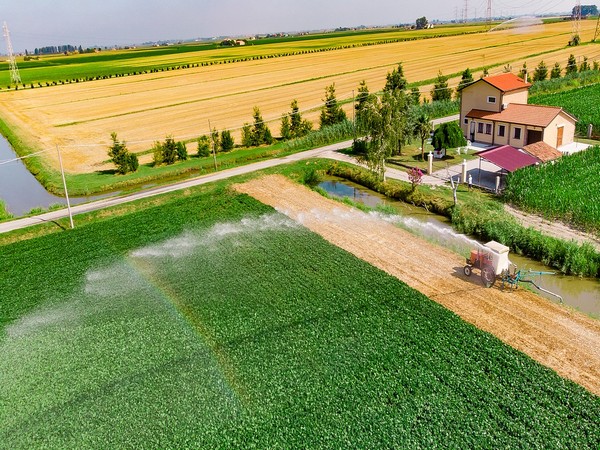
One solution to this global dilemma is the development of more efficient irrigation, central to which is precision monitoring of soil moisture, allowing sensors to guide 'smart' irrigation systems to ensure water is applied at the optimum time and rate.
Current methods for sensing soil moisture are problematic -- buried sensors are susceptible to salts in the substrate and require specialised hardware for connections, while thermal imaging cameras are expensive and can be compromised by climatic conditions such as sunlight intensity, fog, and clouds.
Researchers from The University of South Australia and Baghdad's Middle Technical University have developed a cost-effective alternative that may make precision soil monitoring simple and affordable in almost any circumstance.
A team including UniSA engineers Dr Ali Al-Naji and Professor Javaan Chahl has successfully tested a system that uses a standard RGB digital camera to accurately monitor soil moisture under a wide range of conditions.
"The system we trialled is simple, robust and affordable, making it promising technology to support precision agriculture," Dr Al-Naji says.
"It is based on a standard video camera which analyses the differences in soil colour to determine moisture content. We tested it at different distances, times and illumination levels, and the system was very accurate."
The camera was connected to an artificial neural network (ANN) a form of machine learning software that the researchers trained to recognise different soil moisture levels under different sky conditions.
Using this ANN, the monitoring system could potentially be trained to recognise the specific soil conditions of any location, allowing it to be customised for each user and updated for changing climatic circumstances, ensuing maximum accuracy.
"Once the network has been trained it should be possible to achieve controlled irrigation by maintaining the appearance of the soil at the desired state," Prof Chahl says.
"Now that we know the monitoring method is accurate, we are planning to design a cost-effective smart-irrigation system based on our algorithm using a microcontroller, USB camera and water pump that can work with different types of soils.
"This system holds promise as a tool for improved irrigation technologies in agriculture in terms of cost, availability and accuracy under changing climatic conditions." (ANI)
Tags:
Get the App