

ADD ANI AS A TRUSTED SOURCE
googleads
ANI Logo
Menu
Space

Seismic waves from marsquake detected, revealed possible past meteoroid impact

The largest earthquake ever detected on Mars has revealed layers in its crust that could indicate past collision with a massive object, such as a meteoroid. Previous data have suggested the past occurrence of a large impact, and the findings offer evidence that might support this hypothesis.

ANI Dec 17, 2022 17:23 IST googleads

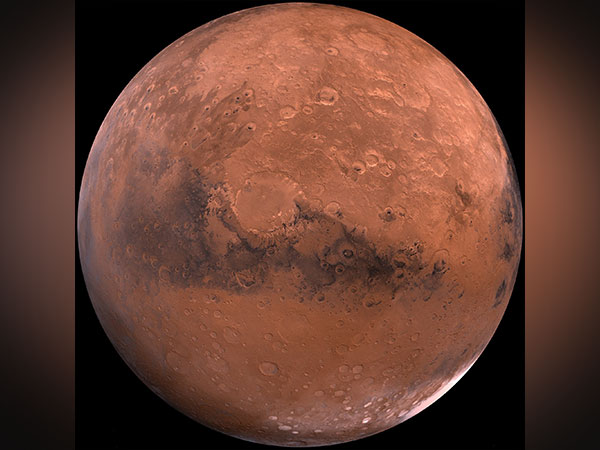
Representative Image

Washington [US], December 17 (ANI): The largest earthquake ever detected on Mars has revealed layers in its crust that could indicate past collision with a massive object, such as a meteoroid. Previous data have suggested the past occurrence of a large impact, and the findings offer evidence that might support this hypothesis.
The research, led by UCLA planetary scientists and published in two papers in Geophysical Research Letters, could also indicate that alternating layers of volcanic and sedimentary rocks lie beneath the surface.
The 4.7 magnitude earthquake, or marsquake, happened in May 2022 and lasted more than four hours, releasing five times more energy than any previously recorded quake. Though moderate by Earth standards, the temblor was nonetheless powerful enough to send seismic surface waves completely around the planet's circumference, the first time this phenomenon has been observed on Mars.
The readings were taken from InSight, which landed on Mars in 2018. InSight is the first outer space seismometer to study in-depth the "inner space" of Mars: its crust, mantle and core.
"The seismometer aboard the InSight lander has recorded thousands of marsquakes but never one this large, and it took over three years after landing to record it," said corresponding author Caroline Beghein, a professor of Earth, planetary and space sciences. "This quake generated different kinds of waves, including two types of waves trapped near the surface. Only one of those two has been observed on Mars before, after two impact events, never during a marsquake."
Mapping the seismic activity, the location and frequency of impacts on Mars and the interior structure is important for future missions to the red planet as it will inform scientists and engineers where and how to build structures to ensure the safety of future human explorers.
As on Earth, studying how seismic waves travel through rocks can give scientists clues about the temperature and composition of the planet below the surface that help inform the search for underground water or magma. It also helps scientists understand the past forces that shaped the planet.
Beghein's group combined measurements from two types of surface waves, called Love and Rayleigh waves, to infer the speed of underground shear-waves, which travel horizontally and move rocks perpendicular to the direction of wave propagation. This is the first time Love waves have been observed in conjunction with Rayleigh waves on Mars.
The measurements showed that the shear-waves move faster in the crust when rocks between 10 and 25 kilometers underground oscillate in a direction almost parallel to the planet surface than if the rocks vibrate in the vertical direction.
"This wave speed information is related to deformations inside the crust," Beghein said. "Alternating volcanic rocks and sedimentary layers, which were deposited long ago, or a very large impact, such as a meteoroid, most likely account for the seismic wave measurements we observed." (ANI)


Get the App

What to Read Next

Science

New insights into how cancer evades the immune system: Study

New insights into how cancer evades the immune system: Study

Immunotherapy research primarily focuses on better recognition of cancer cells by the body's own immune system. Researchers at Amsterdam UMC and Moffitt Cancer Center have taken a different approach.

Read More
Science

Study reveals impact of animals as architects of Earth

Study reveals impact of animals as architects of Earth

A new study led by Professor Gemma Harvey from Queen Mary University of London has revealed how hundreds of species shape the landscapes we depend on, from termite mounds visible from space to beavers creating wetlands and hippos carving drainage systems.

Read More
Science

Weather change linked to heightened risk of Salmonella outbreaks

Weather change linked to heightened risk of Salmonella outbreaks

According to new research from the University of Surrey, climate change has an impact on Salmonella spread. This study builds on prior work by the researchers, which discovered that weather change is contributing to the spread of deadly diarrhoeal illnesses.

Read More
Science

Astronomers find the smallest main-belt asteroids ever detected:

Astronomers find the smallest main-belt asteroids ever detected:

The majority of known asteroids orbit inside the main asteroid belt, which is positioned between Mars and Jupiter at an average distance of around 250 million km from Earth. Since the discovery of the first asteroid in 1801, about 750.000 asteroids have been identified, primarily in the last decade thanks to several optical surveys that examine the sky on clear nights.

Read More
Science

Bacterial vaccine demonstrates potential as cancer treatment

Bacterial vaccine demonstrates potential as cancer treatment

Columbia researchers developed probiotic bacteria that train the immune system to eliminate cancer cells, paving the way for a new class of cancer vaccinations that take advantage of bacteria's innate tumour-targeting abilities. These microbial cancer vaccines can be tailored to each person's specific original tumour and metastases, perhaps preventing future recurrences.

Read More
Science

Cancer cells may be using lipids to hide from immune system

Cancer cells may be using lipids to hide from immune system

Cancer cells rarely begin stealthily. Quite the contrary, they alert the immune system to their presence by displaying chemical red flags on their membranes. When detected, the body's defences can swoop in and destroy renegade cells before they can do significant damage. Lipids, fatty molecules traditionally thought to be largely a fuel supply for developing tumours, are at the heart of this early detection system.

Read More
Science

Study finds how cancer develops when immune system fails

 Study finds how cancer develops when immune system fails

It has been suggested that the immune system is unable to eradicate invasive tumour cells by referring to cancer as "a wound that does not heal."

Read More
Science

Research sheds more light on staging of pancreatic cancer

Research sheds more light on staging of pancreatic cancer

A recent Cedars-Sinai Cancer study found that up to 80 per cent of the time, patients with early pancreatic cancer are incorrectly staged. The discovery highlights the critical need for improvements in staging and diagnostic technology, which could have a substantial impact on early pancreatic cancer research and therapy.

Read More
Science

Rare diseases highlight connections between metabolism, immunity

Rare diseases highlight connections between metabolism, immunity

A new study suggested that inherited immune and metabolism disorders are more similar than previously believed. The results provide fresh information that may help patients with these illnesses receive better care by highlighting a novel collection of metabolic genes that are critical for immune system T cell activity.

Read More
Science

New insight into heart failure with preserved ejection fraction

New insight into heart failure with preserved ejection fraction

Recent research showed that increasing the ketone supply to the heart in mice with heart failure with preserved ejection fraction (HFpEF) allowed their hearts to utilise more ketones and produce more energy.

Read More
Home About Us Our Products Advertise Contact Us Terms & Condition Privacy Policy

Copyright © aninews.in | All Rights Reserved.
