

ADD ANI AS A TRUSTED SOURCE
googleads
ANI Logo
Menu
Space

Paired with super telescopes, model Earth's guide hunt for life

New York [USA], Mar 27 (ANI): After conducting research, astronomers from Cornell University have created five models representing key points from Earth's evolution, like chemical snapshots through Earth's own geologic epochs.

ANI Mar 27, 2020 00:39 IST googleads

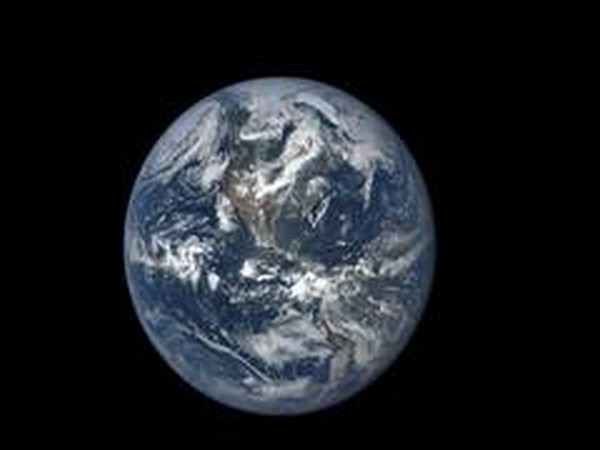
Representative image

New York [USA], Mar 27 (ANI): After conducting research, astronomers from Cornell University have created five models representing key points from Earth's evolution, like chemical snapshots through Earth's own geologic epochs.
The models will be spectral templates for astronomers to use in the approaching new era of powerful telescopes, and in the hunt for Earth-like planets in distant solar systems.
"This new generation of space- and ground-based telescopes coupled with our models will allow us to identify planets like our Earth out to about 50 to 100 light-years away," said Lisa Kaltenegger, associate professor of astronomy and director of the Carl Sagan Institute.
For the research and model development, Kaltenegger, doctoral student Jack Madden and Zifan Lin authored "High-Resolution Transmission Spectra of Earth through Geological Time," published in Astrophysical Journal Letters.
"Using our own Earth as the key, we modeled five distinct Earth epochs to provide a template for how we can characterize a potential exo-Earth -- from a young, prebiotic Earth to our modern world," she said.
"The models also allow us to explore at what point in Earth's evolution a distant observer could identify life on the universe's 'pale blue dots' and other worlds like them," she added.
Kaltenegger and her team created atmospheric models that match the Earth of 3.9 billion years ago, a prebiotic Earth when carbon dioxide densely cloaked the young planet.
A second throwback model chemically depicts a planet free of oxygen, an anoxic Earth, going back 3.5 billion years. Three other models reveal the rise of oxygen in the atmosphere from a 0.2% concentration to modern-day levels of 21%.
"Our Earth and the air we breathe have changed drastically since Earth formed 4.5 billions years ago, and for the first time, this paper addresses how astronomers trying to find worlds like ours, could spot young to modern Earth-like planets in transit, using our own Earth's history as a template," said Kaltenegger.
In Earth's history, the timeline of the rise of oxygen and its abundancy is not clear, Kaltenegger said.
But, if astronomers can find exoplanets with nearly 1% of Earth's current oxygen levels, those scientists will begin to find emerging biology, ozone and methane -- and can match it to ages of the Earth templates.
"Our transmission spectra show atmospheric features, which would show a remote observer that Earth had a biosphere as early as about 2 billion years ago," Kaltenegger said.
Using forthcoming telescopes like NASA's James Webb Space Telescope, scheduled to launch in March 2021, or the Extremely Large Telescope in Antofagasta, Chile, scheduled for first light in 2025, astronomers could watch as an exoplanet transits in front of its host star, revealing the planet's atmosphere.
"Once the exoplanet transits and blocks out part of its host star, we can decipher its atmospheric spectral signatures. Using Earth's geologic history as a key, we can more easily spot the chemical signs of life on the distant exoplanets," Kaltenegger said. (ANI)


Get the App

What to Read Next

Science

Amphibians bounce-back from Earth’s greatest mass extinction

Amphibians bounce-back from Earth’s greatest mass extinction

Researchers at the University of Bristol discovered that ancient frog ancestors survived the biggest mass extinction of species by eating on freshwater prey that evaded terrestrial predators.

Read More
Science

Study reveals impact of animals as architects of Earth

Study reveals impact of animals as architects of Earth

A new study led by Professor Gemma Harvey from Queen Mary University of London has revealed how hundreds of species shape the landscapes we depend on, from termite mounds visible from space to beavers creating wetlands and hippos carving drainage systems.

Read More
Science

Shubhanshu Shukla: IAF officer becomes first Indian astronaut for

Shubhanshu Shukla: IAF officer becomes first Indian astronaut for

Shubhanshu Shukla, Indian Air Force (IAF) officer and one of four astronauts for Indian Space Research Organisation's (ISRO) Gaganyaan mission, has been sele Shubhanshu Shukla, Indian Air Force (IAF) officer and one of four astronauts for Indian Space Research Organisation's (ISRO) Gaganyaan mission, has been selected as the pilot for Axiom Mission 4, scheduled for Spring 2025.cted as the pilot for Axiom Mission 4, scheduled for Spring 2025.

Read More
Science

Astronomers find the smallest main-belt asteroids ever detected:

Astronomers find the smallest main-belt asteroids ever detected:

The majority of known asteroids orbit inside the main asteroid belt, which is positioned between Mars and Jupiter at an average distance of around 250 million km from Earth. Since the discovery of the first asteroid in 1801, about 750.000 asteroids have been identified, primarily in the last decade thanks to several optical surveys that examine the sky on clear nights.

Read More
Science

Fossil study finds how sea level changes shaped early life

Fossil study finds how sea level changes shaped early life

A newly developed timeline of early animal fossils suggests a relationship between sea level fluctuations, variations in marine oxygen, and the appearance of the earliest ancestors of present-day animals.

Read More
Science

Google marks total solar eclipse with special animation

Google marks total solar eclipse with special animation

A total solar eclipse is slated to take place today when the Moon will pass between the Sun and Earth, completely blocking out the Sun's light.

Read More
Science

Study shows how protein folding drives multicellular evolution

Study shows how protein folding drives multicellular evolution

Researchers discovered a mechanism that drives the creation of multicellular life. They found that altered protein folding causes multicellular evolution.

Read More
Science

Butterflies mimic each other's flight patterns to evade predators

Butterflies mimic each other's flight patterns to evade predators

Researchers discovered that inedible butterfly species that replicate one other's colour patterns have developed similar flight habits to warn predators and avoid being eaten.

Read More
Science

Study probes novel therapeutics development for metastatic tumors

Study probes novel therapeutics development for metastatic tumors

Researcher Paul Dent of Virginia Commonwealth University's Department of Biochemistry and Molecular Biology found that tumours that have metastasized to distant locations, such as the brain, are most often impossible to treat and cure, despite recent successes in some tumour types such as NSCLC and cutaneous melanoma.

Read More
Science

Ice age may help predict oceans’ response to global warming

Ice age may help predict oceans’ response to global warming

A team of scientists led by a Tulane University oceanographer discovered that deposits deep beneath the ocean floor provide a means to estimate ocean oxygen levels and their relationship to carbon dioxide in the Earth's atmosphere during the last ice age, which ended more than 11,000 years ago.

Read More
Home About Us Our Products Advertise Contact Us Terms & Condition Privacy Policy

Copyright © aninews.in | All Rights Reserved.


