

ADD ANI AS A TRUSTED SOURCE
googleads
Menu
Space

NASA shares new images from James Webb Space Telescope

Washington [US], July 13 (ANI): After surprising everyone by giving the deepest look of the cosmos ever captured on James Webb Space Telescope, NASA released more images taken from its most powerful observatory ever placed in orbit.

ANI Jul 13, 2022 02:54 IST googleads

NASA shares new images from James Webb Space Telescope (Image source: NASA)

Washington [US], July 13 (ANI): After surprising everyone by giving the deepest look of the cosmos ever captured on James Webb Space Telescope, NASA released more images taken from its most powerful observatory ever placed in orbit.
The first image revealed earlier showed the galaxy cluster SMACS 0723. Webb's First Deep Field is a composite made from different images taken at different wavelengths. It was made using images taken with the Near-Infrared Camera(NIRCam).
NASA then revealed images of the following targets: Carina Nebula, WASP-96 b (spectrum data), Southern Ring Nebula and Stephen's Quintet.
Located 7,600 light-years away, the Carina Nebula is a stellar nursery, where stars are born. It is one of the largest and brightest nebulae in the sky and home to many stars much more massive than our sun, CNN reported.
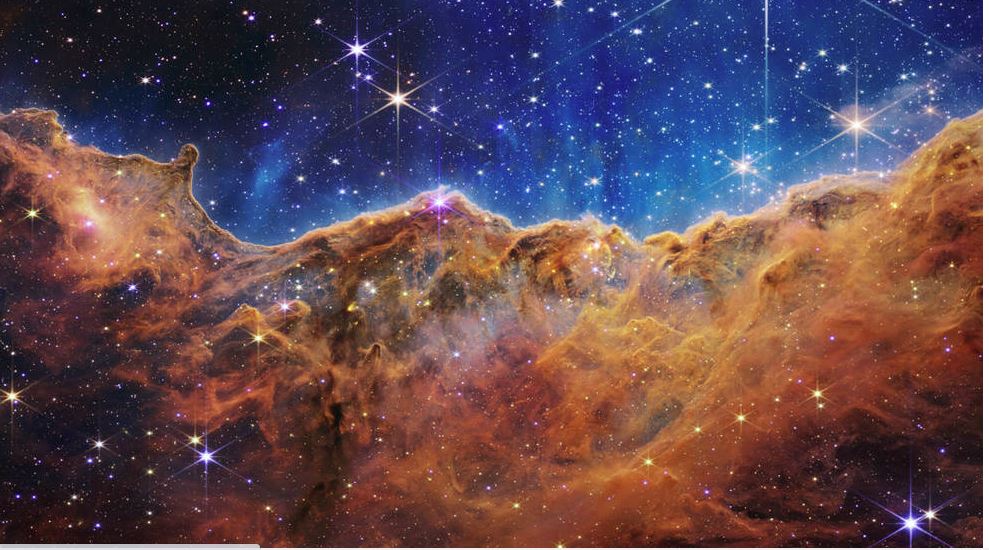
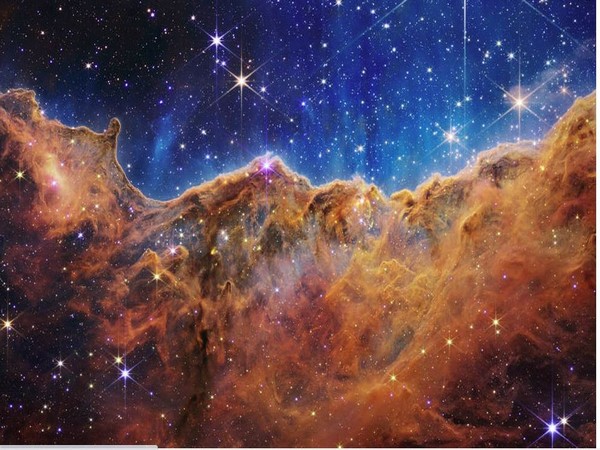
The "Cosmic Cliffs" are seen in the stunning new image that reveals previously hidden baby stars, which provides "a rare peek into stars in their earliest, rapid stages of formation," according to NASA.
The space telescope's view of Stephan's Quintet reveals the way galaxies interact with one another and how their interactions might shape galactic evolution.
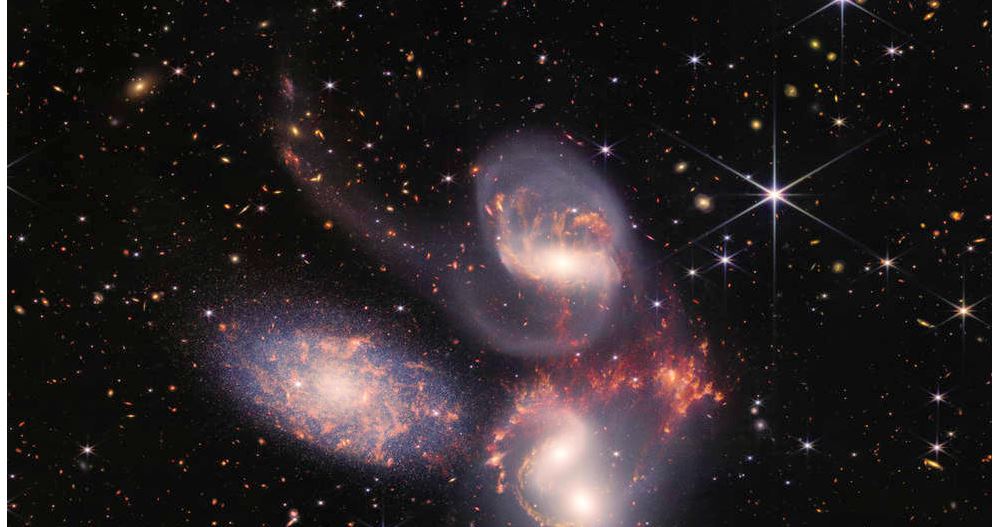
This compact galaxy group, first discovered in 1787, is located 290 million light-years away in the constellation Pegasus. Four of the five galaxies in the group "are locked in a cosmic dance of repeated close encounters," according to a NASA statement.
The Southern Ring Nebula, also called the "Eight-Burst," is 2,000 light-years away from Earth. This large planetary nebula includes an expanding cloud of gas around a dying star.

"The new details from Webb will transform our understanding of how stars evolve and influence their environments," according to NASA.
The new observatory is a joint project of the US, European and Canadian space agencies.It has been specially tuned to see the sky in the infrared - that's light at longer wavelengths than can be sensed by our eyes. (ANI)


Get the App

What to Read Next

Science

New method guides magnetism without magnets

New method guides magnetism without magnets

Researchers at Paul Scherrer Institute PSI have demonstrated an innovative method to control magnetism in materials using an energy-efficient electric field.

Read More
Science

Amphibians bounce-back from Earth’s greatest mass extinction

Amphibians bounce-back from Earth’s greatest mass extinction

Researchers at the University of Bristol discovered that ancient frog ancestors survived the biggest mass extinction of species by eating on freshwater prey that evaded terrestrial predators.

Read More
Science

New insights into how cancer evades the immune system: Study

New insights into how cancer evades the immune system: Study

Immunotherapy research primarily focuses on better recognition of cancer cells by the body's own immune system. Researchers at Amsterdam UMC and Moffitt Cancer Center have taken a different approach.

Read More
Science

New device could allow you to taste cake in virtual reality

New device could allow you to taste cake in virtual reality

The 'e-Taste' interface employs sensors and wireless chemical dispensers to enable remote taste perception, often known as gestation. Field testing done by researchers at The Ohio State University confirmed the device's ability to digitally simulate a range of taste intensities, while still offering variety and safety for the user.

Read More
Science

Study reveals impact of animals as architects of Earth

Study reveals impact of animals as architects of Earth

A new study led by Professor Gemma Harvey from Queen Mary University of London has revealed how hundreds of species shape the landscapes we depend on, from termite mounds visible from space to beavers creating wetlands and hippos carving drainage systems.

Read More
Home About Us Our Products Advertise Contact Us Terms & Condition Privacy Policy

Copyright © aninews.in | All Rights Reserved.
