

ADD ANI AS A TRUSTED SOURCE
googleads
ANI Logo
Menu
Space

MIT researchers develop system that identifies best way to deflect incoming asteroid

Cambridge (Massachusetts) [USA], Feb 20 (ANI): Researchers at the Cambridge-based Massachusetts Institute of Technology (MIT) have developed a system that could help identify the best type of mission for deflecting an incoming asteroid.

ANI Feb 20, 2020 06:35 IST googleads

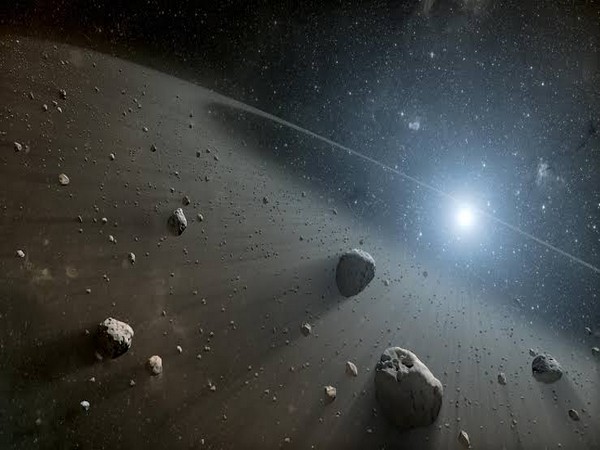
Representative image

Cambridge (Massachusetts) [USA], Feb 20 (ANI): Researchers at the Cambridge-based Massachusetts Institute of Technology (MIT) have developed a system that could help identify the best type of mission for deflecting an incoming asteroid.
The "decision map" would take into account an asteroid's mass and momentum, its proximity to a gravitational keyhole, and the amount of warning time that scientists have of an impending collision -- all of which have degrees of uncertainty, which the researchers also factor in to identify the most successful mission for a given asteroid.
The researchers applied their method to Apophis and Bennu, the near-Earth asteroids, the latter of which is the target of OSIRIS-REx, an operational NASA mission that plans to return a sample of Bennu's surface material to Earth in 2023. REXIS, an instrument designed and built by students at MIT, is also part of this mission and its task is to characterise the abundance of chemical elements at the surface.
In a paper appearing this month in the journal Acta Astronautica, the researchers use their decision map to layout the type of mission that would likely have the most success in deflecting Apophis and Bennu, in various scenarios in which the asteroids may be headed toward a gravitational keyhole.
They say the method could be used to design the optimal mission configuration and campaign to deflect a potentially hazardous near-Earth asteroid.
"People have mostly considered strategies of last-minute deflection when the asteroid has already passed through a keyhole and is heading toward a collision with Earth," says Sung Wook Paek, lead author of the study and a former graduate student in MIT's Department of Aeronautics and Astronautics. "I'm interested in preventing keyhole passage well before Earth impact. It's like a preemptive strike, with less mess."
Paek's co-authors at MIT are Olivier de Weck, Jeffrey Hoffman, Richard Binzel, and David Miller. (ANI)


Get the App

What to Read Next

Science

New method guides magnetism without magnets

New method guides magnetism without magnets

Researchers at Paul Scherrer Institute PSI have demonstrated an innovative method to control magnetism in materials using an energy-efficient electric field.

Read More
Science

Amphibians bounce-back from Earth’s greatest mass extinction

Amphibians bounce-back from Earth’s greatest mass extinction

Researchers at the University of Bristol discovered that ancient frog ancestors survived the biggest mass extinction of species by eating on freshwater prey that evaded terrestrial predators.

Read More
Science

New insights into how cancer evades the immune system: Study

New insights into how cancer evades the immune system: Study

Immunotherapy research primarily focuses on better recognition of cancer cells by the body's own immune system. Researchers at Amsterdam UMC and Moffitt Cancer Center have taken a different approach.

Read More
Science

New device could allow you to taste cake in virtual reality

New device could allow you to taste cake in virtual reality

The 'e-Taste' interface employs sensors and wireless chemical dispensers to enable remote taste perception, often known as gestation. Field testing done by researchers at The Ohio State University confirmed the device's ability to digitally simulate a range of taste intensities, while still offering variety and safety for the user.

Read More
Science

Opposing arrows of time emerge from certain quantum systems

Opposing arrows of time emerge from certain quantum systems

Researchers at the University of Surrey made a thought-provoking discovery. A new study reveals that opposing arrows of time can theoretically emerge from certain quantum systems.

Read More
Science

Microbes help detoxify our atmosphere, says study 

Microbes help detoxify our atmosphere, says study 

Melbourne researchers have uncovered important new information on how microbes absorb huge amounts of carbon monoxide (CO) and assist in reducing levels of this deadly gas.

Read More
Science

Weather change linked to heightened risk of Salmonella outbreaks

Weather change linked to heightened risk of Salmonella outbreaks

According to new research from the University of Surrey, climate change has an impact on Salmonella spread. This study builds on prior work by the researchers, which discovered that weather change is contributing to the spread of deadly diarrhoeal illnesses.

Read More
Science

Astronomers find the smallest main-belt asteroids ever detected:

Astronomers find the smallest main-belt asteroids ever detected:

The majority of known asteroids orbit inside the main asteroid belt, which is positioned between Mars and Jupiter at an average distance of around 250 million km from Earth. Since the discovery of the first asteroid in 1801, about 750.000 asteroids have been identified, primarily in the last decade thanks to several optical surveys that examine the sky on clear nights.

Read More
Science

When devices can read human emotions without a camera: Study

When devices can read human emotions without a camera: Study

Tokyo Metropolitan University researchers employed long-term skin conductance measurements to distinguish between emotions. Volunteers were given videos representing frightening scenarios, family bonding, and humour, while their skin conductance was measured.

Read More
Science

'Nuroscience study results can be better predicted by AI'

'Nuroscience study results can be better predicted by AI'

Large language models, a type of AI that analyses text, can anticipate the results of proposed neuroscience studies more correctly than human experts, according to a new study led by UCL (University College London) researchers.

Read More
Home About Us Our Products Advertise Contact Us Terms & Condition Privacy Policy

Copyright © aninews.in | All Rights Reserved.


