 हिंदी खबर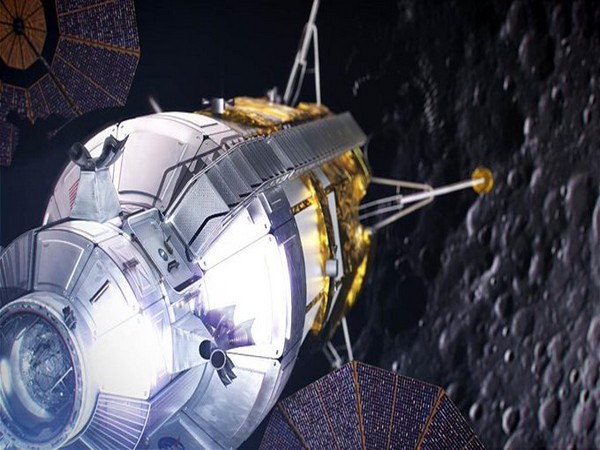

Washington [US], June 28 (ANI): The first leg of NASA's CubeSat mission to the Moon has been successfully completed in space. It was built to test a novel lunar orbit.
The spacecraft is moving towards a still-developing, lunar space station, named Getaway constructed by NASA alongside its international and commercial partners which in turn supports the astronaut missions and Artemis program of the space administration.
The Cislunar Autonomous Positioning System Technology Operations and Navigation Experiment, or CAPSTONE, mission launched at 5:55 a.m. EDT (09:55 UTC) on Rocket Lab's Electron rocket from the Rocket Lab Launch Complex 1 on the Mahia Peninsula of New Zealand Tuesday.
"CAPSTONE is an example of how working with commercial partners is key for NASA's ambitious plans to explore the Moon and beyond," said Jim Reuter, associate administrator for the Space Technology Mission Directorate. "We're thrilled with a successful start to the mission and looking forward to what CAPSTONE will do once it arrives at the Moon."
CAPSTONE is currently in low-Earth orbit, and it will take the spacecraft about four months to reach its targeted lunar orbit. NASA invites the public to follow the spacecraft's journey live using NASA's Eyes on the Solar System interactive real-time 3D data visualization. Starting about one week after launch, virtually ride along with the CubeSat with a simulated view of our solar system. NASA will post updates about when to see CAPSTONE in the visualization on NASA's Ames Research Center's home page as well as Twitter and Facebook.
CAPSTONE is attached to Rocket Lab's Lunar Photon, an interplanetary third stage that will send CAPSTONE on its way to deep space. Shortly after launch, Lunar Photon separated from Electron's second stage. Over the next six days, Photon's engine will periodically ignite to accelerate it beyond low-Earth orbit, where Photon will release the CubeSat on a ballistic lunar transfer trajectory to the Moon. CAPSTONE will then use its own propulsion and the Sun's gravity to navigate the rest of the way to the Moon. The gravity-driven track will dramatically reduce the amount of fuel the CubeSat needs to get to the Moon.
"Delivering the spacecraft for launch was an accomplishment for the entire mission team, including NASA and our industry partners. Our team is now preparing for separation and initial acquisition for the spacecraft in six days," said Bradley Cheetham, principal investigator for CAPSTONE and chief executive officer of Advanced Space, which owns and operates CAPSTONE on behalf of NASA.
"We have already learned a tremendous amount getting to this point, and we are passionate about the importance of returning humans to the Moon, this time to stay!"
At the Moon, CAPSTONE will enter an elongated orbit called a near rectilinear halo orbit, or NRHO. Once in the NRHO, CAPSTONE will fly within 1,000 miles of the Moon's North Pole on its near pass and 43,500 miles from the South Pole at its farthest. It will repeat the cycle every six and a half days and maintain this orbit for at least six months to study dynamics.
"CAPSTONE is a pathfinder in many ways, and it will demonstrate several technology capabilities during its mission timeframe while navigating a never-before-flown orbit around the Moon," said Elwood Agasid, project manager for CAPSTONE at NASA's Ames Research Center in California's Silicon Valley. "CAPSTONE is laying a foundation for Artemis, Gateway, and commercial support for future lunar operations."
During its mission, CAPSTONE will provide data about operating in an NRHO and showcase key technologies. The mission's Cislunar Autonomous Positioning System, developed by Advanced Space with support from NASA's Small Business Innovation Research program, is a spacecraft-to-spacecraft navigation and communications system that will work with NASA's Lunar Reconnaissance Orbiter to determine the distance between the two lunar orbiting spacecraft. This technology could allow future spacecraft to determine their position in space without relying exclusively on tracking from Earth. CAPSTONE also carries a new precision one-way ranging capability built into its radio that could reduce the amount of ground network time needed for in-space operations.
In addition to New Zealand hosting CAPSTONE's launch, New Zealand's Ministry of Business, Innovation and Employment and a University of Canterbury-led team are collaborating with NASA on a research effort to track Moon-orbiting spacecraft. New Zealand helped develop the Artemis Accords - which establish a practical set of principles to guide space exploration cooperation among nations participating in NASA's 21st century lunar exploration plans. In May 2021, New Zealand was the 11th country to sign the Artemis Accords.
The microwave-oven-sized CubeSat was designed and built by Tyvak Nano-Satellite Systems, a Terran Orbital Corporation. CAPSTONE includes contributions from Stellar Exploration, Inc., Space Dynamics Lab, Tethers Unlimited, Inc., and Orion Space Systems. NASA's Small Spacecraft Technology program within the agency's Space Technology Mission Directorate (STMD) funds the demonstration mission. The program is based at NASA's Ames Research Center in California's Silicon Valley. The development of CAPSTONE's navigation technology is supported by NASA's Small Business Innovation Research and Small Business Technology Transfer (SBIR/STTR) program, also within STMD. The Artemis Campaign Development Division within NASA's Exploration Systems Development Mission Directorate funds the launch and supports mission operations. The Launch Services Program at NASA's Kennedy Space Center in Florida manages the launch service. NASA's Jet Propulsion Laboratory supports the communication, tracking, and telemetry downlink via NASA's Deep Space Network, Iris radio design, and groundbreaking 1-way navigation algorithms.
NASA's CubeSat designed to test a unique lunar orbit is safely in space and on the first leg of its journey to the Moon. The spacecraft is heading toward an orbit intended in the future for Gateway, a lunar space station built by the agency and its commercial and international partners that will support NASA's Artemis program, including astronaut missions. (ANI)


