 हिंदी खबर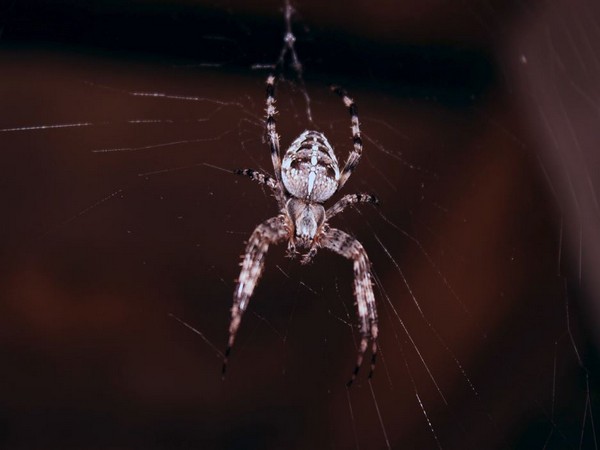

Washington DC [US], September 13 (ANI): Many spiders sit patiently in their webs, waiting for prey to come to them. Arachnids that live near lakes and rivers eat aquatic insects like dragonflies. However, if these insects live in mercury-contaminated streams, the metal can be passed on to the spiders that feed on them. Researchers have now established how some shoreline spiders can transmit mercury contamination from riverbeds up the food chain to land animals, as reported in ACS' Environmental Science & Technology Letters.
Most mercury that enters waterways originates from industrial pollution and other human activities, but it can also come from natural sources. Once in the water, microbes transform the element into methylmercury, a more toxic form, which biomagnifies and increases in organisms up the food chain. Scientists increasingly recognize spiders living on lakeshores and riverbanks as a potential link between contamination in waterways and animals that mostly live on land, such as birds, bats and amphibians, which eat the insects. So, Sarah Janssen and colleagues wanted to assess if shoreline spiders’ tissues contain mercury from nearby riverbeds and establish how these animals could connect mercury pollution in water and land animals.
The researchers collected long-jawed spiders along two tributaries to Lake Superior, and they sampled sediments, dragonfly larvae and yellow perch fish from these waterways. Next, the team measured and identified the mercury sources, including direct industrial contamination, precipitation and runoff from soil. The team observed that the origin of mercury in the sediments was the same up the aquatic food chain in wetlands, reservoir shorelines and urban shorelines. For instance, when sediment contained a higher proportion of industrial mercury, so did the dragonfly larvae, spider and yellow perch tissues that were collected. Based on the data, the researchers say that long-jawed spiders could indicate how mercury pollution moves from aquatic environments to terrestrial wildlife. The implication of these findings is that spiders living next to the water provide clues to the sources of mercury contamination in the environment, informing management decisions and providing a new tool for monitoring of remediation activities, explain the researchers.
The team also collected and analyzed tissues from two other types of arachnids from some sites: fishing spiders and orb-weaver spiders. A comparison of the data showed that the mercury sources varied among the three taxa. The team attributes this result to differences in feeding strategies. Fishing spiders hunt near water but primarily on land; orb-weavers eat both aquatic and terrestrial insects; but it’s the long-jawed species that feed most heavily on adult aquatic insects. These results suggest that although long-jawed spiders can help monitor aquatic contaminants, not every species living near the shore is an accurate sentinel, the researchers say. (ANI)




