

ADD ANI AS A TRUSTED SOURCE
googleads
Menu
Science

Socio-economic factors shown to drive mangrove losses and gains

New research into the drivers of mangrove loss over the past 20 years has revealed that most of the degradation can be attributed to socio-economic and biophysical factors, with mangrove cover increasing in some areas. The University of Queensland-led study calculated the change in mangrove cover across coastlines around the world over the past two decades, and is the first look into how local economic pressures, national governance, and conservation policies impact mangrove losses and gains, and how this has changed over time.

ANI Nov 01, 2022 20:55 IST googleads

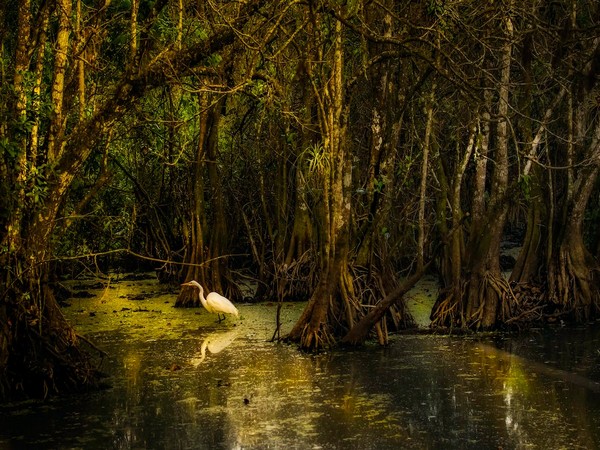
Representative Image

Washington [US], November 1 (ANI): New research into the drivers of mangrove loss over the past 20 years has revealed that most of the degradation can be attributed to socio-economic and biophysical factors, with mangrove cover increasing in some areas.
The University of Queensland-led study calculated the change in mangrove cover across coastlines around the world over the past two decades, and is the first look into how local economic pressures, national governance, and conservation policies impact mangrove losses and gains, and how this has changed over time.
"Mangrove forests store high amounts of carbon and protect communities from storms, while also supporting fisheries and playing an important role in local economies," researcher Dr Hagger said.
"To date the main cause of global mangrove loss has been from human land-use impacts associated with conversion to aquaculture ponds, agriculture, and urban development.
"What's most surprising is that, while in most instances of economic growth you'll find habitat loss and degradation, this study found the opposite.
"Travel time to the nearest city, as a proxy for access to markets to sell commodities, such as shrimp, rice, palm oil, remained a strong driver of mangrove loss over the last 20 years.
"But while economic growth, measured as an increase in night-time lights, was a driver of mangrove loss in the first decade, it was no longer associated with increased losses in the last decade, it in fact enabled mangrove expansion.
"This is potentially because of increased wealth and education and improved agricultural productivity, which would ultimately reduce economic pressure."
Researchers believe this information will help guide future mangrove conservation efforts.
"Assessing economic pressures on mangrove change with a country's governance and their support for pro-conservation programs is vital to the development of effective conservation interventions," Dr Hagger said.
"That's why the information revealed in this study is so important -- it provides valuable, and sometimes surprising, insights over a long period of time on both mangrove losses and gains."
Researchers also discovered a strong positive association between community forestry efforts and mangrove gains.
"What we know is that sustainable community-based management of mangrove forests that recognises local land tenure rights can make a difference," Dr Hagger said.
"We also found that hotspots of mangrove loss caused by conversion to aquaculture ponds and agriculture often occur in protected areas.
"Community management of forest resources within protected areas could also help improve enforcement of those protected areas.
"Now we have more information to not only support that on the global-scale, but inform our efforts moving forward." (ANI)


Get the App

What to Read Next

Science

Researchers find how cells recognize, repair DNA damage

Researchers find how cells recognize, repair DNA damage

When cells divide, there is a substantial risk of genetic harm. After all, the cell must repeat its whole genetic material, including billions of genetic letters, before it can divide. This repeatedly produces "reading errors" in the genome. Other factors, including as exposure to sunlight, alcohol, and cigarettes, are also responsible for the buildup of DNA damage over a person's lifetime.

Read More
Science

Researchers shed light on possible endosymbiosis

Researchers shed light on possible endosymbiosis

Endosymbiosis is a remarkable biological phenomenon in which one creature resides within another. Such an unconventional partnership is usually advantageous to both parties. Even in human bodies, we find evidence of such cohabitation: mitochondria, the cells' powerhouses, originated from an ancient endosymbiosis. Bacteria long ago invaded and colonized other cells. This coexistence created the groundwork for mitochondria, which are found in the cells of plants, animals, and fungi.

Read More
Science

Sleep apnea may increase abdominal aortic aneurysms risk

Sleep apnea may increase abdominal aortic aneurysms risk

Obstructive sleep apnea may increase the chance of developing abdominal aortic aneurysms, according to experts from the University of Missouri School of Medicine and NextGen Precision Health.

Read More
Science

Study finds how cancer develops when immune system fails

 Study finds how cancer develops when immune system fails

It has been suggested that the immune system is unable to eradicate invasive tumour cells by referring to cancer as "a wound that does not heal."

Read More
Science

Researchers give insight into breast cancer tumor growth

Researchers give insight into breast cancer tumor growth

According to a recent study, Malassezia globosa, a common skin fungus, may penetrate deep tissues through the skin or by other methods, which can lead to tumor formation.

Read More
Home About Us Our Products Advertise Contact Us Terms & Condition Privacy Policy

Copyright © aninews.in | All Rights Reserved.
