

ADD ANI AS A TRUSTED SOURCE
googleads
ANI Logo
Menu
Science

Social media helping to protect biodiversity: Study

Nature photographers using social media to post their work are helping enhance biodiversity conservation mapping in South Asia and the concept has the potential to spread globally, according to a study

ANI Nov 18, 2023 00:04 IST googleads

Representative Image

California [US], November 18 (ANI): Nature photographers using social media to post their work are helping enhance biodiversity conservation mapping in South Asia and the concept has the potential to spread globally, according to a study.
Dr Shawan Chowdhury from the University of Queensland's School of the Environment led an international team that scoured photographs on Facebook nature photography groups in Bangladesh to submit to the Global Biodiversity Information Facility database.
The findings have been published in the journals Bioscience, One Earth, and Conservation Biology.
"We found 44,000 photos of almost 1,000 animal species, including many birds and insects, 288 of which are considered threatened in Bangladesh," Dr Chowdhury said.
"This has vastly improved habitat mapping across the country where only 4.6 per cent of land is designated as protected.
"We identified many more high-priority areas for conservation, spanning 4,000 square kilometres for birds and 10,000 square kilometres for butterflies.
"We'd been missing out on the distribution data of hundreds of endangered species in Bangladesh so this is a big result.
"This could change the way scientists gather biodiversity information in the future, especially in regions where there is a lack of reliable and up-to-date structured monitoring to inform conservation efforts."
In Australia, social media posts are being used to track pest species.
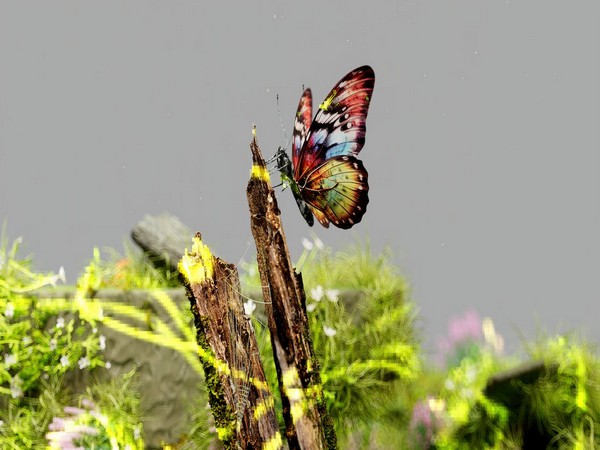
"A South Asian butterfly, called the tawny coster, entered Australia in 2012," Dr Chowdhury said.
"We've searched for additional locality records from Facebook to analyse the movement, ecology and colonisation status of this species and shown that it expanded at about 135 kilometres per year in Australia between 2012 and 2020."
Co-author Professor Richard Fuller from UQ said while Facebook had been helpful, there are some big opportunities for social media companies.
"There is currently no automated way to collect this information, and it was a very arduous task for us to do it manually." Professor Fuller said.
"We hope our research can inspire the development of technology such as an app that transfers biodiversity data posted on Facebook directly to the global biodiversity databases. This way, conservation scientists can easily access that data and use it." (ANI)


Get the App

What to Read Next

Science

Amphibians bounce-back from Earth’s greatest mass extinction

Amphibians bounce-back from Earth’s greatest mass extinction

Researchers at the University of Bristol discovered that ancient frog ancestors survived the biggest mass extinction of species by eating on freshwater prey that evaded terrestrial predators.

Read More
Science

Study reveals impact of animals as architects of Earth

Study reveals impact of animals as architects of Earth

A new study led by Professor Gemma Harvey from Queen Mary University of London has revealed how hundreds of species shape the landscapes we depend on, from termite mounds visible from space to beavers creating wetlands and hippos carving drainage systems.

Read More
Science

Plastic pollution, seawater flooding effect on coastal plants

Plastic pollution, seawater flooding effect on coastal plants

Two of the planet's most urgent environmental stressors have the potential to affect the development and reproductive production of plants found along the world's coasts, according to new research.

Read More
Science

Insight into how brain overgrowth dictates autism severity

Insight into how brain overgrowth dictates autism severity

Some children with autism face severe, long-term challenges such as developmental delays, social issues, and even the inability to communicate. Others report milder symptoms that improve with time.

Read More
Science

Study finds biodiversity is key to better mental health

Study finds biodiversity is key to better mental health

A study by King's College London found that spaces with a variety of natural features are associated with better mental health than spaces with less natural diversity.

Read More
Science

Climate change disrupts vital ecosystems in Alps: Study

Climate change disrupts vital ecosystems in Alps: Study

Reduced snow cover and altering vegetation patterns in the Alps, both caused by climate change, are having significant combined effects on biodiversity and ecosystem functioning in the high mountains, according to a new study.

Read More
Science

Study shows older adults want to express themselves with emojis

Study shows older adults want to express themselves with emojis

A new study from the University of Ottawa sheds light on how different generations interpret the use of emojis in their communications, with older persons unclear how to use them as frequently as younger adults, despite recognizing their meaning.

Read More
Science

Consuming refined carbs may be linked with perceive facial beauty

Consuming refined carbs may be linked with perceive facial beauty

In a new study, individuals' levels of refined carbohydrate consumption were statistically connected to their facial attractiveness as evaluated by heterosexual volunteers of the opposite sex.

Read More
Science

Gardeners can help to identify possibly invasive plants: Research

Gardeners can help to identify possibly invasive plants: Research

Researchers from the University of Reading and the Royal Horticultural Society have discovered that gardeners play a vital role in identifying 'future invaders' - ornamental plants that could become invasive species.

Read More
Science

Butterflies mimic each other's flight patterns to evade predators

Butterflies mimic each other's flight patterns to evade predators

Researchers discovered that inedible butterfly species that replicate one other's colour patterns have developed similar flight habits to warn predators and avoid being eaten.

Read More
Home About Us Our Products Advertise Contact Us Terms & Condition Privacy Policy

Copyright © aninews.in | All Rights Reserved.


