

ADD ANI AS A TRUSTED SOURCE
googleads
ANI Logo
Menu
Science

Scientists use holographic imaging to detect viruses, antibodies

Washington [US], October 13 (ANI): A team of New York University scientists have developed a method using holographic imaging to detect both viruses and antibodies. The breakthrough has the potential to aid in medical diagnoses and, specifically, those related to the COVID-19 pandemic.

ANI Oct 13, 2020 23:26 IST googleads

The method can test for either the virus (current infection) or antibodies (immunity)

Washington [US], October 13 (ANI): A team of New York University scientists have developed a method using holographic imaging to detect both viruses and antibodies. The breakthrough has the potential to aid in medical diagnoses and, specifically, those related to the COVID-19 pandemic.
"Our approach is based on physical principles that have not previously been used for diagnostic testing," explains David Grier, a professor of physics at NYU and one of the researchers on the project, which is reported in the journal Soft Matter. "We can detect antibodies and viruses by literally watching them stick to specially prepared test beads."
If fully realised, this proposed test could be done in under 30 minutes, is highly accurate, and can be performed by minimally trained personnel. Moreover, the method can test for either the virus (current infection) or antibodies (immunity).
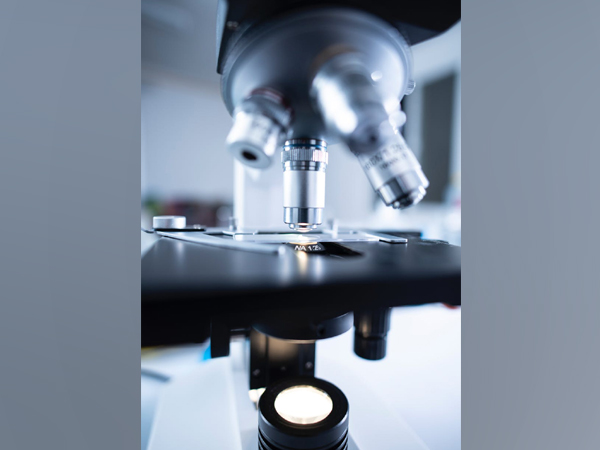
The scientists, who also include NYU doctoral candidates Kaitlynn Snyder and Rushna Quddus as well as NYU Chemistry Professor Kent Kirshenbaum and NYU Physics Professor Andy Hollingsworth, base their test on holographic video microscopy, which uses laser beams to record holograms of their test beads. The surfaces of the beads are activated with biochemical binding sites that attract either antibodies or virus particles, depending on the intended test. Binding antibodies or viruses cause the beads to grow by a few billionths of a meter, which the NYU researchers have shown they can detect through changes in the beads' holograms.
"We can analyze a dozen beads per second," explains Grier, "which means that we can cut the time for a reliable thousand-bead diagnostic test to 20 minutes. And we can measure those changes rapidly, reliably, and inexpensively."
The holographic video microscopy is performed by an instrument, xSight, created by Spheryx, a New York-based company Grier co-founded.
The scientists also note the versatility of their method.
"This instrument can count virus particles dispersed in patients' saliva and also detect and differentiate antibodies dissolved in their blood," adds Grier. "This flexibility is achieved by changing the composition of the test beads to model what we are testing.
"Each type of bead tests for the presence of a particular target, but can also test for several targets simultaneously. Our holographic analysis distinguishes the different test beads by their size and by their refractive index--an easily controlled optical property."
The scientists say that this capability can be used to develop libraries of test beads that may be combined into test kits for mixing with patient samples. This will support doctors in distinguishing among possible diagnoses, speeding patients' treatment, reducing the risk of misdiagnosis, and cutting the cost of healthcare.(ANI)


Get the App

What to Read Next

Science

New method guides magnetism without magnets

New method guides magnetism without magnets

Researchers at Paul Scherrer Institute PSI have demonstrated an innovative method to control magnetism in materials using an energy-efficient electric field.

Read More
Science

Amphibians bounce-back from Earth’s greatest mass extinction

Amphibians bounce-back from Earth’s greatest mass extinction

Researchers at the University of Bristol discovered that ancient frog ancestors survived the biggest mass extinction of species by eating on freshwater prey that evaded terrestrial predators.

Read More
Science

New insights into how cancer evades the immune system: Study

New insights into how cancer evades the immune system: Study

Immunotherapy research primarily focuses on better recognition of cancer cells by the body's own immune system. Researchers at Amsterdam UMC and Moffitt Cancer Center have taken a different approach.

Read More
Science

Scientists use AI to better understand nanoparticles: Study

Scientists use AI to better understand nanoparticles: Study

A group of scientists has created a way to illuminate the dynamic behavior of nanoparticles, which are essential components in the production of pharmaceuticals, electronics, and industrial and energy-conversion materials.

Read More
Science

New device could allow you to taste cake in virtual reality

New device could allow you to taste cake in virtual reality

The 'e-Taste' interface employs sensors and wireless chemical dispensers to enable remote taste perception, often known as gestation. Field testing done by researchers at The Ohio State University confirmed the device's ability to digitally simulate a range of taste intensities, while still offering variety and safety for the user.

Read More
Science

Study reveals impact of animals as architects of Earth

Study reveals impact of animals as architects of Earth

A new study led by Professor Gemma Harvey from Queen Mary University of London has revealed how hundreds of species shape the landscapes we depend on, from termite mounds visible from space to beavers creating wetlands and hippos carving drainage systems.

Read More
Science

Opposing arrows of time emerge from certain quantum systems

Opposing arrows of time emerge from certain quantum systems

Researchers at the University of Surrey made a thought-provoking discovery. A new study reveals that opposing arrows of time can theoretically emerge from certain quantum systems.

Read More
Science

COVID-19 severity may be predicted by White Blood Cell Count

COVID-19 severity may be predicted by White Blood Cell Count

A COVID-19 diagnosis is no longer as frightening as it used to be, thanks to developments in treatment choices. However, a new study reveals that leukocyte (white blood cell) count may now be used to identify who is more likely to develop more significant disease symptoms.

Read More
Science

Seals can essentially act as 'smart sensors': Study

Seals can essentially act as 'smart sensors': Study

A new study by marine biologists reports that seals can essentially act as 'smart sensors' for monitoring fish populations in the ocean's eerily dim 'twilight zone.'

Read More
Science

New technology enhances gravitational-wave detection: Study

New technology enhances gravitational-wave detection: Study

A team of physicists led by Jonathan Richardson of the University of California, Riverside, demonstrated how new optical technology can extend the detection range of gravitational-wave observatories such as the Laser Interferometer Gravitational-Wave Observatory, or LIGO, and pave the way for future observatories.

Read More
Home About Us Our Products Advertise Contact Us Terms & Condition Privacy Policy

Copyright © aninews.in | All Rights Reserved.


