

ADD ANI AS A TRUSTED SOURCE
googleads
ANI Logo
Menu
Science

Scientists show technology can save people from shark bites

Adelaide [Australia], March 31 (ANI): With shark bites increasing in countries like Australia - scientists say the use of personal electronic deterrents is an effective way to prevent future deaths and injuries which could save the lives of up to 1063 Australians along the coastline over the next 50 years.

ANI Mar 31, 2021 08:57 IST googleads

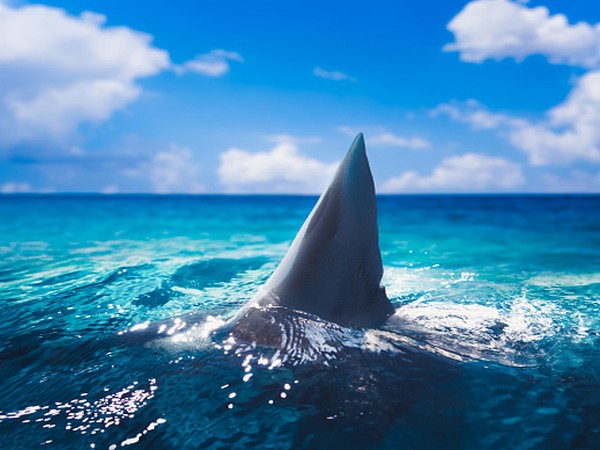
Representative image

Adelaide [Australia], March 31 (ANI): With shark bites increasing in countries like Australia - scientists say the use of personal electronic deterrents is an effective way to prevent future deaths and injuries which could save the lives of up to 1063 Australians along the coastline over the next 50 years.
The research, published in the scientific journal Royal Society Open Science, shows that while shark bites are rare events, strategies to reduce shark-bite risk are also valuable because they can severely affect victims and their support groups - with one-third of victims experiencing post-traumatic stress disorder.
The researchers analysed per-capita shark bites around Australia from 1900 to 2020 and developed models to estimate the preventative impact of electronic deterrents if they were worn by water users, to predict how many shark bites could be avoided.
With the incidence of bites increasing worldwide, researchers used the Australian Shark Attack File curated by Taronga Conservation Society Australia to develop the models of incidents and then projected these shark bites to 2066 when the population is expected to rise to 49 million.
There were 985 incidents reported in the Australian Shark Attack File from 1900 to 2020 from 20 different species.
Lead author Professor Corey Bradshaw of Flinders University says efforts to reduce the risk of shark bites, even if they are extremely rare, are valuable with electronic deterrents capable of reducing the likelihood of a bite by about 60 per cent, potentially saving hundreds of lives over the next 50 years.
"Avoiding death, injury, and trauma from shark bites over the next half-century would be a realistic outcome if people use these personal electronic deterrents whenever they're in the water, and as long as the technology is operating at capacity."
"Given that governments are applying multiple approaches to mitigate shark bites such as drones, SMART drumlines, and acoustic monitoring, our simulations suggest electronic deterrents could make a valuable contribution to overall mitigation, and so help allay community fears."
"This is especially so when you consider the additional costs associated with the loss of recreational, commercial, and tourism revenue in the tens to hundreds of millions of dollars following clusters of shark-bite events. "
"For example, the New South Wales Government recently invested AU$16 million to mitigate shark bites in part due to lost revenue from businesses benefitting from water users and tourism."
Despite the low probability of being bitten by a shark, the rising number of people spending time in waters frequented by sharks increase the shark-bite risk to an extent.
The researchers point out this approach relies on many assumptions, the biggest factors being stability in the abundance of sharks, shark behaviour, shark distribution (potentially influenced by climate), and human use of the ocean.
Shark scientist and co-author Associate Professor Charlie Huveneers, who leads the Southern Shark Ecology Group at Flinders University, says the electronic deterrent devices can be beneficial, as long as people understand their effectiveness and how much they actually reduce the risk of attacks.
"Although several studies have demonstrated that electronic deterrents can reduce the probability of shark bites, device efficacy varies among manufacturers and even between products of the same manufacturer."
"When testing these products scientifically, we need a large number of interactions to (i.e., using robust statistics) assess efficacy confidently. As a result, we often need to use bait or berley to attract sharks, which likely motivate sharks to bite more than in situations when sharks encounter a swimmer or surfer."
"Therefore, the ability of electric deterrents to reduce shark bite risk might be greater than the 60 per cent decrease we observed in our studies, further increasing the number of lives saved." (ANI)


Get the App

What to Read Next

Science

New method guides magnetism without magnets

New method guides magnetism without magnets

Researchers at Paul Scherrer Institute PSI have demonstrated an innovative method to control magnetism in materials using an energy-efficient electric field.

Read More
Science

Amphibians bounce-back from Earth’s greatest mass extinction

Amphibians bounce-back from Earth’s greatest mass extinction

Researchers at the University of Bristol discovered that ancient frog ancestors survived the biggest mass extinction of species by eating on freshwater prey that evaded terrestrial predators.

Read More
Science

New insights into how cancer evades the immune system: Study

New insights into how cancer evades the immune system: Study

Immunotherapy research primarily focuses on better recognition of cancer cells by the body's own immune system. Researchers at Amsterdam UMC and Moffitt Cancer Center have taken a different approach.

Read More
Science

Scientists use AI to better understand nanoparticles: Study

Scientists use AI to better understand nanoparticles: Study

A group of scientists has created a way to illuminate the dynamic behavior of nanoparticles, which are essential components in the production of pharmaceuticals, electronics, and industrial and energy-conversion materials.

Read More
Science

New device could allow you to taste cake in virtual reality

New device could allow you to taste cake in virtual reality

The 'e-Taste' interface employs sensors and wireless chemical dispensers to enable remote taste perception, often known as gestation. Field testing done by researchers at The Ohio State University confirmed the device's ability to digitally simulate a range of taste intensities, while still offering variety and safety for the user.

Read More
Science

Strand Life Sciences launches portal for rare disease diagnosis

Strand Life Sciences launches portal for rare disease diagnosis

Marking Rare Disease Day, Strand Life Sciences, a subsidiary of Reliance Industries and a leading genomics research company, has launched the StrandOmics Portal, an innovative digital platform designed to assist doctors in diagnosing rare diseases more efficiently.

Read More
Science

Study reveals impact of animals as architects of Earth

Study reveals impact of animals as architects of Earth

A new study led by Professor Gemma Harvey from Queen Mary University of London has revealed how hundreds of species shape the landscapes we depend on, from termite mounds visible from space to beavers creating wetlands and hippos carving drainage systems.

Read More
Science

Opposing arrows of time emerge from certain quantum systems

Opposing arrows of time emerge from certain quantum systems

Researchers at the University of Surrey made a thought-provoking discovery. A new study reveals that opposing arrows of time can theoretically emerge from certain quantum systems.

Read More
Science

COVID-19 severity may be predicted by White Blood Cell Count

COVID-19 severity may be predicted by White Blood Cell Count

A COVID-19 diagnosis is no longer as frightening as it used to be, thanks to developments in treatment choices. However, a new study reveals that leukocyte (white blood cell) count may now be used to identify who is more likely to develop more significant disease symptoms.

Read More
Science

Seals can essentially act as 'smart sensors': Study

Seals can essentially act as 'smart sensors': Study

A new study by marine biologists reports that seals can essentially act as 'smart sensors' for monitoring fish populations in the ocean's eerily dim 'twilight zone.'

Read More


