

ADD ANI AS A TRUSTED SOURCE
googleads
ANI Logo
Menu
Science

Scientists predict two out of three glaciers could be lost by 2100

Scientists have made new projections of glacier mass loss through the century under different emissions scenarios.

ANI Jan 08, 2023 20:36 IST googleads

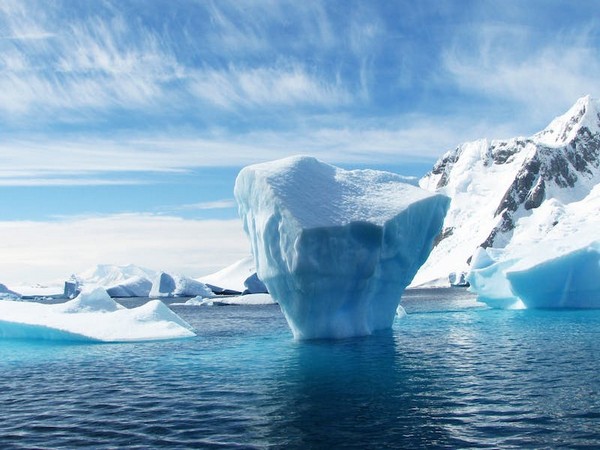
Representative Image

Washington [US], January 8 (ANI): Scientists have made new projections of glacier mass loss through the century under different emissions scenarios.
Rounce and his team found that in a future scenario with continued investment in fossil fuels, over 40 percent of the glacial mass will be gone within the century, and over 80 percent of glaciers by number could well disappear. Even in a best-case, low-emissions scenario, where the increase in global mean temperature is limited to +1.5° C relative to pre-industrial levels, over 25 percent of glacial mass will be gone and nearly 50 percent of glaciers by number are projected to disappear.
A majority of these lost glaciers are small (less than one km2) by glacial standards, but their loss can negatively impact local hydrology, tourism, glacier hazards, and cultural values.
His work provides better context for regional glacier modeling, and he hopes it will spur climate policymakers to lower temperature change goals beyond the 2.7° C mark that pledges from COP-26 are projected to hit. Smaller glacial regions like Central Europe and Western Canada and the United States will be disproportionately affected by temperatures rising more than 2° C. At a 3° C rise, glaciers in these regions almost disappear completely.
Rounce noted that the way in which glaciers respond to changes in climate takes a long time. He describes the glaciers as extremely slow-moving rivers. Cutting emissions today will not remove previously emitted greenhouse gasses, nor can it instantly halt the inertia they contribute to climate change, meaning even a complete halt to emissions would still take between 30 and 100 years to be reflected in glacier mass loss rates.
Many processes govern how glaciers lose mass and Rounce's study advances how models account for different types of glaciers, including tidewater and debris-covered glaciers. Tidewater glaciers refer to glaciers that terminate in the ocean, which causes them to lose a lot of mass at this interface. Debris-covered glaciers refer to glaciers that are covered by sand, rocks, and boulders.
Prior work by Rounce has shown that the thickness and distribution of debris cover can have a positive or negative effect on glacial melt rates across an entire region, depending on the debris thickness. In this newest work, he found that accounting for these processes had relatively little impact on the global glacier projections, but substantial differences in mass loss were found when analyzing individual glaciers.
The model is also calibrated with an unprecedented amount of data, including individual mass change observations for every glacier, which provide a more complete and detailed picture of glacier mass change. The use of supercomputers was thus essential to support the application of state-of-the-art calibration methods and the large ensembles of different emissions scenarios. (ANI)


Get the App

What to Read Next

Science

Amphibians bounce-back from Earth’s greatest mass extinction

Amphibians bounce-back from Earth’s greatest mass extinction

Researchers at the University of Bristol discovered that ancient frog ancestors survived the biggest mass extinction of species by eating on freshwater prey that evaded terrestrial predators.

Read More
Science

Study reveals impact of animals as architects of Earth

Study reveals impact of animals as architects of Earth

A new study led by Professor Gemma Harvey from Queen Mary University of London has revealed how hundreds of species shape the landscapes we depend on, from termite mounds visible from space to beavers creating wetlands and hippos carving drainage systems.

Read More
Science

Astronomers find the smallest main-belt asteroids ever detected:

Astronomers find the smallest main-belt asteroids ever detected:

The majority of known asteroids orbit inside the main asteroid belt, which is positioned between Mars and Jupiter at an average distance of around 250 million km from Earth. Since the discovery of the first asteroid in 1801, about 750.000 asteroids have been identified, primarily in the last decade thanks to several optical surveys that examine the sky on clear nights.

Read More
Science

Study reveals how reminders can eliminate age-related memory loss

Study reveals how reminders can eliminate age-related memory loss

A recent study from UT Arlington showed that setting reminders can reverse some age-related memory deficits. The findings represent a significant breakthrough in tackling the cognitive issues that older persons confront, particularly in the context of prospective memory, which is the ability to remember to complete an intended activity at the appropriate time, such as taking medication or attending appointments.

Read More
Science

Study finds new ways to prevent, treat type 2 diabetes

Study finds new ways to prevent, treat type 2 diabetes

Pancreatic cells, like human cells, have a limit to how much stress they can handle before they start to break down. Through overstimulation of these cells, certain stresses like inflammation and hyperglycemia lead to the onset of type 2 diabetes.

Read More
Science

Study: Connection between gene variants, breast, ovarian cancer

Study: Connection between gene variants, breast, ovarian cancer

Researchers have identified thousands of genetic variants in a gene that could raise an individual's risk of ovarian and breast cancer, opening the door to more accurate risk assessment and individualised treatment.

Read More
Science

Study finds how skin cancer occurrence in young adults declines

Study finds how skin cancer occurrence in young adults declines

A recent study suggested that the risk of malignant melanoma, or skin cancer, may be declining in Sweden, at least for people under the age of 50.

Read More
Science

Weight loss could reduce chances of severe infections in people

Weight loss could reduce chances of severe infections in people

According to new research, weight loss therapies may lower the risk of severe flu cases and other infections in patients with diabetes.

Read More
Science

Memory problems in old age may be linked to key enzyme: Study

Memory problems in old age may be linked to key enzyme: Study

Everyone experiences occasional episodes of forgetfulness, particularly as they age. It's not only that fresh material is hard for older folks to remember. Moreover, when new information becomes available, they find it more difficult to change those thoughts. Nevertheless, not much is understood about the processes that underlie memory updating and how they malfunction as we age.

Read More
Science

Fossil study finds how sea level changes shaped early life

Fossil study finds how sea level changes shaped early life

A newly developed timeline of early animal fossils suggests a relationship between sea level fluctuations, variations in marine oxygen, and the appearance of the earliest ancestors of present-day animals.

Read More
Home About Us Our Products Advertise Contact Us Terms & Condition Privacy Policy

Copyright © aninews.in | All Rights Reserved.


