

ADD ANI AS A TRUSTED SOURCE
googleads
ANI Logo
Menu
Science

Scientists find how organic aerosols can affect environment, climate

Birmingham [UK], April 15 (ANI): Scientists have found the process of how organic aerosols are transformed in the atmosphere, and by this, they will be able to better understand and predict their impact on the environment and the climate.

ANI Apr 15, 2022 19:29 IST googleads

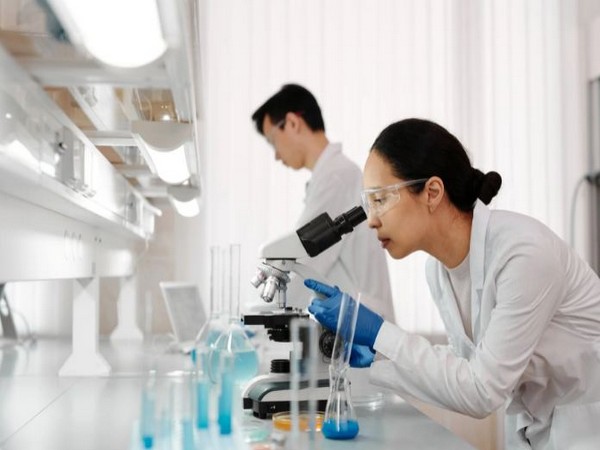
Representative image

Birmingham [UK], April 15 (ANI): Scientists have found the process of how organic aerosols are transformed in the atmosphere, and by this, they will be able to better understand and predict their impact on the environment and the climate.
The findings of the study were published in the journal, 'Atmospheric Chemistry and Physics'.
Organic aerosols are those molecule particles released in cooking. They stay in the atmosphere for several days, because of nanostructures formed by fatty acids as they are released into the air.
Experts at the Universities of Birmingham and Bath have used instruments at the Diamond Light Source and the Central Laser Facility, both based at the Harwell Campus in Oxford, to probe the behavior of thin films of oleic acid, which is an unsaturated fatty acid commonly released when cooking.
Scientists were able to analyze the particular molecular properties that control how rapidly aerosol emissions can be broken down in the atmosphere.
Then, using a theoretical model combined with experimental data the team was able to predict the number of times aerosols generated from cooking may hang around in the environment.
These types of aerosols have long been associated with poor air quality in urban areas, but their impact on human-made climate change is hard to gauge. That's because of the diverse range of molecules found within aerosols, and their varying interactions with the environment.
By identifying the nanostructure of molecules emitted during cooking that slows down the break-up of organic aerosols, it becomes possible to model how they are transported and dispersed into the atmosphere.
Lead author Dr Christian Pfrang, of the University of Birmingham's School of Geography, Earth and Environmental Sciences, said, "Cooking aerosols account for up to 10 per cent of particulate matter (PM) emissions in the UK. Finding accurate ways to predict their behavior will give us much more precise ways to also assess their contribution to climate change."
Co-author Dr Adam Squires, of the University of Bath, said, "We're increasingly finding out how molecules like these fatty acids from cooking can organize themselves into bilayers and other regular shapes and stacks within aerosol droplets that float in the air, and how this completely changes how fast they degrade, how long they persist in the atmosphere, and how they affect pollution and weather." (ANI)


Get the App

What to Read Next

Science

Discovering the genetics of climate adaptation 

Discovering the genetics of climate adaptation 

As climate change accelerates, plants are under increasing pressure to adapt to changing habitats and environmental conditions.

Read More
Science

Microbes help detoxify our atmosphere, says study 

Microbes help detoxify our atmosphere, says study 

Melbourne researchers have uncovered important new information on how microbes absorb huge amounts of carbon monoxide (CO) and assist in reducing levels of this deadly gas.

Read More
Science

Weather change linked to heightened risk of Salmonella outbreaks

Weather change linked to heightened risk of Salmonella outbreaks

According to new research from the University of Surrey, climate change has an impact on Salmonella spread. This study builds on prior work by the researchers, which discovered that weather change is contributing to the spread of deadly diarrhoeal illnesses.

Read More
Science

AI can reveals hidden hazards of chemical mixtures in rivers

AI can reveals hidden hazards of chemical mixtures in rivers

Artificial intelligence can provide important insights into how complex chemical mixes in rivers affect aquatic life, paving the path for more effective environmental protection.

Read More
Science

Study reveals role of gamma-delta T cells in cancer immunology

Study reveals role of gamma-delta T cells in cancer immunology

The significance of gamma-delta T cells in 33 different cancer types is revealed in a recent study that was published in Cell Press. This information sheds light on the cells' potential as clinical biomarkers and therapeutic targets in the treatment of cancer. This thorough examination, which was carried out under the direction of a group of Moffitt Cancer Center experts, marks a substantial breakthrough in our knowledge of these distinct immune cells and how they affect cancer therapy outcomes for patients.

Read More
Science

Contrail avoidance is less likely to damage climate by mistake

Contrail avoidance is less likely to damage climate by mistake

A new study allays concerns that rerouting planes to avoid producing climate-warming contrails may accidentally exacerbate climate change.

Read More
Science

Plastic pollution, seawater flooding effect on coastal plants

Plastic pollution, seawater flooding effect on coastal plants

Two of the planet's most urgent environmental stressors have the potential to affect the development and reproductive production of plants found along the world's coasts, according to new research.

Read More
Science

Study tracks air pollution, reveals demographic disparities

Study tracks air pollution, reveals demographic disparities

There are considerable variances in how much people are exposed to air pollution, according to a new study co-authored by MIT researchers that considers everyday mobility.

Read More
Science

Chemists design novel method for generating sustainable fuel

Chemists design novel method for generating sustainable fuel

Tuning this environment by controlling how the CoPc catalyst was distributed on the carbon nanotube surface allowed carbon dioxide to be as much as eight times more likely to produce methanol, a discovery that could increase the efficiency of other catalytic processes and have a widespread impact on other fields, said Robert Baker, co-author of the study and a professor in chemistry and biochemistry at The Ohio State University.

Read More
Science

Plastic waste can be converted to electronic devices

Plastic waste can be converted to electronic devices

The University of Delaware and the Argonne National Laboratory have developed a chemical process that converts Styrofoam into the high-value conducting polymer PEDOT:PSS. The researchers show how improved plastic trash may be successfully integrated into functional electronic devices such as silicon-based hybrid solar cells and organic electrochemical transistors.

Read More
Home About Us Our Products Advertise Contact Us Terms & Condition Privacy Policy

Copyright © aninews.in | All Rights Reserved.


