

ADD ANI AS A TRUSTED SOURCE
googleads
ANI Logo
Menu
Science

Scientists distinguish between treatable, untreatable sudden cardiac arrest

Washington [US], March 31 (ANI): Scientists in the Smidt Heart Institute at Cedars-Sinai developed a clinical algorithm that distinguishes between treatable sudden cardiac arrest and untreatable forms of the condition.

ANI Mar 31, 2022 13:43 IST googleads

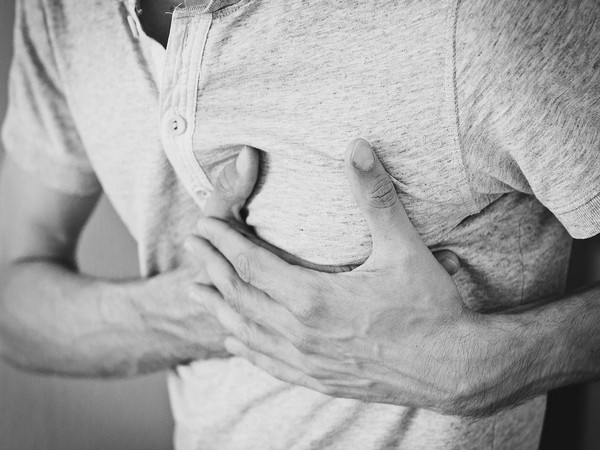
Representative image

Washington [US], March 31 (ANI): Scientists in the Smidt Heart Institute at Cedars-Sinai developed a clinical algorithm that distinguishes between treatable sudden cardiac arrest and untreatable forms of the condition.
The findings, published in the peer-reviewed Journal of the American College of Cardiology: Clinical Electrophysiology, have the potential to enhance prevention of sudden cardiac arrest -- unexpected loss of heart function -- based on key risk factors identified in this study.
"All sudden cardiac arrest is not the same," explained Sumeet Chugh, MD, director of the Center for Cardiac Arrest Prevention and lead author of the study. "Until now, no prior research has distinguished between potentially treatable sudden cardiac arrest versus untreatable forms that cause death in almost all instances."
Out-of-hospital sudden cardiac arrest claims at least 300,000 US lives annually. For those affected, 90 per cent will die within 10 minutes of cardiac arrest.
For this largely fatal condition, prevention would have a profound impact. The biggest challenge, however, lies in distinguishing between those who stand to benefit the most from an implantable cardioverter defibrillator -- and those who would not benefit from the electric jolt.
"Defibrillators are expensive and unnecessary for individuals with the type of sudden cardiac arrest that will not respond to an electrical shock," said Chugh adding, "However, for patients with treatable, or 'shockable,' forms of the disease, a defibrillator is lifesaving."
Chugh, also a professor and the Pauline and Harold Price Chair in Cardiac Electrophysiology Research, says this new research provides a clinical risk assessment algorithm that can better identify patients at highest risk of treatable sudden cardiac arrest -- and thus, a better understanding of those patients who would benefit from a defibrillator.
The risk assessment algorithm consists of 13 clinical, electrocardiogram, and echocardiographic variables that could put a patient at higher risk of treatable sudden cardiac arrest.
The risk factors include diabetes, myocardial infarction, atrial fibrillation, stroke, heart failure, chronic obstructive pulmonary disease, seizure disorders, syncope -- a temporary loss of consciousness caused by a fall in blood pressure -- and four separate indicators found with an electrocardiogram test, including heart rate.
"This first-of-its-kind algorithm has the potential to improve the way we currently predict sudden cardiac arrest," said Eduardo Marban, MD, PhD, executive director of the Smidt Heart Institute and the Mark S. Siegel Family Foundation Distinguished Professor.
"If validated in clinical trials, we will be able to better identify high-risk patients and therefore, save lives," Marban added.
The research study utilized data from two ongoing multiyear studies founded by Chugh. The Oregon Sudden Unexpected Death Study is a comprehensive assessment of sudden cardiac arrests among the 1 million residents of the Portland, Oregon, metropolitan area.
The Ventura Prediction of Sudden Death in Multiethnic Communities (PRESTO) study is based in Ventura, California, with approximately 850,000 residents. Both studies are unique community partnerships with area residents, as well as first responders, medical examiners and hospital systems that deliver care within the two communities.
Both led by Chugh, the projects -- now ongoing in Oregon for nearly 20 years, and more recently in Ventura -- provides researchers with unique, community-based information to help determine how best to predict sudden cardiac arrest. (ANI)


Get the App

What to Read Next

Science

New method guides magnetism without magnets

New method guides magnetism without magnets

Researchers at Paul Scherrer Institute PSI have demonstrated an innovative method to control magnetism in materials using an energy-efficient electric field.

Read More
Science

Amphibians bounce-back from Earth’s greatest mass extinction

Amphibians bounce-back from Earth’s greatest mass extinction

Researchers at the University of Bristol discovered that ancient frog ancestors survived the biggest mass extinction of species by eating on freshwater prey that evaded terrestrial predators.

Read More
Science

New insights into how cancer evades the immune system: Study

New insights into how cancer evades the immune system: Study

Immunotherapy research primarily focuses on better recognition of cancer cells by the body's own immune system. Researchers at Amsterdam UMC and Moffitt Cancer Center have taken a different approach.

Read More
Science

Scientists use AI to better understand nanoparticles: Study

Scientists use AI to better understand nanoparticles: Study

A group of scientists has created a way to illuminate the dynamic behavior of nanoparticles, which are essential components in the production of pharmaceuticals, electronics, and industrial and energy-conversion materials.

Read More
Science

New device could allow you to taste cake in virtual reality

New device could allow you to taste cake in virtual reality

The 'e-Taste' interface employs sensors and wireless chemical dispensers to enable remote taste perception, often known as gestation. Field testing done by researchers at The Ohio State University confirmed the device's ability to digitally simulate a range of taste intensities, while still offering variety and safety for the user.

Read More
Science

Strand Life Sciences launches portal for rare disease diagnosis

Strand Life Sciences launches portal for rare disease diagnosis

Marking Rare Disease Day, Strand Life Sciences, a subsidiary of Reliance Industries and a leading genomics research company, has launched the StrandOmics Portal, an innovative digital platform designed to assist doctors in diagnosing rare diseases more efficiently.

Read More
Science

Study reveals impact of animals as architects of Earth

Study reveals impact of animals as architects of Earth

A new study led by Professor Gemma Harvey from Queen Mary University of London has revealed how hundreds of species shape the landscapes we depend on, from termite mounds visible from space to beavers creating wetlands and hippos carving drainage systems.

Read More
Science

Opposing arrows of time emerge from certain quantum systems

Opposing arrows of time emerge from certain quantum systems

Researchers at the University of Surrey made a thought-provoking discovery. A new study reveals that opposing arrows of time can theoretically emerge from certain quantum systems.

Read More
Science

COVID-19 severity may be predicted by White Blood Cell Count

COVID-19 severity may be predicted by White Blood Cell Count

A COVID-19 diagnosis is no longer as frightening as it used to be, thanks to developments in treatment choices. However, a new study reveals that leukocyte (white blood cell) count may now be used to identify who is more likely to develop more significant disease symptoms.

Read More
Science

Seals can essentially act as 'smart sensors': Study

Seals can essentially act as 'smart sensors': Study

A new study by marine biologists reports that seals can essentially act as 'smart sensors' for monitoring fish populations in the ocean's eerily dim 'twilight zone.'

Read More
Home About Us Our Products Advertise Contact Us Terms & Condition Privacy Policy

Copyright © aninews.in | All Rights Reserved.


