

ADD ANI AS A TRUSTED SOURCE
googleads
ANI Logo
Menu
Science

Scientists discover new fossil which reveals origin of arthropod breathing system

University of Manchester research fellow David Legg, in collaboration with a team of international scientists from China, Switzerland, and Sweden, has today announced a new fossil that reveals the origin of gills in arthropods.

ANI Dec 28, 2022 03:03 IST googleads

Representative Image

Washington [US], December 28 (ANI): University of Manchester research fellow David Legg, in collaboration with a team of international scientists from China, Switzerland, and Sweden, has today announced a new fossil that reveals the origin of gills in arthropods.
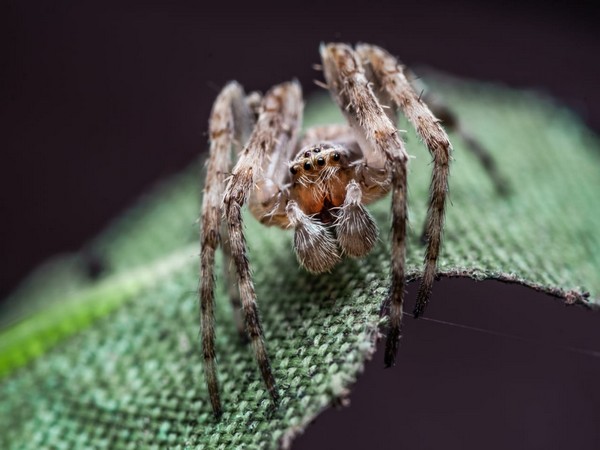
Arthropods, the group of animals that includes creepy crawlies like spiders and woodlice, are the largest phylum in the animal kingdom and are found everywhere from the deepest ocean trench to the top of Mount Everest.
Research published today shows the newest addition to the group is a 520-million-year-old (about 10 times as old as the dinosaurs) organism called Erratus sperare. Erratus sperare was discovered in the Chengjiang Fossil Site, a UNESCO World Heritage Site located in Yunnan, China. The Chengjiang Fossil Site preserves an ancient underwater ecosystem which included the relatives of some well-known arthropod fossils like trilobites and anomalocarids.
Modern water dwelling arthropods have biramous limbs, legs that have two parts -- one for breathing and one for walking -- but how such specialised limbs evolved was a mystery. Some of the earliest fossil arthropods, like Anomalocaris, had swimming flaps that may have doubled as gills, but until now researchers didn't know how arthropods made the jump from these specialised flaps to the biramous limbs of modern arthropods.
Erratus sperare provides the missing link between arthropods that used such specialised flaps and arthropods with biramous limbs. It has both legs and flaps.
Dr David Legg, one of the authors of this study, said: "Fish aren't the only organisms that have gills! Arthropods have gills too... they just have them on their legs. When it came to arthropods, however, we just weren't sure where these gills came from.
"Thanks to this new fossil, Erratus sperare, we now have a much clearer idea. These gills also probably went on to evolve into the wings of insects and the lungs of terrestrial arthropods like spiders so were a very important innovation." (ANI)


Get the App

What to Read Next

Science

Amphibians bounce-back from Earth’s greatest mass extinction

Amphibians bounce-back from Earth’s greatest mass extinction

Researchers at the University of Bristol discovered that ancient frog ancestors survived the biggest mass extinction of species by eating on freshwater prey that evaded terrestrial predators.

Read More
Science

New insights into how cancer evades the immune system: Study

New insights into how cancer evades the immune system: Study

Immunotherapy research primarily focuses on better recognition of cancer cells by the body's own immune system. Researchers at Amsterdam UMC and Moffitt Cancer Center have taken a different approach.

Read More
Science

Bacterial vaccine demonstrates potential as cancer treatment

Bacterial vaccine demonstrates potential as cancer treatment

Columbia researchers developed probiotic bacteria that train the immune system to eliminate cancer cells, paving the way for a new class of cancer vaccinations that take advantage of bacteria's innate tumour-targeting abilities. These microbial cancer vaccines can be tailored to each person's specific original tumour and metastases, perhaps preventing future recurrences.

Read More
Science

Cancer cells may be using lipids to hide from immune system

Cancer cells may be using lipids to hide from immune system

Cancer cells rarely begin stealthily. Quite the contrary, they alert the immune system to their presence by displaying chemical red flags on their membranes. When detected, the body's defences can swoop in and destroy renegade cells before they can do significant damage. Lipids, fatty molecules traditionally thought to be largely a fuel supply for developing tumours, are at the heart of this early detection system.

Read More
Science

Study finds how cancer develops when immune system fails

 Study finds how cancer develops when immune system fails

It has been suggested that the immune system is unable to eradicate invasive tumour cells by referring to cancer as "a wound that does not heal."

Read More
Science

Rare diseases highlight connections between metabolism, immunity

Rare diseases highlight connections between metabolism, immunity

A new study suggested that inherited immune and metabolism disorders are more similar than previously believed. The results provide fresh information that may help patients with these illnesses receive better care by highlighting a novel collection of metabolic genes that are critical for immune system T cell activity.

Read More
Science

Fossil study finds how sea level changes shaped early life

Fossil study finds how sea level changes shaped early life

A newly developed timeline of early animal fossils suggests a relationship between sea level fluctuations, variations in marine oxygen, and the appearance of the earliest ancestors of present-day animals.

Read More
Science

Study finds how macrophages play critical role in immune system

Study finds how macrophages play critical role in immune system

Macrophages are essential to the immune system because they combat infections and help heal damaged tissue. It's critical to comprehend how these cells are triggered in various contexts in order to design novel medical interventions. The complexity of these cells and their reactions has made it difficult to identify and research macrophage activation.

Read More
Science

Study finds link between yoga, patients with heart failure

Study finds link between yoga, patients with heart failure

According to a study, yoga that focuses on breathing, meditation, and relaxation is connected to symptom improvement in people with heart failure.

Read More
Science

Study finds protein responsible for genetic inflammatory disease

Study finds protein responsible for genetic inflammatory disease

A team of researchers revealed the significance of a particular protein complex in some types of immunological dysregulation.

Read More
Home About Us Our Products Advertise Contact Us Terms & Condition Privacy Policy

Copyright © aninews.in | All Rights Reserved.
