

ADD ANI AS A TRUSTED SOURCE
googleads
ANI Logo
Menu
Science

Scientists discover diapers might be recycled 200 times faster with UV light

Superabsorbers are found in diapers as well as other hygiene and medical items such as bandages and dressing materials. Strong acids were previously needed to recycle sodium polyacrylate, a very absorbent polymer.

ANI Oct 29, 2023 21:36 IST googleads

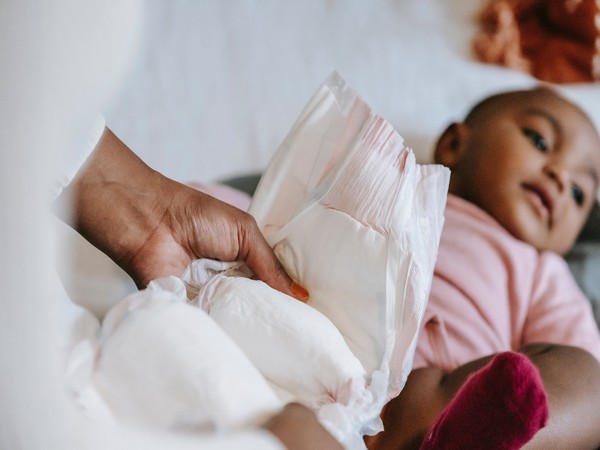
Representative Image

Washington [US], October 29 (ANI): Superabsorbers are found in diapers as well as other hygiene and medical items such as bandages and dressing materials. Strong acids were previously needed to recycle sodium polyacrylate, a very absorbent polymer.
These crosslinked polymers are water-insoluble. They do not melt at high temperatures but rather deteriorate. However, after roughly 16 hours at 80 degrees Celsius, the acids "cut" the chains, stabilising the polymers and allowing recycling.
Because this technique is complex and costly, superabsorbers are rarely reused. Approximately two million tonnes of them wind up in the trash or are burnt each year.
Researchers from KIT's Institute of Biological and Chemical Systems, Institute for Biological Interfaces, and Institute for Chemical Technology and Polymer Chemistry discovered that crosslinked sodium polyacrylate polymers deteriorate after being exposed to UV light.
"The chains that link the polymers are broken by the light. Then, they are so loose that they swim in water and turn into liquid fibres," Pavel Levkin, Professor at the Institute of Biological and Chemical Systems, explained.
For their studies, the researchers cut out the liners from conventional diapers, wetted them with water, and exposed them to a lamp of 1000 W. After five minutes already did the solid material turned into a liquid that dropped into a collector. "This method with UV light is about 200 times faster than with acids," Levkin said.
The team then used known processes to convert the liquid into new adhesives and dyes. "The observation that the substance is soluble and processible was of high importance. Most probably, it can be turned into many other products," the scientist explained.
For their tests, the researchers used clean diapers. But it is also possible to separate the superabsorbers from used diapers. "Hence, there is no reason why close-to-reality use should not be possible," Levkin said.
The recycling method can be optimized ecologically at no cost by using solar power. "We have found a promising strategy for recycling superabsorbers. This will significantly reduce environmental pollution and contribute to a more sustainable use of polymers." (ANI)


Get the App

What to Read Next

Science

Discovering the genetics of climate adaptation 

Discovering the genetics of climate adaptation 

As climate change accelerates, plants are under increasing pressure to adapt to changing habitats and environmental conditions.

Read More
Science

AI can reveals hidden hazards of chemical mixtures in rivers

AI can reveals hidden hazards of chemical mixtures in rivers

Artificial intelligence can provide important insights into how complex chemical mixes in rivers affect aquatic life, paving the path for more effective environmental protection.

Read More
Science

Tool for detecting problems during protein synthesis

Tool for detecting problems during protein synthesis

Protein synthesis in eukaryotic cells--found in plants, animals, and fungi--involves more than just the straightforward ribosome assembly of amino acids.

Read More
Science

Role of omega-3 fatty acid in prevention of arrhythmias

Role of omega-3 fatty acid in prevention of arrhythmias

Scientists have produced an enormous amount of evidence in the last few decades that indicates eating a diet high in saturated fats is sufficient to induce heart disease. Saturated fats have also been connected to potentially fatal arrhythmias, in addition to other issues including diabetes and atherosclerosis.

Read More
Science

Plastic pollution, seawater flooding effect on coastal plants

Plastic pollution, seawater flooding effect on coastal plants

Two of the planet's most urgent environmental stressors have the potential to affect the development and reproductive production of plants found along the world's coasts, according to new research.

Read More
Science

High BP linked with environmental contamination by tellurium 

High BP linked with environmental contamination by tellurium 

Higher amounts of tellurium, a pollutant transported from mining and manufacturing to foods, increase the risk of having high blood pressure (hypertension). Improved monitoring of tellurium levels in certain meals may help reduce high blood pressure in the general population.

Read More
Science

Study tracks air pollution, reveals demographic disparities

Study tracks air pollution, reveals demographic disparities

There are considerable variances in how much people are exposed to air pollution, according to a new study co-authored by MIT researchers that considers everyday mobility.

Read More
Science

Researchers discover new approach against fatty liver

Researchers discover new approach against fatty liver

The failure of the liver as a crucial organ is becoming more common due to fatty liver disease, often known as steatotic liver disease or SLD for short. Researchers have now found that a saturated fatty acid in blood vessels causes the synthesis of the signalling molecule SEMA3A, which shuts the blood vessel 'windows.'

Read More
Science

Omega-3 therapy prevents brain damage in newborn rodents

Omega-3 therapy prevents brain damage in newborn rodents

A study conducted by researchers at Columbia University Vagelos College of Physicians and Surgeons discovered that an injectable emulsion containing two omega-3 fatty acids contained in fish oil significantly reduced brain damage in newborn rodents after a disturbance in the flow of oxygen to the brain near delivery.

Read More
Science

'Cloaked' proteins deliver cancer-killing therapeutics into cells

'Cloaked' proteins deliver cancer-killing therapeutics into cells

Researchers at Cornell University have created a generalized method to "cloak" proteins, which may allow for the recycling of materials like antibodies for biological research and therapeutic applications.

Read More
Home About Us Our Products Advertise Contact Us Terms & Condition Privacy Policy

Copyright © aninews.in | All Rights Reserved.
