

ADD ANI AS A TRUSTED SOURCE
googleads
ANI Logo
Menu
Science

Scientists developing once-a-month oral contraceptive pill

Washington [US], December 26 (ANI): A team of researchers from the Brigham and Women's Hospital and MIT is designing a new method to help improve adherence and reduce the risk of pregnancy by offering an oral contraceptive that could be taken once a month.

ANI Dec 26, 2021 11:55 IST googleads

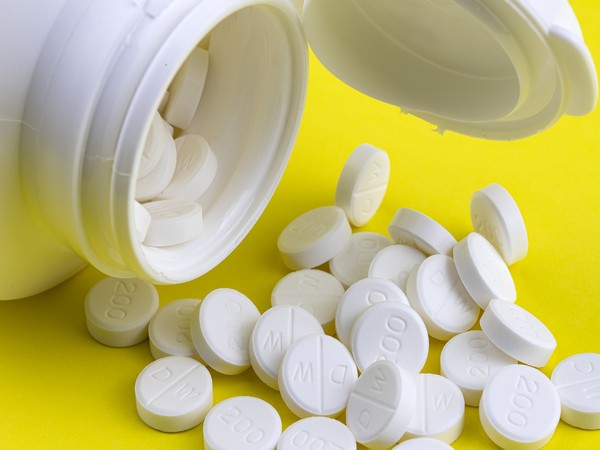
Representative image

Washington [US], December 26 (ANI): A team of researchers from the Brigham and Women's Hospital and MIT is designing a new method to help improve adherence and reduce the risk of pregnancy by offering an oral contraceptive that could be taken once a month.
The study has been published in the 'Science Translational Medicine Journal'.
"Our capsule represents a major advancement toward providing women with a once-a-month contraceptive. For many, this may be hard to believe. But our preclinical data is encouraging us along that road," said co-corresponding author Giovanni Traverso, MD, PhD, a gastroenterologist and physician-researcher at Brigham and MIT.
"We began our work on extended drug release by working with treatments for malaria, tuberculosis and HIV. But early on, we were having conversations about the potential impact that extended drug release could have on family planning. We wanted to help empower women with respect to fertility control and are pleased to report our progress toward that goal," Traverso added.
The team designed a drug-delivery vehicle that consists of six arms joined by an elastic-coated core. The arms were loaded with the oral contraceptive drug levonorgestrel and folded up into a capsule that can be swallowed. Once in the stomach, the arms unfold and have a span that is larger than the opening of the human pylorus, helping the system stay in the stomach where it can release the drug over time.
The research team tested the concentration of oral contraceptives over time in a pig model and measured the presence of the drug in the bloodstream for animals that had been given the extended-release form versus an immediate-release tablet. For the tablet, dosage tapered off after six hours. For the extended-release form, the team observed concentrations of the drug for up to 29 days.
Work is now underway to bring the extended-release pill closer to human trials. The next steps will include scaling up manufacturing processes and safety evaluations.
Co-authors of this work included Ameya R. Kirtane, Tiffany Hua, Alison Hayward, Ambika Bajpayee, Aniket Wahane, Aaron Lopes, Taylor Bensel, Lihong Ma, Frank Z. Stanczyk, Sierra Brooks, Declan Gwynne, Jacob Wainer, Joy Collins, Siid Tamang, and Robert Langer.
This work was funded by the Bill and Melinda Gates Foundation Grant No. OPP1139927. Traverso, Langer and Kirtane are co-inventors on patents describing the use of gastric retentive drug delivery systems. Traverso and Langer have a financial interest in Lyndra Therapeutics, a biotechnology company focused on the development of oral drug delivery for long drug release. Hayward is a consultant for Lyndra Therapeutics. (ANI)


Get the App

What to Read Next

Science

Amphibians bounce-back from Earth’s greatest mass extinction

Amphibians bounce-back from Earth’s greatest mass extinction

Researchers at the University of Bristol discovered that ancient frog ancestors survived the biggest mass extinction of species by eating on freshwater prey that evaded terrestrial predators.

Read More
Science

New insights into how cancer evades the immune system: Study

New insights into how cancer evades the immune system: Study

Immunotherapy research primarily focuses on better recognition of cancer cells by the body's own immune system. Researchers at Amsterdam UMC and Moffitt Cancer Center have taken a different approach.

Read More
Science

Scientists use AI to better understand nanoparticles: Study

Scientists use AI to better understand nanoparticles: Study

A group of scientists has created a way to illuminate the dynamic behavior of nanoparticles, which are essential components in the production of pharmaceuticals, electronics, and industrial and energy-conversion materials.

Read More
Science

New device could allow you to taste cake in virtual reality

New device could allow you to taste cake in virtual reality

The 'e-Taste' interface employs sensors and wireless chemical dispensers to enable remote taste perception, often known as gestation. Field testing done by researchers at The Ohio State University confirmed the device's ability to digitally simulate a range of taste intensities, while still offering variety and safety for the user.

Read More
Science

Strand Life Sciences launches portal for rare disease diagnosis

Strand Life Sciences launches portal for rare disease diagnosis

Marking Rare Disease Day, Strand Life Sciences, a subsidiary of Reliance Industries and a leading genomics research company, has launched the StrandOmics Portal, an innovative digital platform designed to assist doctors in diagnosing rare diseases more efficiently.

Read More
Science

Study reveals impact of animals as architects of Earth

Study reveals impact of animals as architects of Earth

A new study led by Professor Gemma Harvey from Queen Mary University of London has revealed how hundreds of species shape the landscapes we depend on, from termite mounds visible from space to beavers creating wetlands and hippos carving drainage systems.

Read More
Science

Opposing arrows of time emerge from certain quantum systems

Opposing arrows of time emerge from certain quantum systems

Researchers at the University of Surrey made a thought-provoking discovery. A new study reveals that opposing arrows of time can theoretically emerge from certain quantum systems.

Read More
Science

COVID-19 severity may be predicted by White Blood Cell Count

COVID-19 severity may be predicted by White Blood Cell Count

A COVID-19 diagnosis is no longer as frightening as it used to be, thanks to developments in treatment choices. However, a new study reveals that leukocyte (white blood cell) count may now be used to identify who is more likely to develop more significant disease symptoms.

Read More
Science

Seals can essentially act as 'smart sensors': Study

Seals can essentially act as 'smart sensors': Study

A new study by marine biologists reports that seals can essentially act as 'smart sensors' for monitoring fish populations in the ocean's eerily dim 'twilight zone.'

Read More
Science

'Creation of black holes without singularities through gravity'

'Creation of black holes without singularities through gravity'

Traditional black holes, as predicted by Albert Einstein's theory of General Relativity, contain what are known as singularities, i.e. points where the laws of physics break down. Identifying how singularities are resolved in the context of quantum gravity is one of the fundamental problems in theoretical physics. Now, a team of experts has described the creation of regular black holes from gravitational effects without the need for the existence of exotic matter required by some previous models.

Read More


