

ADD ANI AS A TRUSTED SOURCE
googleads
ANI Logo
Menu
Science

Scientists design new drug compound to stop malaria in its tracks

London [UK], May 13 (ANI): Researchers at the Francis Crick Institute and the Latvian Institute of Organic Synthesis have designed a drug-like compound that effectively blocks a critical step in the malaria parasite life cycle and are working to develop this compound into a potential first of its kind malaria treatment.

ANI May 13, 2021 23:29 IST googleads

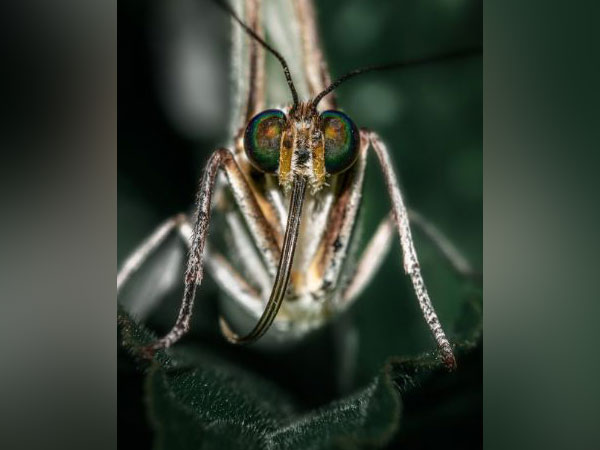
Representative Image

London [UK], May 13 (ANI): Researchers at the Francis Crick Institute and the Latvian Institute of Organic Synthesis have designed a drug-like compound that effectively blocks a critical step in the malaria parasite life cycle and are working to develop this compound into a potential first of its kind malaria treatment.
While drugs and mosquito control have reduced levels of malaria over recent decades, the parasite still kills over 400,000 people every year, infecting many more. Worryingly, it has now developed resistance to many existing antimalarial drugs, meaning new treatments that work in different ways are urgently needed.
In their research, published in PNAS, the scientists developed a set of compounds designed to stop the parasite from being able to burst out of red blood cells, a process vital to its replication and life cycle. They found one compound, in particular, was highly effective in human cell tests.
"Malaria parasites invade red blood cells where they replicate many times, before bursting out into the bloodstream to repeat the process. It's this cycle and build-up of infected red blood cells which causes the symptoms and sometimes fatal effects of the disease," says Mike Blackman, lead author and group leader of the Malaria Biochemistry Laboratory at the Crick.
"If we can effectively trap malaria in the cell by blocking the parasite's exit route, we could stop the disease in its tracks and halt its devastating cycle of invading cells."
The compound works by blocking an enzyme called SUB1, which is critical for malaria to burst out of red blood cells. Existing antimalarials work by killing the parasite within the cell, so the researchers hope this alternative drug action will overcome the resistance the parasite has acquired.
Importantly the compound is also able to pass through the membranes of the red blood cell and of the compartment within the cell where the parasites reside.
The team is continuing to optimise the compound, making it smaller and more potent. If successful, it will need to be tested in further experiments and in animal and human trials to show it is safe and effective, before being made available to people.
Chrislaine Withers-Martinez, author and researcher in the Malaria Biochemistry Laboratory, says: "Many existing antimalarial drugs are plant-derived and while they're incredibly effective, we don't know the precise mechanisms behind how they work.
Our decades of research have helped us identify and understand pathways crucial to the malaria life cycle allowing us to rationally design new drug compounds based on the structure and mechanism of critical enzymes like SUB1.
"This approach, which has already been highly successful at finding new treatments for diseases including HIV and Hepatitis C, could be key to sustained and effective malaria control for many years to come." (ANI)


Get the App

What to Read Next

Science

Amphibians bounce-back from Earth’s greatest mass extinction

Amphibians bounce-back from Earth’s greatest mass extinction

Researchers at the University of Bristol discovered that ancient frog ancestors survived the biggest mass extinction of species by eating on freshwater prey that evaded terrestrial predators.

Read More
Science

Scientists use AI to better understand nanoparticles: Study

Scientists use AI to better understand nanoparticles: Study

A group of scientists has created a way to illuminate the dynamic behavior of nanoparticles, which are essential components in the production of pharmaceuticals, electronics, and industrial and energy-conversion materials.

Read More
Science

New technology enhances gravitational-wave detection: Study

New technology enhances gravitational-wave detection: Study

A team of physicists led by Jonathan Richardson of the University of California, Riverside, demonstrated how new optical technology can extend the detection range of gravitational-wave observatories such as the Laser Interferometer Gravitational-Wave Observatory, or LIGO, and pave the way for future observatories.

Read More
Science

Astronomers find the smallest main-belt asteroids ever detected:

Astronomers find the smallest main-belt asteroids ever detected:

The majority of known asteroids orbit inside the main asteroid belt, which is positioned between Mars and Jupiter at an average distance of around 250 million km from Earth. Since the discovery of the first asteroid in 1801, about 750.000 asteroids have been identified, primarily in the last decade thanks to several optical surveys that examine the sky on clear nights.

Read More
Science

Study finds connection between quantum theory, information theory

Study finds connection between quantum theory, information theory

"Our results have no clear or direct application right now. It's basic research that lays the foundation for future technologies in quantum information and quantum computers. There's enormous potential for complete discoveries in many different research fields," said Guilherme B Xavier, a researcher in quantum communication at Linkoping University, Sweden.

Read More
Science

When devices can read human emotions without a camera: Study

When devices can read human emotions without a camera: Study

Tokyo Metropolitan University researchers employed long-term skin conductance measurements to distinguish between emotions. Volunteers were given videos representing frightening scenarios, family bonding, and humour, while their skin conductance was measured.

Read More
Science

'Nuroscience study results can be better predicted by AI'

'Nuroscience study results can be better predicted by AI'

Large language models, a type of AI that analyses text, can anticipate the results of proposed neuroscience studies more correctly than human experts, according to a new study led by UCL (University College London) researchers.

Read More
Science

Gut microbes play role in regulating stress responsiveness

Gut microbes play role in regulating stress responsiveness

A groundbreaking study has revealed the critical role of gut bacteria in regulating stress responses through interactions with the body's circadian rhythms.

Read More
Science

Thermal imaging may help fruits, veggies stay fresher longer: Study

Thermal imaging may help fruits, veggies stay fresher longer: Study

Before your favourite produce arrives at the grocery store, it must be carefully harvested and stored for extended periods of time. A recent University of Georgia assessment argues that new temperature sensing devices could make that procedure considerably easier, as agricultural issues are exacerbated by changing climates.

Read More
Science

Alzheimer’s disease can damage brain in two phases

Alzheimer’s disease can damage brain in two phases

Alzheimer's disease may cause brain damage in two stages, according to new research supported by the National Institutes of Health (NIH) that uses sophisticated brain mapping methods.

Read More
Home About Us Our Products Advertise Contact Us Terms & Condition Privacy Policy

Copyright © aninews.in | All Rights Reserved.
