

ADD ANI AS A TRUSTED SOURCE
googleads
ANI Logo
Menu
Science

Rising temperatures are making it harder for birds to breed: Study

Researchers found that rising global temperatures make it more difficult for birds to determine when it is spring and time to breed. The study was published in the journal, 'Proceedings of the National Academy of Science.'

ANI Jul 04, 2023 10:08 IST googleads

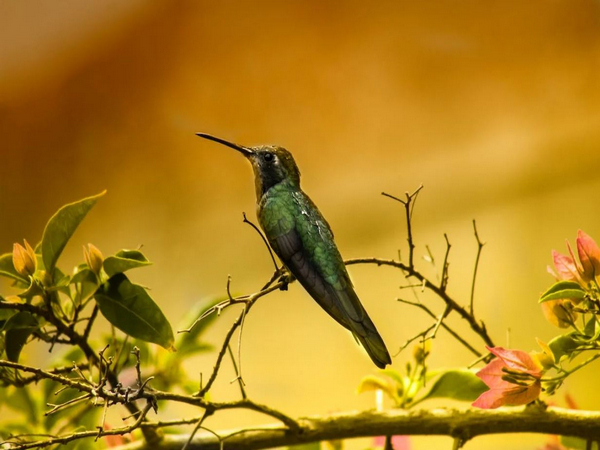
Representative Image

Los Angeles [US], July 4 (ANI): Researchers found that rising global temperatures make it more difficult for birds to determine when it is spring and time to breed.
The study was published in the journal, 'Proceedings of the National Academy of Science.'
The research led by UCLA and Michigan State University scientists discovered that birds produce fewer young if they begin breeding too early or too late in the season. Birds have been unable to keep up with climate change, which has resulted in early springlike conditions, according to the experts.
Furthermore, the authors write that the mismatch between the start of spring and birds' readiness to reproduce is likely to worsen as the world heats, which might have far-reaching effects on many bird species. Bird breeding seasons begin with the appearance of the first green plants and blossoms, which is occurring earlier and earlier as the temperature warms.
"By the end of the 21st century, spring is likely to arrive about 25 days earlier, with birds breeding only about 6.75 days earlier," said the study's first author, Casey Youngflesh, who led the research as a postdoctoral researcher at UCLA and is now a postdoctoral fellow at Michigan State. "Our results suggest that breeding productivity may decrease about 12% for the average songbird species."
The authors stress that conservation strategies should address bird species' responses to climate-driven shifts.
"For nearly 30 years, scientists have hypothesized that animals could become mismatched from plants as springs begin earlier," said Morgan Tingley, a UCLA associate professor of ecology and evolutionary biology and the study's senior author. "While there have been a few very good case studies of this phenomenon, it has remained a major mystery whether advancing springs will pose a general problem for the majority of species."
When it comes to raising their young, timing matters for birds. If they breed too early or too late, harsh weather could harm their eggs or newborns. But timing relative to food sources matters too: If birds are looking for food before or after its natural availability, they might not have the resources to keep their young alive.
"Critically, we found evidence for impacts on bird reproduction of both the absolute and the relative timing of birds," Tingley said.
Using data from a large-scale collaborative bird banding program run by the Institute for Bird Populations, the researchers calculated the timing of breeding and the number of young produced for 41 migratory and resident bird species at 179 sites near forested areas throughout North America between 2001 and 2018.
Then, the authors used satellite imaging to determine when vegetation emerged around each site. They found that each species had an optimal time to breed, and that the number of young produced decreased when spring arrived very early, or when breeding occurred early or late relative to when plants emerged.
While the majority of birds were adversely affected by variations in the start of spring, several species -- the northern cardinal, Bewick's wren and wrentit among them -- countered the trend, demonstrating improved breeding productivity when spring began earlier. Those species are mostly non-migratory species that can respond more quickly to the emergence of spring plants that signal the start of the breeding season.
By breeding earlier and without the time constraints imposed by migration, the study noted, non-migratory species may also be able to reproduce more than once per season.
But those species were the exceptions to the rule. Even most non-migratory species couldn't keep up with earlier spring arrivals. Overall, for every four days earlier that leaves appeared on trees, species bred only about one day earlier.
For migratory species, that discrepancy means that the time between when they arrive at their breeding sites and breeding itself is likely to get shorter as springlike conditions begin earlier. Birds need time to establish territories and prepare physiologically for egg-laying and rearing their young, so that change could cause even greater disturbances to reproduction.
"North America has lost nearly a third of its bird populations since the 1970s," Tingley said. "While our study demonstrates that the worst impacts of timing mismatch likely won't occur for several decades yet, we need to focus now on concrete strategies to boost bird populations before climate change takes its toll." (ANI)


Get the App

What to Read Next

Science

Seals can essentially act as 'smart sensors': Study

Seals can essentially act as 'smart sensors': Study

A new study by marine biologists reports that seals can essentially act as 'smart sensors' for monitoring fish populations in the ocean's eerily dim 'twilight zone.'

Read More
Science

Shubhanshu Shukla: IAF officer becomes first Indian astronaut for

Shubhanshu Shukla: IAF officer becomes first Indian astronaut for

Shubhanshu Shukla, Indian Air Force (IAF) officer and one of four astronauts for Indian Space Research Organisation's (ISRO) Gaganyaan mission, has been sele Shubhanshu Shukla, Indian Air Force (IAF) officer and one of four astronauts for Indian Space Research Organisation's (ISRO) Gaganyaan mission, has been selected as the pilot for Axiom Mission 4, scheduled for Spring 2025.cted as the pilot for Axiom Mission 4, scheduled for Spring 2025.

Read More
Science

Contrail avoidance is less likely to damage climate by mistake

Contrail avoidance is less likely to damage climate by mistake

A new study allays concerns that rerouting planes to avoid producing climate-warming contrails may accidentally exacerbate climate change.

Read More
Science

Daylight saving time has minimal effect on heart health: Study

Daylight saving time has minimal effect on heart health: Study

Researchers concentrated on the week immediately following the spring and autumn DST transitions when clocks are changed either an hour forward or backwards.

Read More
Science

Researchers give more insight into bone diseases

Researchers give more insight into bone diseases

Diseases affecting the bones and joints are becoming more widespread in today's elderly populations. For example, in Japan alone, approximately 12 million people suffer from osteoporosis, a disorder that significantly weakens and fragilizes bones. Understanding the biological processes involved in the maintenance of bone and joint tissue is an important first step toward developing effective therapies for these illnesses.

Read More
Science

Rising sea levels may lead to more methane emitted from wetlands

Rising sea levels may lead to more methane emitted from wetlands

Global warming is causing sea levels to rise, which is altering ecosystems. Scientists assumed that the tidal wetlands present in estuaries could create less methane, a strong greenhouse gas because the increased influx of seawater renders these habitats less hospitable to methane-producing microorganisms.

Read More
Science

Ice age may help predict oceans’ response to global warming

Ice age may help predict oceans’ response to global warming

A team of scientists led by a Tulane University oceanographer discovered that deposits deep beneath the ocean floor provide a means to estimate ocean oxygen levels and their relationship to carbon dioxide in the Earth's atmosphere during the last ice age, which ended more than 11,000 years ago.

Read More
Science

Loss of cells in pancreas in elderly cause age-related diabetes

Loss of cells in pancreas in elderly cause age-related diabetes

Researchers have looked into the disappearance of pancreatic islet cells in people who have never suffered pancreatitis. They determined that the loss of insulin-producing beta cells was the primary cause of islet cell loss in the elderly after finding notable trends in the types of cells lost as a result of islet cell loss in different age groups and genders. This may be the underlying cause of diabetes associated with ageing and offers guidance for new preventative treatments.

Read More
Science

Research shows logging, climate change threaten montane birds

Research shows logging, climate change threaten montane birds

The Indian Institute of Science (IISc) analysed data from over ten years to investigate the effects of forest logging and climate change on bird populations in tropical mountains.

Read More
Science

Logging, climate change threaten montane birds: Research

Logging, climate change threaten montane birds: Research

The Indian Institute of Science (IISc) examined over ten years of data to study the effects of forest logging and climate change on bird groups in tropical mountains.

Read More
Home About Us Our Products Advertise Contact Us Terms & Condition Privacy Policy

Copyright © aninews.in | All Rights Reserved.


